When Minimal Packing Feels More Complicated Than It Should
A minimal unpack carry-on looks tidy but causes friction if essentials overlap; true efficiency needs clear category separation for easy access.
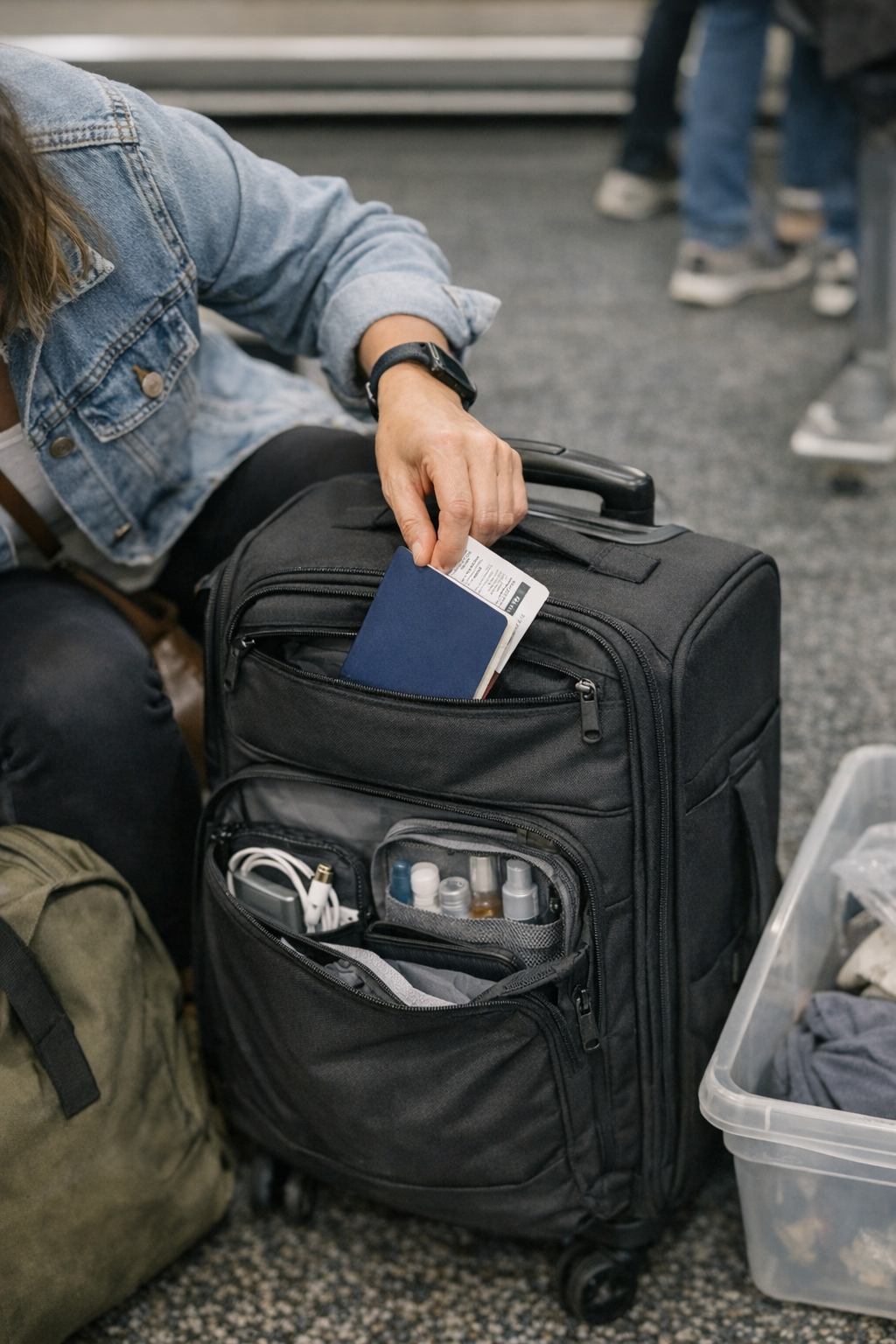
The realization didn’t happen at home over a neatly packed bag. It came while standing shoulder-to-shoulder in a line, inching forward. The setup looked straightforward—just a few organized pouches, some sleek tech organizers, everything zipped in. But once real movement started, every stop-and-unzip felt just a little off. Neatness didn’t translate to smoothness. When I needed a passport or charger cable, quiet snags appeared: tangled overlaps, one pouch slipping under another, deep digging instead of quick reach. What looked minimal on the floor felt oddly heavier in my hand.
You notice it after a few transitions. The idea of “less to unpack” begins to blur once you’re through security, juggling your bag for the tray, or reaching for a boarding pass with a line pressing behind you. It’s not disorder exactly but a split-second stall—the kind that makes your zipper echo louder than you want. That small, avoidable pause when access matters was what stuck with me. The minimalist setup wasn’t reducing friction. Sometimes, it multiplied the moves in transit.
The Hidden Cost of Blended Packing
At first, everything feels contained. A single larger pouch, pockets pressed close together, your go-to organizers—each category neatly tucked away. But by the second or third time I needed something without unpacking the whole bag, the problem emerged. Travel documents mixed with adapters, pens rubbing against charger cords, sanitizer lost behind a bundle of cables. The order looked real, but access didn’t flow. It looked fine at home, but repeated reaches turned “contained” into a shuffle. Small overlaps were the parts that slowed me down.
Real Use, Real Routines
Repacking happens in public—balanced on a seat edge, standing near bins, juggling a coat with one hand. Early mornings and tight gate changes turn what seemed organized at home into a different story at the airport. A boarding pass tucked inside tech or liquids meant an extra unzip, a bit more digging, and another reset as the bag went back over my shoulder. That’s when I realized what really matters: separating small essentials instead of just shaving weight. One change—putting every quick-access travel document in a slim outer pocket—shifted the whole experience. No more mixing with cables, no pens dropping, no reordering later. Every reach was done on the first zip pull. It wasn’t about carrying less; it was about not losing time to repeated reshuffling.
The Quiet Gain of Clear Boundaries
Surface clutter often gets the blame, but it was overlap that tripped me up. The practical gain came from fitting one zipped section to each travel moment. No overlap between documents and devices. No lumping chargers with toiletries. Every item returned to its place without extra shuffles. Four document checks on a single trip, each one smooth and without disruption inside the bag. The improvement wasn’t flashy but quietly persistent: friction didn’t repeat. It was a small but meaningful way to breathe between all the moving parts of travel.
If you’re curious where those quiet changes start, you’ll probably find a few here: http://www.carryonsupply.myshopify.com