When Mobile Storage Finds Its Place, Home Feels Easier
Giving mobile storage a clear home base in the entryway prevents clutter, limits drift, reduces reset time, and keeps walkways functional.
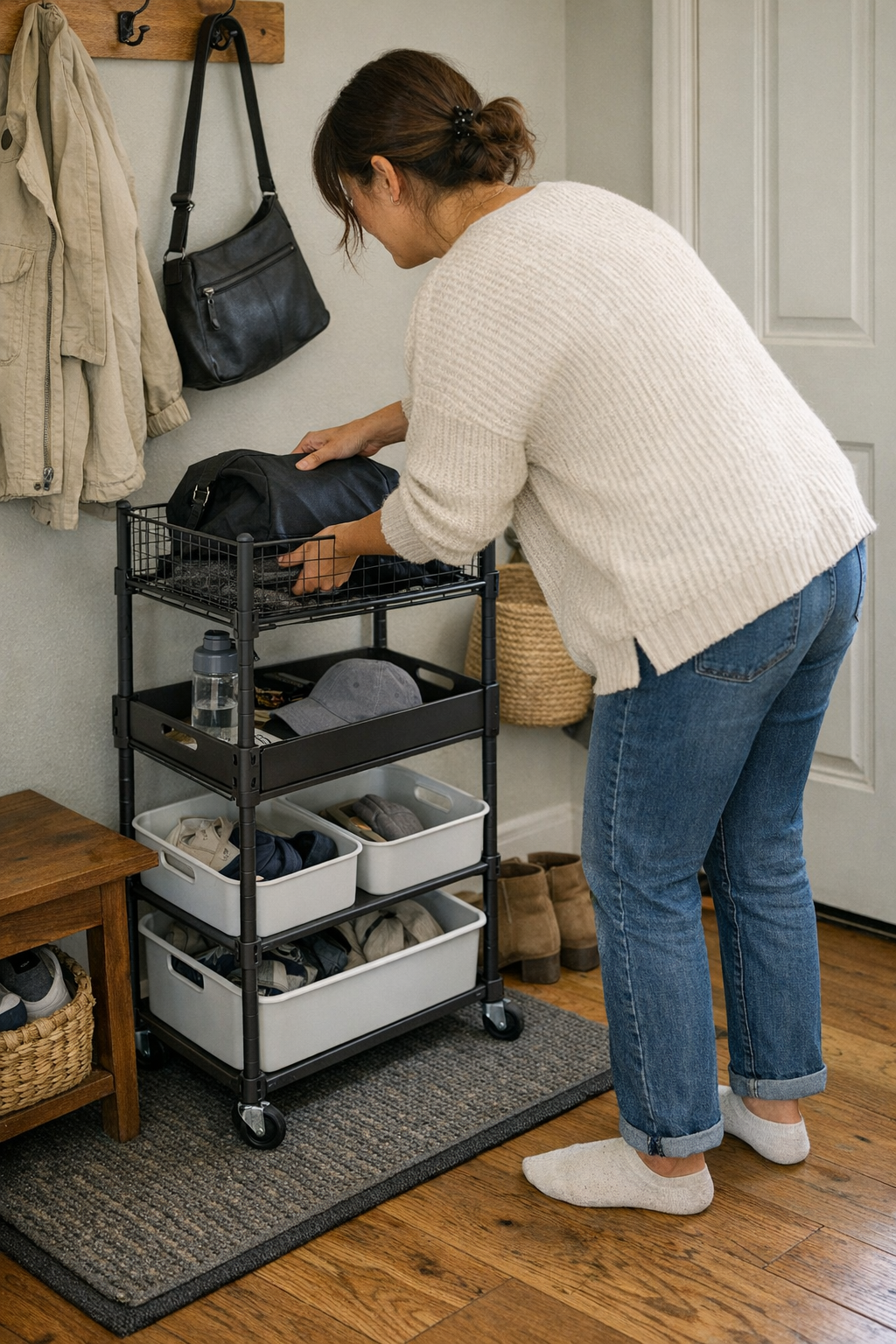
Sometimes I notice the shift most when I’m juggling too many things at the threshold—an awkward armful, shoes kicked off half-heartedly, or a stray tote slipping from its perch. There’s a pattern to how things loosen up over a week, the way mobile storage—designed to help—starts slowly edging into the path. It happens so gradually that most days I only register the change when I have to sidestep a rolling bin or nudge a cart back, promising myself I’ll fix it “later.” In these moments, the reality of a transition space—messy, crowded, but essential—quietly asserts itself.
Sometimes Order Hides in Small Anchors
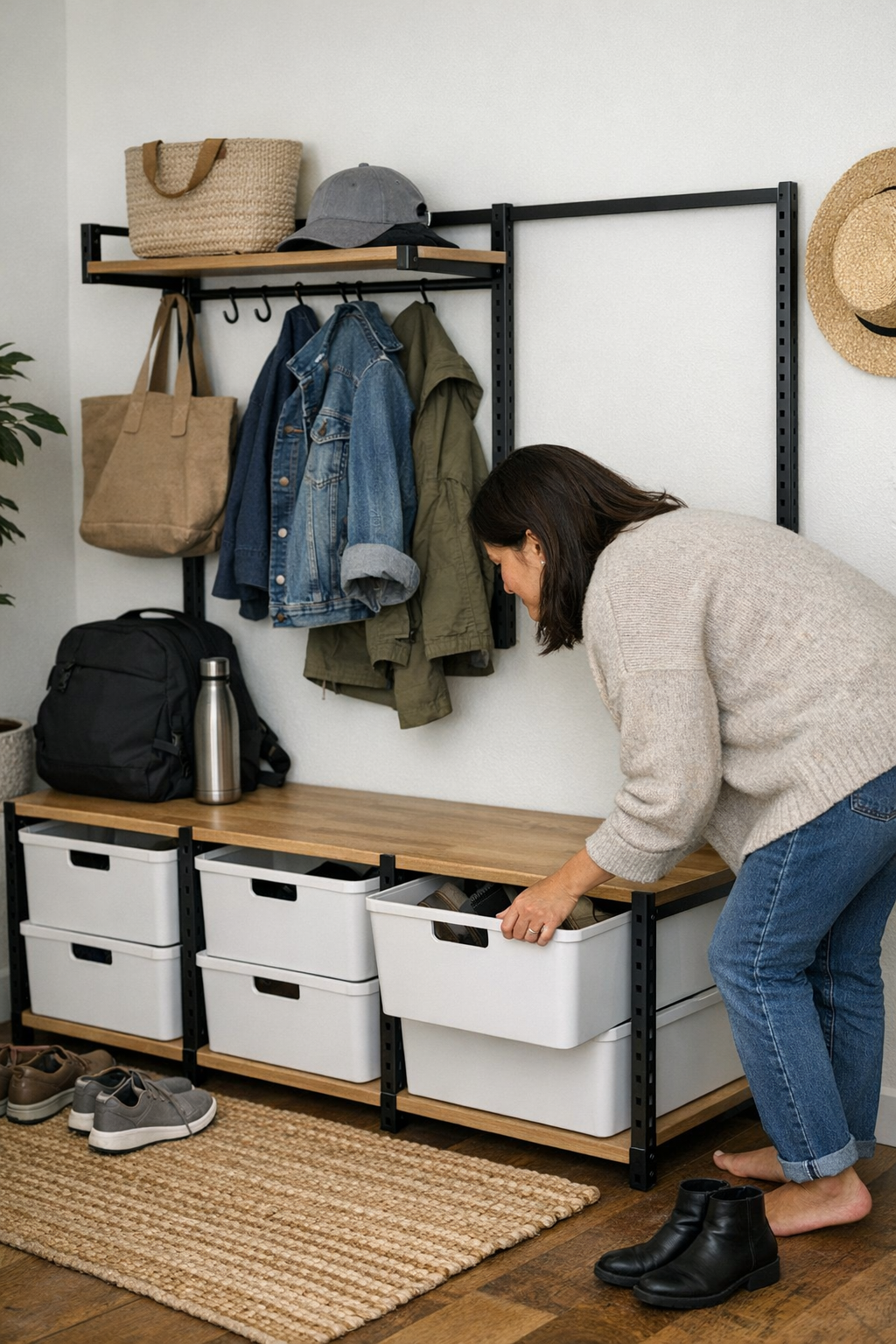
Rolling racks and bins seem innocent at first. One clear walkway in the morning can fade to a crowded jumble by night. Shoes accumulate in new spots, bench corners catch stray bags, and wheels never seem to land where they started. You don’t notice right away, but you feel it.
It’s the missing inches of space when you walk in with wet boots. The low-level pressure of rearranging things just to pass through. I kept thinking about how a small home base—a mat’s edge, a painted mark, the end of a bench—made all the difference. Nothing dramatic, but enough to shift the routine away from constant correction.
Drift Becomes Its Own Routine
Over time, mobile storage creates a pattern of interruptions. The cart parks neatly on day one. By midweek, it’s halfway across the entry. By Friday, it’s blocking the door, half-buried under jackets and unsorted mail. The drift doesn’t announce itself; it quietly gathers until no space is left to move easily.
What stands out is how everyone adjusts, negotiating passage—sometimes out loud, more often silently. The room responds to habits rather than intentions. Without an anchor, the benchmark for what’s “clear enough” slips, and resets go from occasional to necessary.
The Gentle Reset
I found that resets became effortless only after giving everything a visible anchor, however subtle. No rigid system needed—just something signaling the room where things belong between uses. It’s surprising how something as simple as a strip of non-slip tape or alignment with a door jamb can change the tone of the evening routine.
Suddenly, the space wasn’t just functional at the week’s start but stayed open even on the busiest days. Not perfect, but lighter. Instead of spending energy restoring order, it became about maintaining flow—arrive, unload, return, repeat. There’s quiet satisfaction in routines that protect their own rhythm.
Many of these insights came after weeks of watching bins, carts, and shoes do their slow dance. If you’re interested in how transition spaces can live a little easier, you’ll find more of that world here: http://www.betweenry.myshopify.com