When Neat Bags Turn Into Travel Frustrations
A carry-on that looks organized can slow you down during travel; real efficiency comes from easy access using outer pockets for essentials.
There’s a quiet moment—somewhere after the second gate shuffle—when an organized carry-on starts to feel less like a solution and more like another layer to work through. The pouches fit. The compartments make sense when you pack. But the feeling shifts the first time you reach for something while standing halfway down the boarding ramp, balancing your bag between your knees, and the thing you need isn’t where your hand expects.
You notice it after a few transitions. That outer-pocket passport slides deeper than you intended, or you unzip the main compartment for the third time just to grab a charger. The visual order remains, but each retrieval gets slower, especially moving from one line to the next. In practice, a carry-on can become more obstacle course than tool: nested organizers bunching up, zippers catching on pouch straps, a single pen wedged between toiletry cases on the bottom. What worked back in the calm of your room stops working once there’s a tray in one hand and a boarding pass in the other.
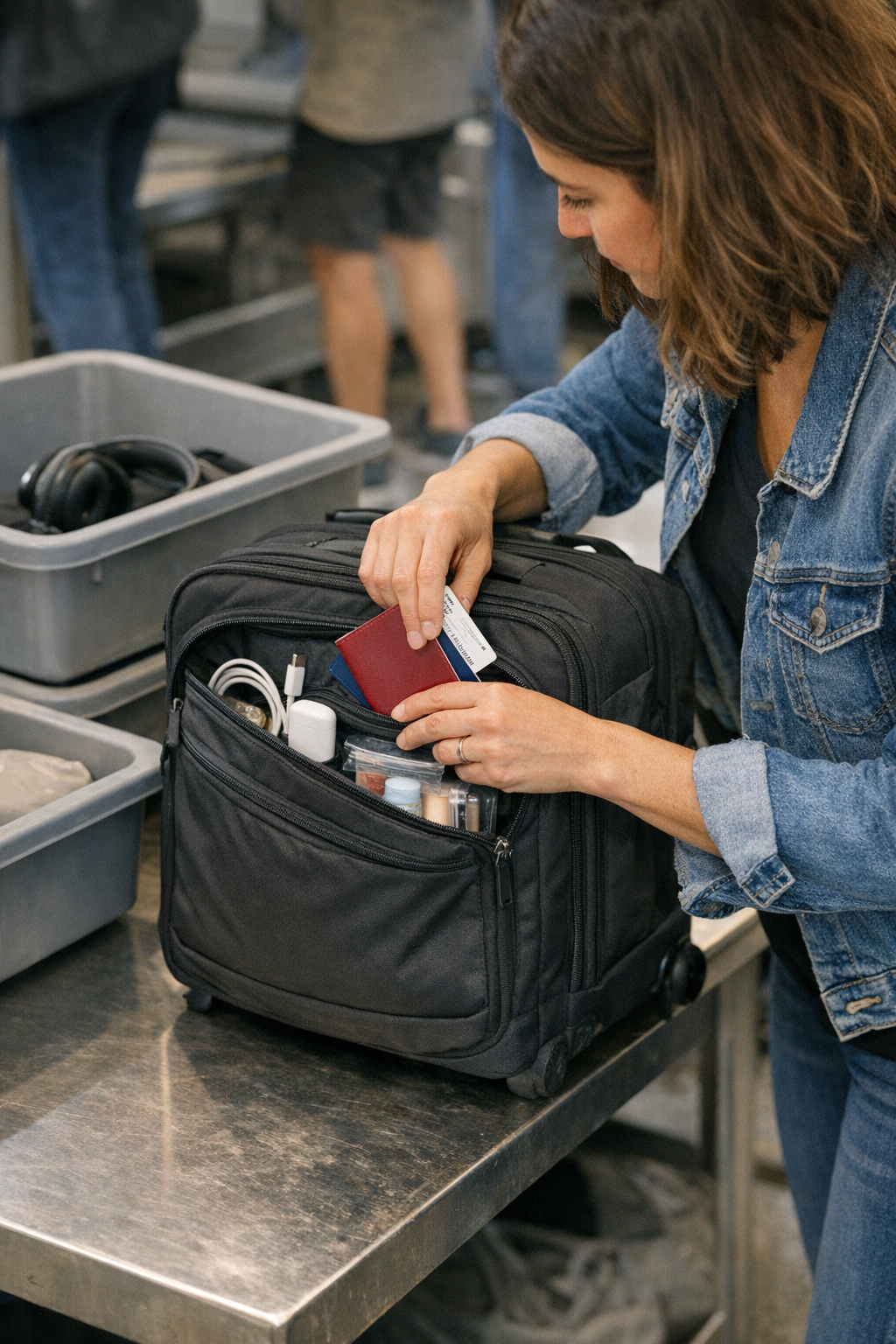
That was the part that kept coming back. On the surface, the separation seemed clear: passport in this organizer, electronics there, liquids in their own spot. But keeping everything so sorted meant every bit of movement added friction. At security, the process was never just one action. Pull out headphones, then slide out a pouch, then shift something else aside—small delays stacked up, making simple movements feel exposed in front of a shifting line. I once watched someone try to repack with one foot in the aisle, the other in their seat space, too many layers to close before moving on.
After a few flights, I started pushing all repeat-use items—passport, charger, boarding documents, even basic snacks—into a single outer pocket. It looked less composed, maybe a little more lived-in. But the ease was instant: a zipper, one motion, then everything went back in just as easily. Not searching, not reshuffling. That small shift changed the tone of each transition—less pause before security trays, less fumbling with cables, less worry about something slipping between pouches. You still want order, but what matters stands right in front. The real proof came later, when lining up for a flight felt less about managing a bag and more about not being slowed by it.
Most lessons felt earned rather than planned. A good carry-on setup comes to reflect its routine: not a static sense of organization, but the quiet relief of nothing interrupting the hand reaching for what’s needed. Over a travel season, the difference stays clear—it’s not how neat everything looks at rest, but how little it drags down the moving parts of the journey.
If you want another look at how these setups can take shape, there’s more detail quietly gathered here: http://www.carryonsupply.myshopify.com