When One Shelf Quietly Disrupts Everyday Order
Shelf clutter starts in one weak zone with unclear roles, spreading disorder and slowing access; clearer dividers keep categories separated.
It doesn’t happen all at once. At first glance, your shelves look just fine—lined up, binned, maybe even labeled after a recent tidy. But unnoticed, a quiet sort of disorder starts to set in. One shelf begins to lose its clarity. Maybe the dividers are too short, or a wide bin swallows whatever you toss inside. It’s not chaos, not yet. Still, you find yourself pausing just a little longer each time you reach for something, wondering where that certainty—once automatic—has slipped away.
The Hidden Pattern of Disorder
Shelf clutter doesn’t arrive with a bang; it sneaks in from a corner that seemed harmless. Maybe it’s a shelf with no real job, just a catch-all that picks up whatever can’t quite fit anywhere else. For a few days, it passes as “organized.” You don’t notice it immediately.
But you feel it—the slight delay searching for gloves, the tiny frustration moving two boxes to reach the thing you actually need.
In the rush of daily life, each of these small irritations repeats, becoming part of your routine. Over weeks, the unsorted edges blur, and other categories begin to drift. The weak shelf keeps absorbing more, until it’s quietly dictating the pace of your mornings.
The Ripple Effect, One Small Shelf at a Time
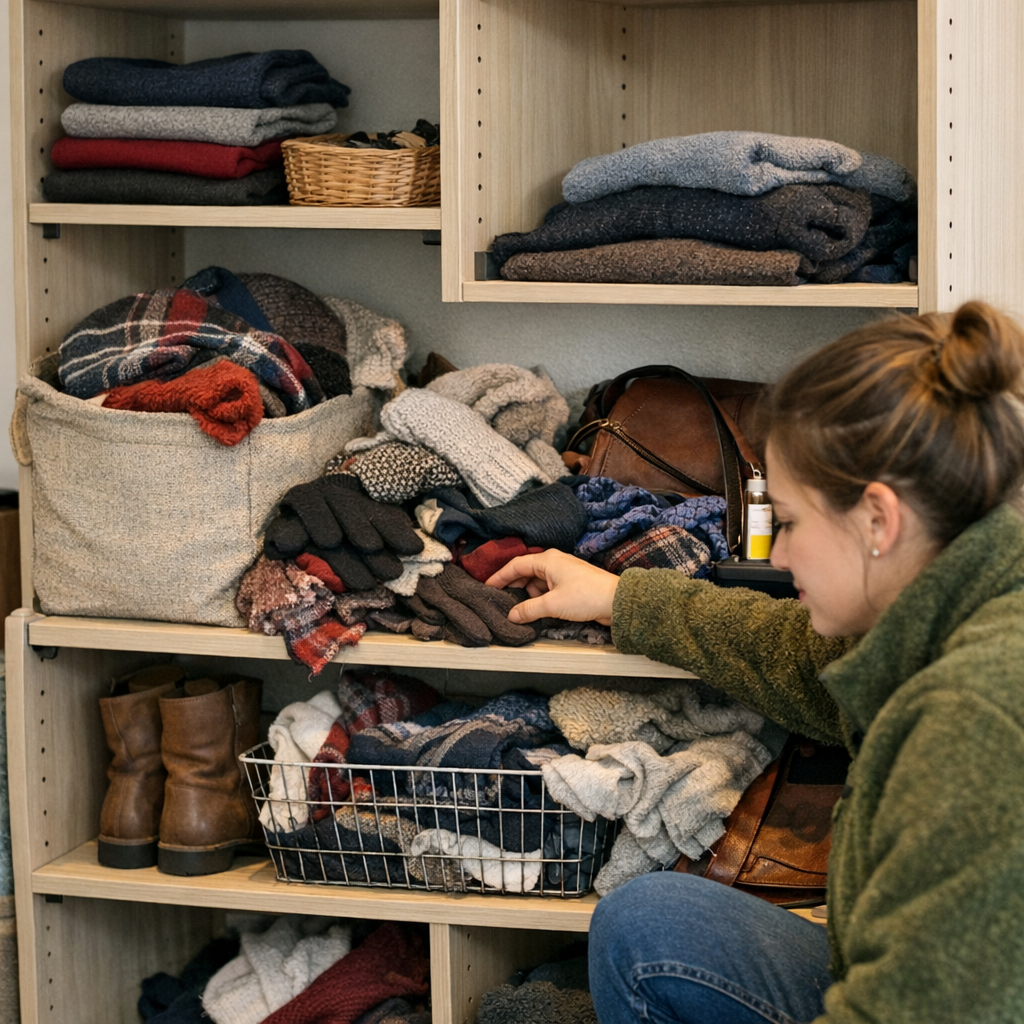
I noticed this most in our hallway closet. There was a shelf—just one—meant for hats and scarves, but it had a bin so roomy that everything blended together. Gloves disappeared beneath beanies, scarves tangled at the bottom, and eventually a stray bag perched “just for now” became something permanent.
With each hurried grab on cold mornings, another category slipped: hats mixed with gloves, scarves exiled somewhere harder to reach. Order doesn’t break all at once. It spreads outward, an infection of convenience gone unexamined. Before long, even spaces that started out neat begin to mirror the first weak spot’s confusion.
A Small Change, A Different Kind of Ease
One evening, almost on a whim, I installed a rigid divider—splitting the ambiguous shelf into two narrow lanes. Suddenly, piles couldn’t sprawl. Hats stayed in their stretch of space, gloves easy to find. What surprised me most wasn’t just the newfound order, but how it changed how I felt using the closet. Retrieval became just a single, unthinking motion.
Here’s what I realized: It rarely takes a massive overhaul to restore ease; sometimes, just one clear line is enough to break the creeping tide of overlap.
Most shelves don’t fail everywhere, all at once. Instead, it’s the subtle, overlooked spots that quietly slow you down—until resetting takes more energy than it gives back. Paying gentle attention to where piles form or hands linger can open up the possibility for something far simpler: spaces that care for you, not the other way around.
These thoughts drifted into focus while rethinking a stubborn bit of hallway storage.