When Open Shelves Hide Everyday Messes at Home
Bare shelves quickly shift from looking organized to amplifying spills, while bins contain clutter and make resets easier in busy entry zones.
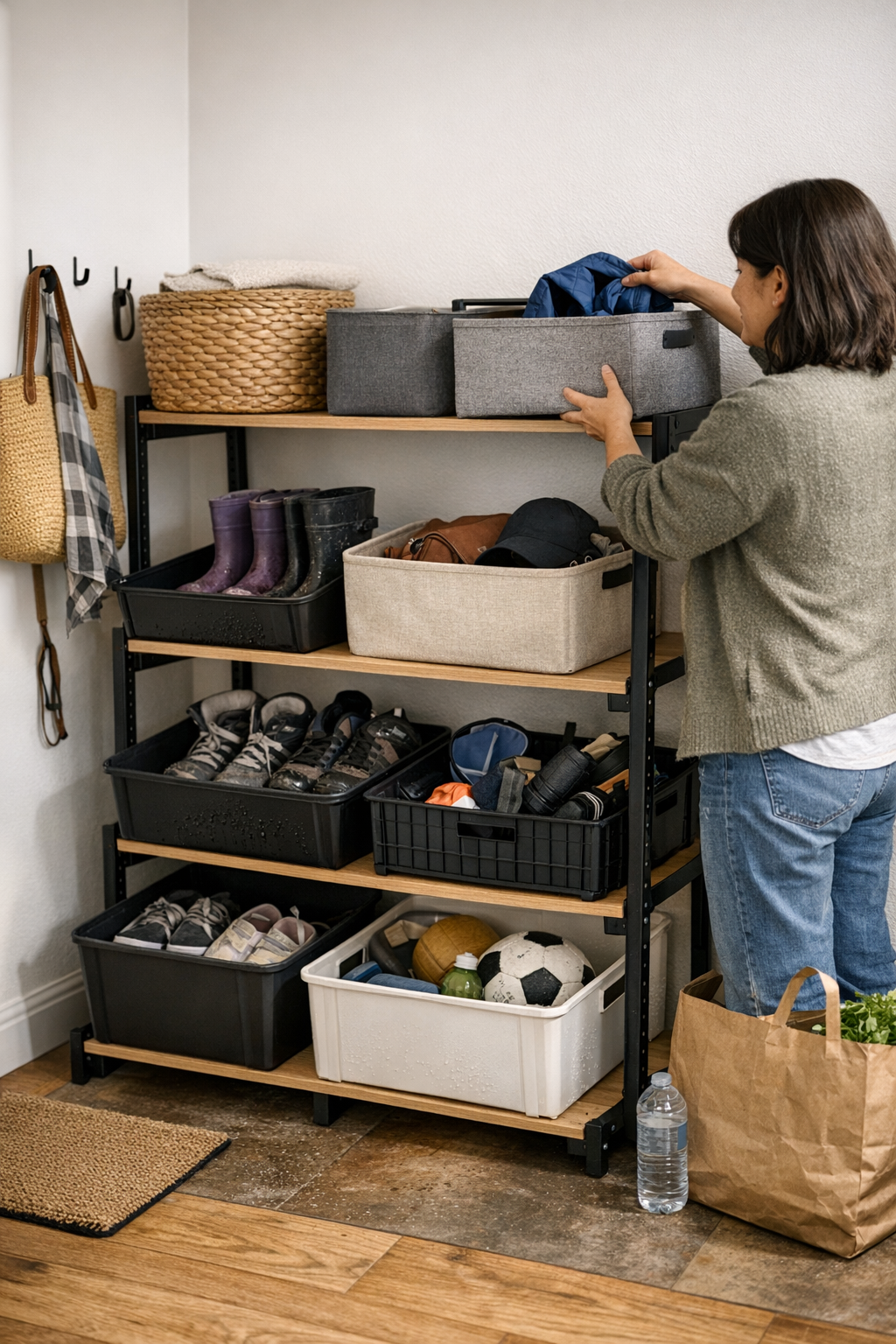
Some days you hardly notice the line between coming home and being home. But after a while, the little details reveal themselves—the way shoes end up angled outward, bags collapse in a heap, and wet footprints inch past the same threshold your feet cross a dozen times. I started watching it all build up, thinking about the shelves and storage we use in these in-between spaces, those daily drop zones meant to hold shoes, gear, and bags. At first, it seemed so simple: open shelves, always within reach, always ready. Yet after a few weeks of living with them, I couldn’t help noticing how their order never lasted beyond a few arrivals and departures.
Where the Mess Begins
You don’t notice it immediately. There’s a certain optimism with open shelving in entryways and transition zones: each shoe and umbrella claims a spot, and on slower days, the row almost holds together. But as commutes stack and errands collide, the boundaries blur. The bare shelf leaves everything exposed—dripped water under boots, loose keys, and even a stray sock—and soon the neat row becomes a sprawling pile.
This is the part I kept coming back to: without dividers, trays, or defined edges, messes travel. A puddle from wet shoes spreads beneath boots and drags grit toward clean socks stored nearby. By the end of a busy weekend, I’d find a pencil abandoned at the far edge, groceries quietly leaking condensation, and the smooth entryway line shrinking under overflow clutter.
The Slow Creep of “Good Enough”
There’s a gradual shift in these transition spaces—the gap between what you originally intended and the reality you accept. With bare shelves and open benches, little piles form faster than you'd expect. The initial tidy display turns into an obstacle course of off-center sneakers, half-open bags, and the satellite debris that always comes with school days and soccer practice.
You feel the friction more than you see it. There’s an impulse to leave things “just for now,” trusting the shelf or bench can take one more layer. But over time, that temptation grows. The less contained the space, the easier it becomes to let that threshold contract, allowing clutter to quietly redefine what “normal” feels like in the entry zone. Each reset then feels heavier, as if clearing one mess only uncovers another that had drifted out of immediate reach.
Boundaries That Quiet the Chaos
The change came quietly for me: adding bins deep enough to catch drips, baskets with enough weight to hold their place, or trays where water could collect without reaching everything else. Not perfect containment, but enough to prevent a single mess from dominating the whole surface. Items had somewhere to land beyond the shelf or bench edge, and cleanup meant lifting out a tray or moving a bin, not scrubbing every inch.
I realized it wasn’t about the volume of storage but the edges that gently held the mess—not so much hiding it as making cleanup feel small, specific, and doable. On days when several pairs of boots entered muddy, I could restore the zone with just a few moves. The space didn’t look staged, but it was always closer to ready.
Sometimes, a quiet solution makes the real difference in the soft rush of everyday coming and going in these high-use transition spots.
If you’ve noticed similar patterns, there’s a quiet collection built around these real-life entryway challenges: http://www.betweenry.myshopify.com



