When Open Storage Stops Feeling Like Freedom
Visible-everything storage clogs space over time; limiting visibility to daily-use items and adjusting shelves eases access and maintains order.
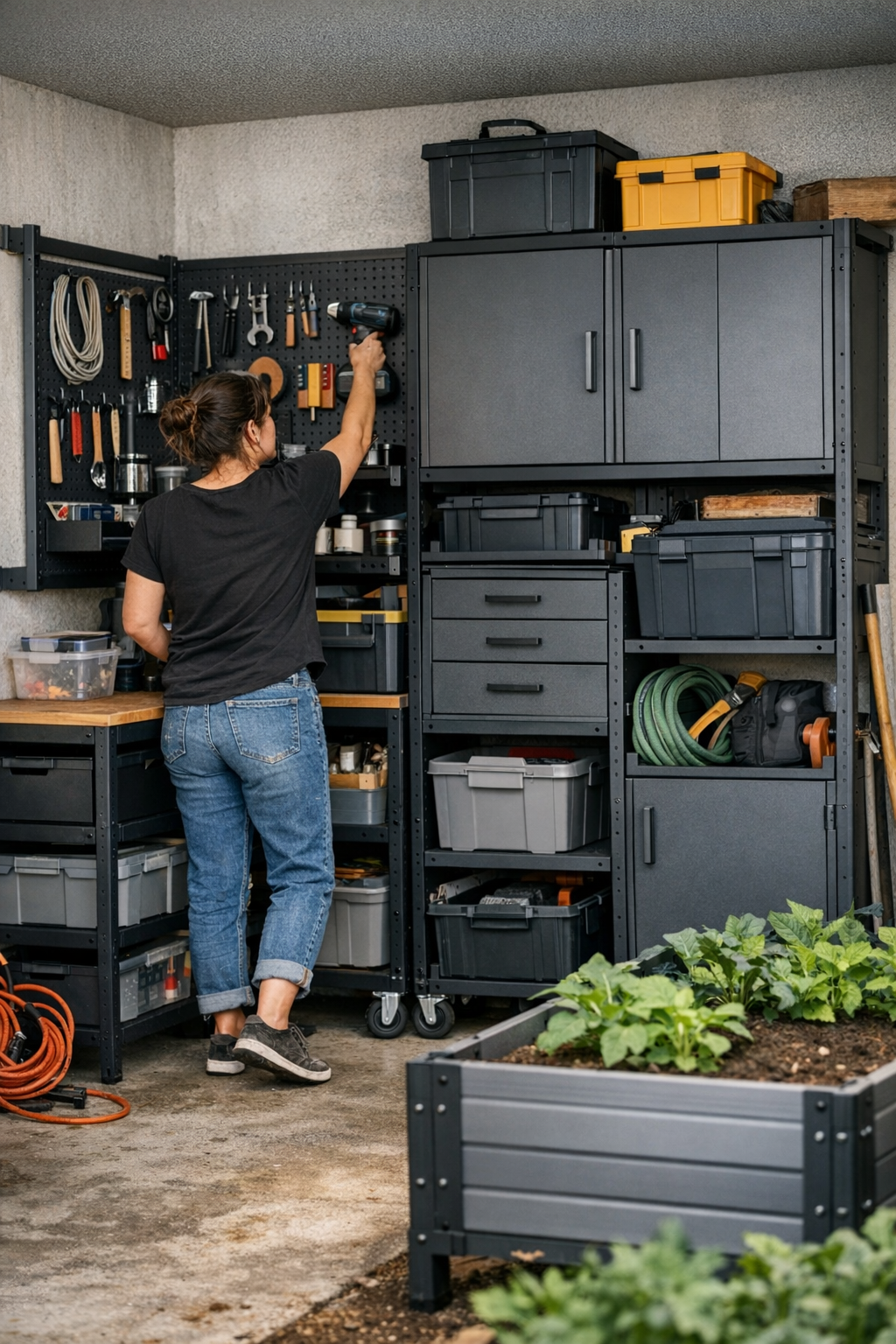
There’s a quiet comfort in keeping every tool, screw, and gardening fork visible in your workshop or garage. It feels honest, like nothing is hidden and every project is a simple reach away. I used to believe this too: open shelves, pegboards dense with tools and reminders of future tasks. At first, it works. But after a few real-use cycles, something shifts. The clarity starts to blur.
You don’t notice it immediately.
But you feel it.
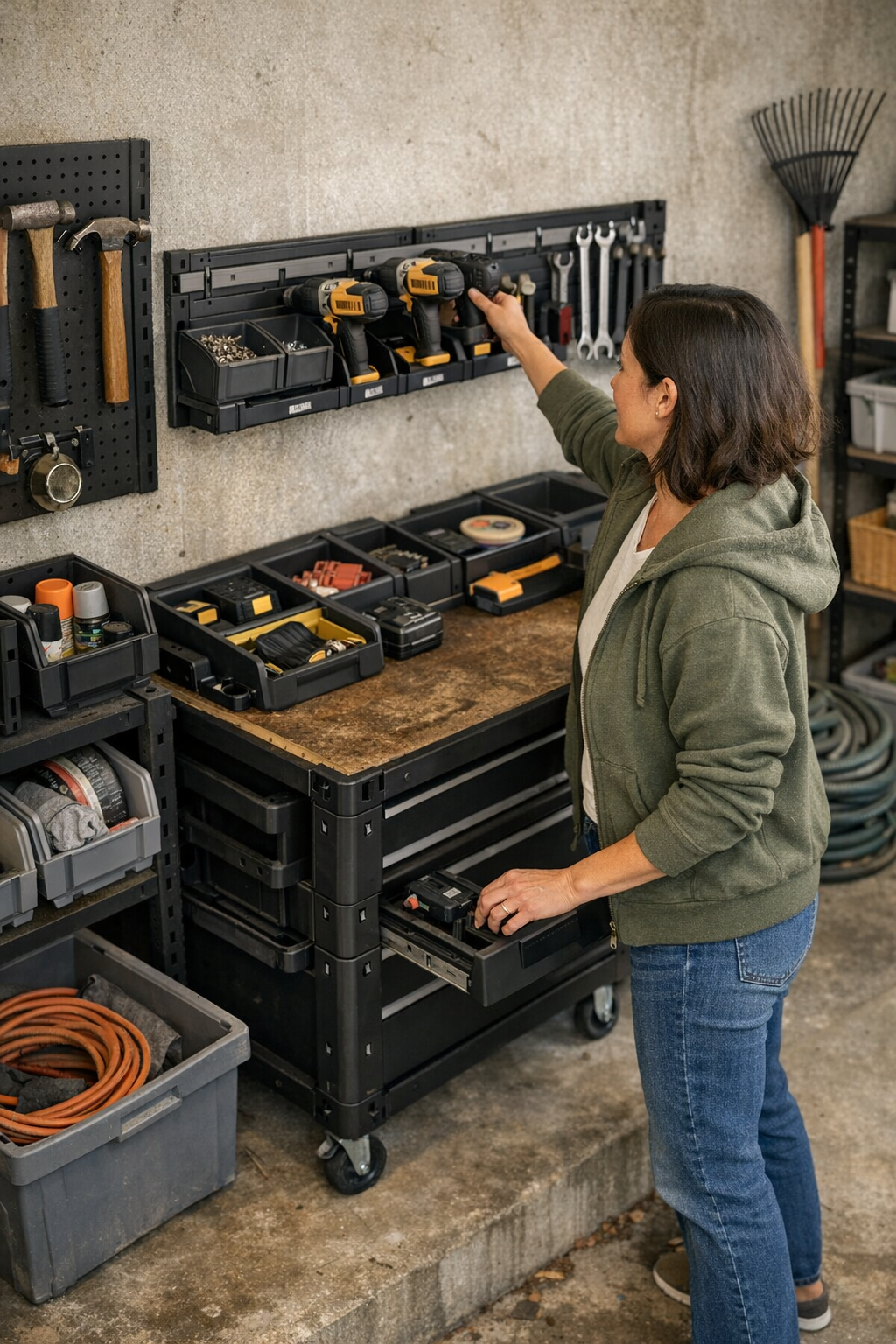
The idea of visible-everything storage—whether wall-mounted pegboards, floor-based bins, or open shelving—is nearly universal in modular, mobile, or small-workspace setups. The goal is clear: make everything accessible, keep nothing tucked out of sight. It’s tempting. A wall full of tools or a yard of visible storage looks like efficiency made physical. But over time, the space becomes its own puzzle. Hooks double up, quick-fix bins land underfoot. The routine shuffles so many pieces that the space starts to feel smaller, not larger. And every reset takes just a little more effort than before.
The Slow Drift from Clarity to Clutter
Open storage feels perfect at first, like a display for readiness—every item present and accounted for in the garage or workshop. But as days pile on, friction creeps in. Items used once or twice a season compete for space with daily mainstays. Shelves grow heavy, hooks get crowded, and the smooth flow you imagined slows under the weight of small decisions—move this, reach past that, avoid the stack on the floor.
You barely notice the moment when grabbing a hammer requires a detour. Yet there it is, nagging at the edge of every project. One day’s neat arrangement becomes the next day’s obstacle course.
The Unseen Cost of Always-Open
With every new project, the promise of “fast access” quietly slips away. A pegboard bristling with tools can bottleneck movement. The floor, once clear, now demands navigation around bins parked “just for a minute.” Overflow in plain sight triggers a ripple effect: you start placing things wherever there’s room, not where they belong. The arrangement that looked intentional now hosts small chaos beneath surface order.
The more I paid attention, the more I realized how much time I spent not building or fixing—but simply moving things aside, shuffling to keep the space workable. It’s a strange erosion: the efficiency you hoped for is eaten up in lost motion and tiny, routine hesitations.
Lightening the Load—One Adjustment at a Time
Eventually, the cycle became too familiar. I moved seldom-used gear into closed bins and left open space only for tools I reach for daily. It wasn’t a grand overhaul. Just sliding one shelf lower—putting daily-use items at an easy, natural height—made a difference. Suddenly, returns were obvious, overflow stopped landing on the floor, and spaces kept their purpose without extra effort.
It wasn’t the size of the storage that changed, but the rhythm of the reset. Shelves could breathe. Movement cleared. The space invited, rather than resisted.
It’s easy to overlook how a visible-everything setup quietly builds resistance. We think routines run smoothly, but the drain sneaks up. By shifting a notch, a shelf, or a pattern, a cluttered wall or floor-based setup can breathe again.
Sometimes the most practical change isn’t another bin—but a thoughtful pause—a chance to let the space remind us what’s actually working.
These reflections came while rethinking my own workshop’s modular and wall-mounted storage layout. If your garage, backyard utility area, or small workspace has begun feeling less like an organized tool-ready zone and more like a maze, maybe it’s time to consider how you’re using sightlines, floor space, and reset rhythm.