When Order Slips Away: The Hidden Struggle of Workshop Maintenance
Many storage systems seem tidy but fail over time; enforcing a 30-second reset reveals blockages and makes maintenance manageable.
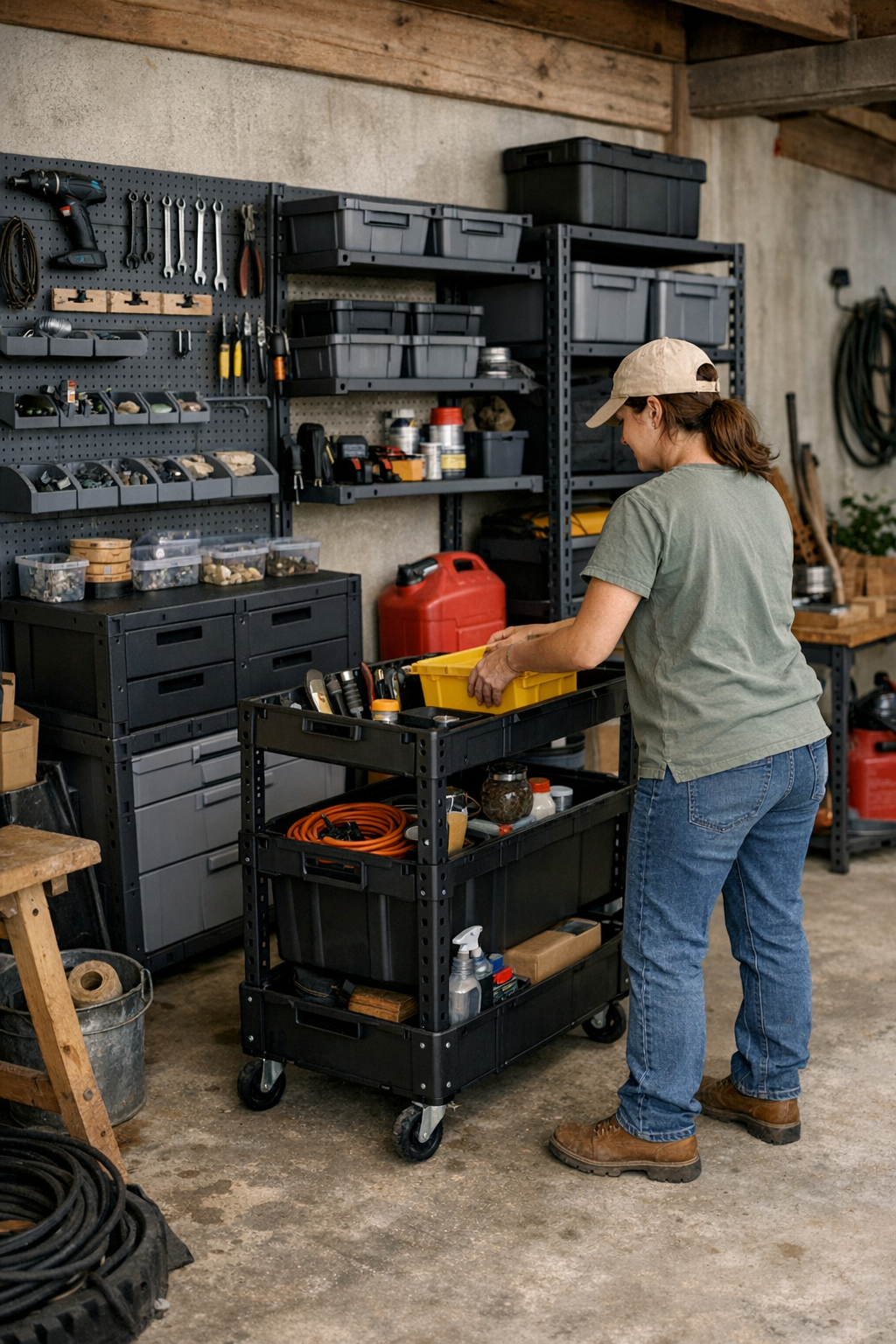
At first, you step back and admire what you’ve built—a row of modular racks, maybe a glossy new storage cabinet, everything arranged with intent. There’s a quiet satisfaction in taming the overflow of hardware or half-finished projects in your garage, workshop, or backyard utility space. For a moment, it feels complete and ready to support the work.
You don’t notice the small points of friction at first. Not until you hesitate before putting a tool back, or sidestep around a mobile cart blocking your way. Even the tidiest systems—wall-mounted, floor-based, or mobile—start to show their limits once you’ve lived with them. The routines settle in, and it’s in the simple acts of returning, resetting, and restocking that the gap between looking organized and feeling organized begins to emerge.
You don’t notice it immediately.
But you feel it.
Where Organization Quietly Fails
No matter how sleek your modular storage or raised-bed system looks on the surface, its real weakness isn’t obvious at a glance. It’s less about how it appears and more about the rhythm of movement it allows.
One week, I switched between a wall-mounted rack and a small mobile cart, thinking the upgrade would solve the problem. Instead, by the next day, overflow just found a new home stacked at the cart’s edge, while the highest rack forced me to stretch or shuffle awkwardly, disrupting what could have been a smooth return flow. It didn’t break all at once—it quietly built up as each trip took a few seconds longer.
The true problem reveals itself when resetting—whether returning a tool to its spot or clearing a section—starts taking more than half a minute. Pathways get blocked, corners fill up. Step by step, the time and effort creep in until the space works against you rather than with you.
The Hidden Cost of Small Delays
Maintenance friction is subtle but powerful. Organization doesn’t fail because of chaos; it fades through repeated little interruptions—a sidestep here, an extra reach there.
Most systems are designed for the first hour of use, not the fiftieth return. That’s when the cracks show. I found that trying to reset any given area in under thirty seconds makes the sticking points clear—a rack too close to the wall, or a cart that blocks passage just enough for me to leave something “for now.” These small delays are nearly invisible but persistent.
A shelf may be easy to reach in theory but still fills with backup parts by midweek. Cabinets that sounded like relief become juggling acts to restock or clear. When it feels too slow or troublesome, the reset simply stops happening consistently.
When Order Makes Room for Routine
This shifted how I thought about storage. Instead of just asking, “Does it look tidy?” I started asking, “Does this reset naturally, every time?”
By nudging things to keep reset time under thirty seconds, dead space and frustration faded. Small adjustments—sliding the cart out of the main corridor, moving the wall rack so it didn’t block flow—changed the whole dynamic. Suddenly, putting tools back felt like a smooth pause, not resistance.
Lasting order isn’t about clever racks or how much storage you have. It’s about reducing friction so reset and return happen without a second thought. It’s about movement, rhythm, and space that invite maintenance instead of resisting it.
Maintenance doesn’t have to be heroic. It just needs to be possible, easy even. Somewhere in the background, the modular setup quietly supports you, leaving no room for clutter to build up.
These thoughts came together while reorganizing my own garage one slow, overcast weekend.



