When Order Turns Into Everyday Frustration at the Door
Entryway storage needing tools to adjust seems steady but becomes inflexible, causing clutter and blockage as daily routines shift.
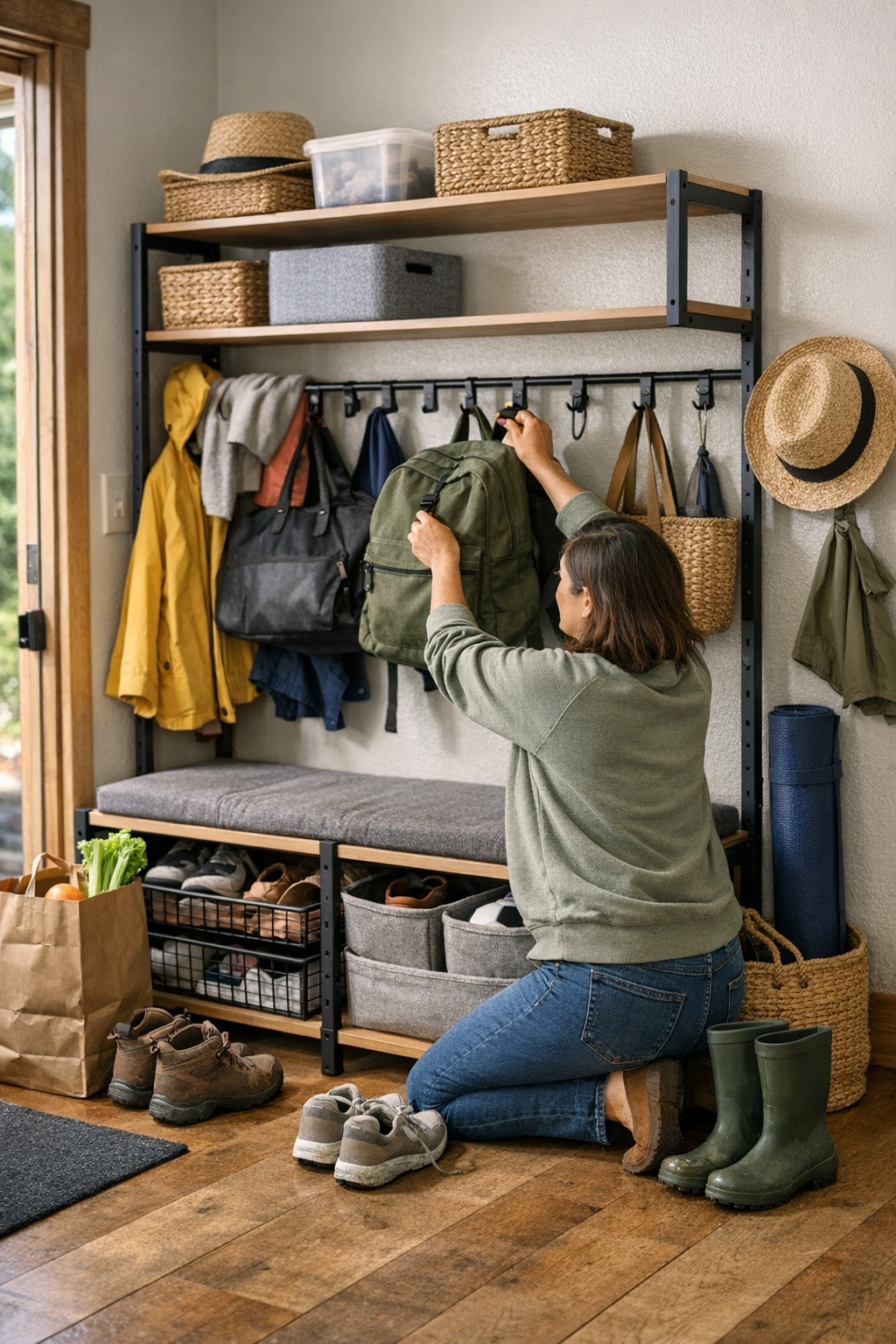
A subtle pressure builds at the entryway—not all at once, but over time. You grow tired of sidestepping shoes that don’t fit neatly in their row or dropping your work bag wherever there’s a gap, knowing the cubby wasn’t designed for bulkier gear. When the storage in this transition space demands a screwdriver to adjust, what was meant to bring order quietly turns into a source of frustration. It looks tidy at first, but it doesn’t keep up when life changes unexpectedly.
The Subtle Accumulation
You don’t notice it immediately. Daily routines remain almost the same—bags, boots, hats claiming their usual spots. But gradually, fixed shelves and bolted benches push back when the routines expand or contract. A new pair of rain boots, wider backpacks, or a change in gear turns the promise of organization into a low-grade bottleneck.
Most real use doesn’t match the quiet weekend layout you planned. Small items end up in temporary spots, edging past the designated drop zone, always waiting for a better system you never quite get around to resetting.
Adaptation, Interrupted
At first, the control feels reassuring: neat rows, just enough hooks, everything mapped out. But reaching for the bottom of a fixed cubby to wedge in kid shoes or shifting bags aside to clear a narrow path tells a different story. Static setups resist the moment-to-moment shifts of a hallway that functions more like a crossroads than a showcase.
The issue becomes clear—the difference between a system requiring tools and time for every adjustment and one that lets you slide, unhook, or scoot things easily in a passing breath. There’s relief in not treating every shift as a small project.
Breathing Room at the Threshold
Swapping rigid dividers for sliding bins and movable hooks eased the narrow shuffle by the door. It wasn’t dramatic, but the passage widened. Shoes stopped piling on the bench edges. The urge to “deal with it later” faded since a quick slide was enough to clear a crowded path after a long day.
Storage that flexes, even slightly, to the week’s traffic leaves fewer decisions hanging. Stepping back, you see that real organization isn’t about perfect lines but about how quickly things bounce back after being shuffled.
I’ve come to think of flexible storage as a quiet welcome—the way a well-considered room opens to you, matches your pace, and gives back a bit of ease right at the edge between outside and home.
If you’re curious where this perspective came from, the Betweenry storefront quietly explores it.



