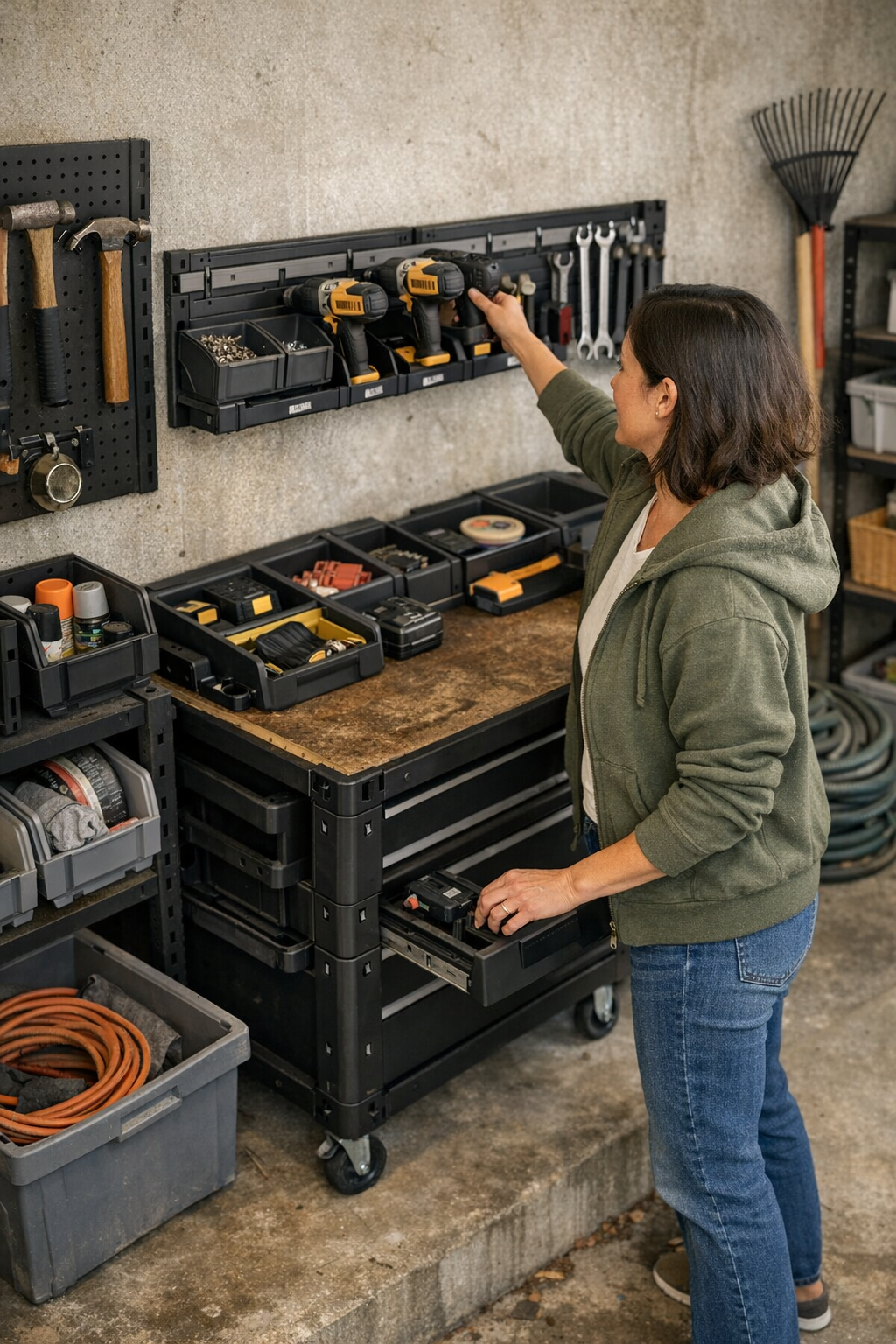
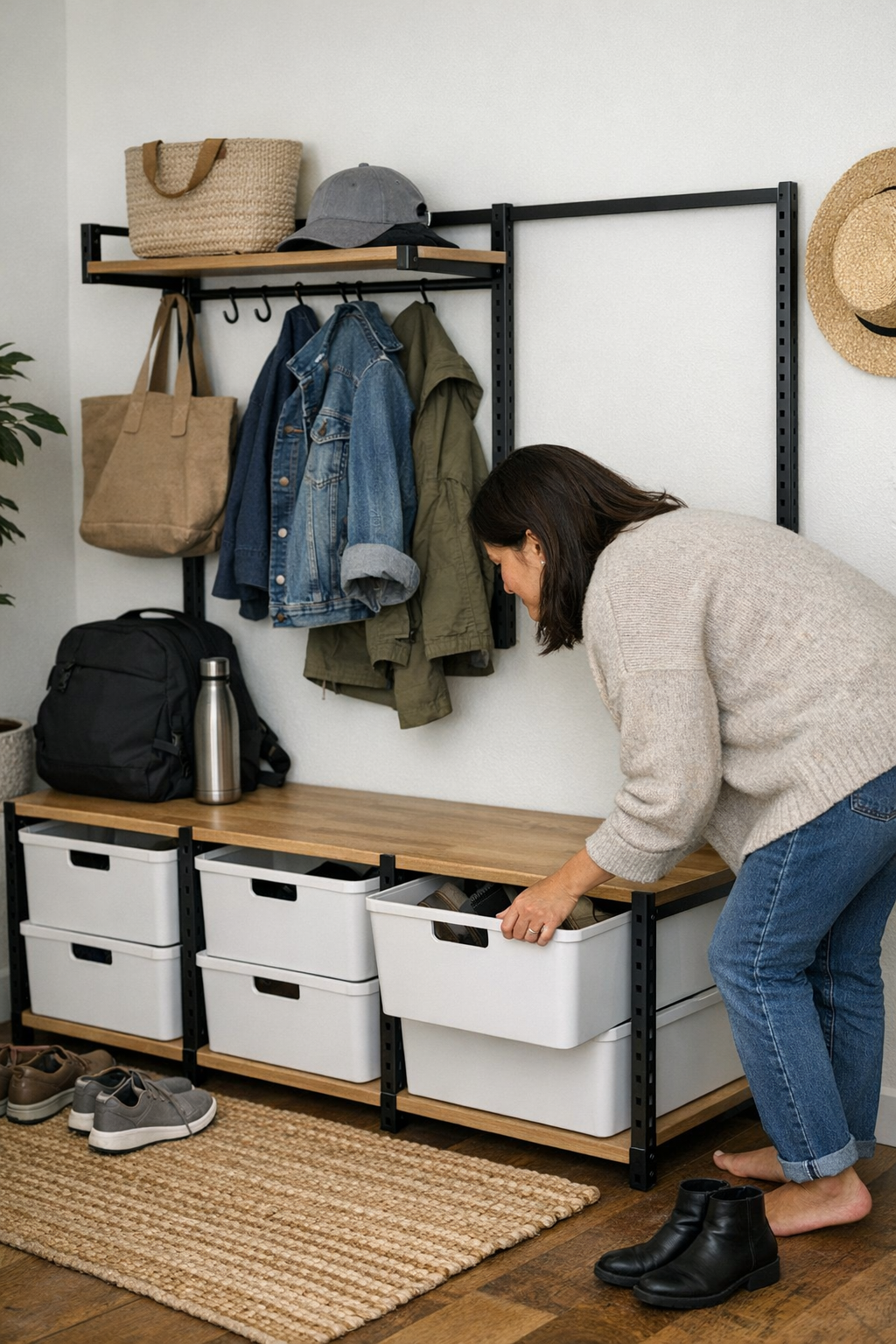
When Organized Spaces Hide Everyday Frustrations
Even well-designed modular systems can cause extra steps due to layout misalignment; aligning setup with natural movement reduces friction.
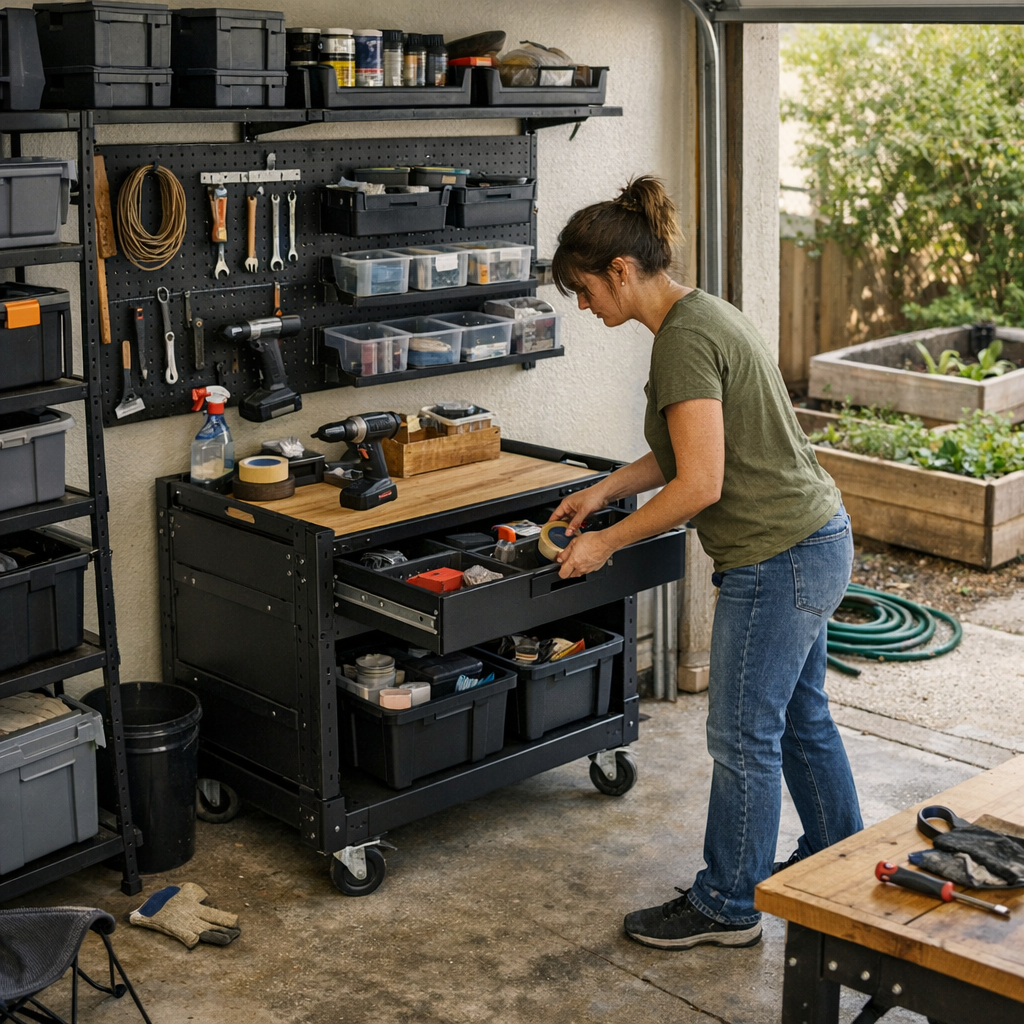
There’s something oddly calming about a tidy garage. Rows of bins aligned just so. A rolling cart with every tool in its place. You pause, maybe exhale, and imagine everything finally just working smoothly.
But quiet order on the surface can mask a different story.
Lately, I’ve been noticing the subtle costs of my own modular storage setup—especially once daily routines settle in. At first, all those polished systems promise easy movement and less clutter. Then come the small, nearly invisible detours: stepping wide, shifting a box, or circling back for what you missed. What’s meant to be effortless becomes a string of almost-right motions, sapping the calm you hoped to gain.
You don’t notice it immediately.
But you feel it.
When Smooth Flow Gets Stuck
The thing about mobile carts and wall-mounted racks is they always work—until your daily rhythm makes them falter.
Maybe it’s the cart’s wheel catching in a narrow path, or the rack blocking your quick return to familiar tools. You adapt without thinking, nudging things aside, retracing short steps. At first, it just feels like background noise.
But each time, a tiny tug pulls you out of flow. It’s the difference between grabbing and gliding—and shuffling and resetting.
These small interruptions only become obvious in repetition. As days pass, you recognize them as the soundtrack to your work: quiet, persistent, almost invisible until suddenly it isn’t.
How “Order” Hides Its Own Chaos
On paper, it’s all lined up—the bins, the cart, the hooks. That quick flush of satisfaction when everything fits. Then real work begins.
You find yourself edging around the cart (was it always just a little in the way?), or returning to end-bins that never seem to stay easily accessible. The tidy wall rack, meant to open floor space, suddenly becomes a barrier just when you want to return a tool quickly.
It’s not about how much is stored or how clean it looks. It’s about whether each move actually feels smooth.
Consider how a cart left just beyond the main work zone starts collecting overflow. Before you realize it, the cart quietly becomes a bottleneck. Not by design, but by placement. A small, repeated burden pops up each time—shift, reach, loop back.
Order isn’t just a look. It’s the absence of hesitation.
Small Shifts That Change Everything
Sometimes all it takes is a pause—a moment to notice the real path your feet take.
I remember, midweek, nudging my cart scarcely a foot and spinning it to open toward my usual approach. Suddenly, the familiar clatter of double-backs and awkward returns disappeared. Access became a single, natural motion, not a two-step shuffle.
What seems like a minor rearrangement becomes a ripple effect; everything after feels lighter, more direct.
Hidden movement doesn’t just waste time; it wears away at the ease your system should provide. The smooth exterior only matters if it matches the living shape of your daily habits and repeated use.
Sometimes clarity returns with a small, honest shift—matching the system to how you already move, not how you wish you did.
Quiet improvements don’t always draw attention, but they change the way a day feels.
These thoughts came together while reworking a dusty corner of my own garage setup.