When Organized Spaces Hide Everyday Frustrations
Selecting organizers without a clear system leads to mismatched setups, blocked access, and constant reshuffling, especially in small spaces.
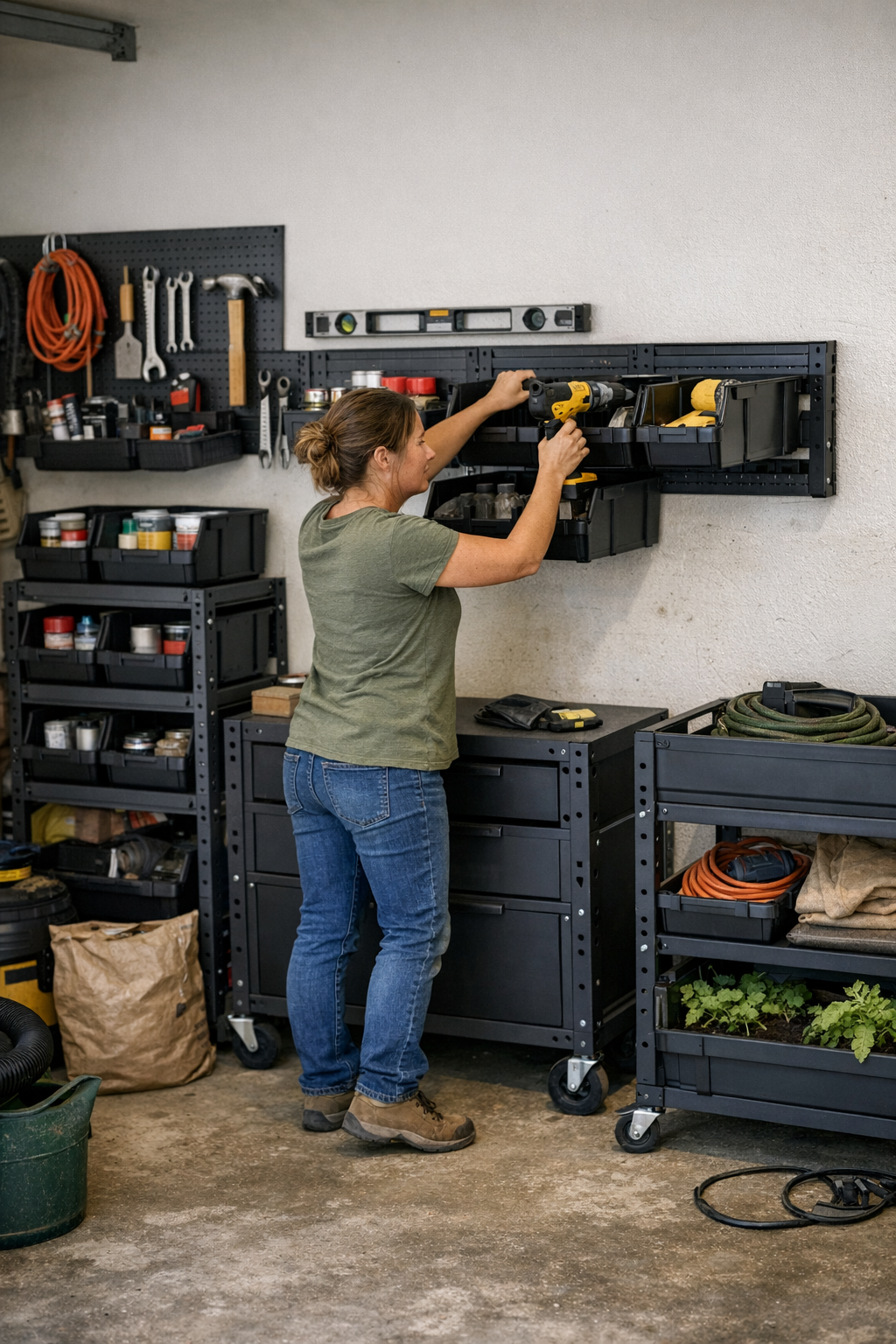
There’s something deeply satisfying about lining up fresh bins or trays, seeing a small workspace transform with just a few matching organizers. For a moment, the clutter falls away, and everything looks calm, almost finished. It’s easy to believe that buying the right storage pieces is the first step toward a lasting sense of order in a garage, workshop, or backyard utility space.
But the reality is subtler, and slower to reveal itself.
You don’t notice it immediately. But you feel it.
As days turn into weeks, the bins start shifting from their tidy rows, nudged out of position as you reach for tools or slide a cart across the floor. Organizers that once looked so promising become small obstacles—just enough to interrupt your flow, but rarely enough to demand your full attention. There’s an odd mismatch brewing between picture-perfect setup and day-to-day movement.
When “Organized” Isn’t Effortless
A shelf filled with coordinated baskets and a pegboard full of new hooks looks like momentum toward better use of space. Yet something happens the first time you have to move three things just to get at one. A basket blocks the only outlet; a tray sits too high to reach with one hand full; a rolling caddy grazes your shin as you sidestep to reach behind it.
The little inconveniences pile up. You start to work around the setup, not with it.
It’s a quiet kind of friction that creeps in uninvited. Instead of making your tasks simpler, the organizers demand extra steps, nudges, and resets. The system you designed for order begins to ask for attention you never meant to give.
Noticing the Real Pattern
Most of us don’t pause to question the arrangement; we simply adapt. In my own garage, I watched as tools found their way into the nearest open bin, hoses gathered in the same awkward corner, and gloves seemed to vanish behind stacked paint cans.
Every time I returned to that space, I needed a little shuffle—a tray to slide, a cart to wiggle aside. A setup that looked orderly for photos never felt quite right in motion. The reset was never complete.
Space has a way of telling you what it wants, if you notice the habits forming.
The refresh came in a simple realization: rather than buying more trays and hoping for the best, I paused. I let the space decide. By fixing a wall rail at arm height, then matching only those bins and trays that truly fit the pattern, movement changed. Now, nothing stacks or blocks; the flow is natural and almost invisible.
When the System Comes First
It’s tempting to treat storage as a puzzle to be solved with the right piece. The truth is, the system—a rail, a panel, even a mobile base—changes everything about how storage works. Once the foundation fits your habits, the organizers finally align with real use.
No more stooping for bins, no more games of Tetris with carts. The small pauses and minor frustrations ease. Over time, you hardly notice the system at all. That’s how you know it’s working.
It’s odd—how the feeling of order lingers, not in matched baskets or visual neatness, but in how easy it becomes to move, to return things, to let the workspace breathe.
Maybe lasting order isn’t about owning the right organizers, but about making space for the right movements to happen—over and over, almost without thinking.
These thoughts came together while I was quietly rearranging my garage and letting the space tell its own story.



