When Organized Spaces Start to Feel Crowded
Organizational setups can seem perfect initially, but repeated use reveals friction; adjustments improve flow and reduce tool pileups.
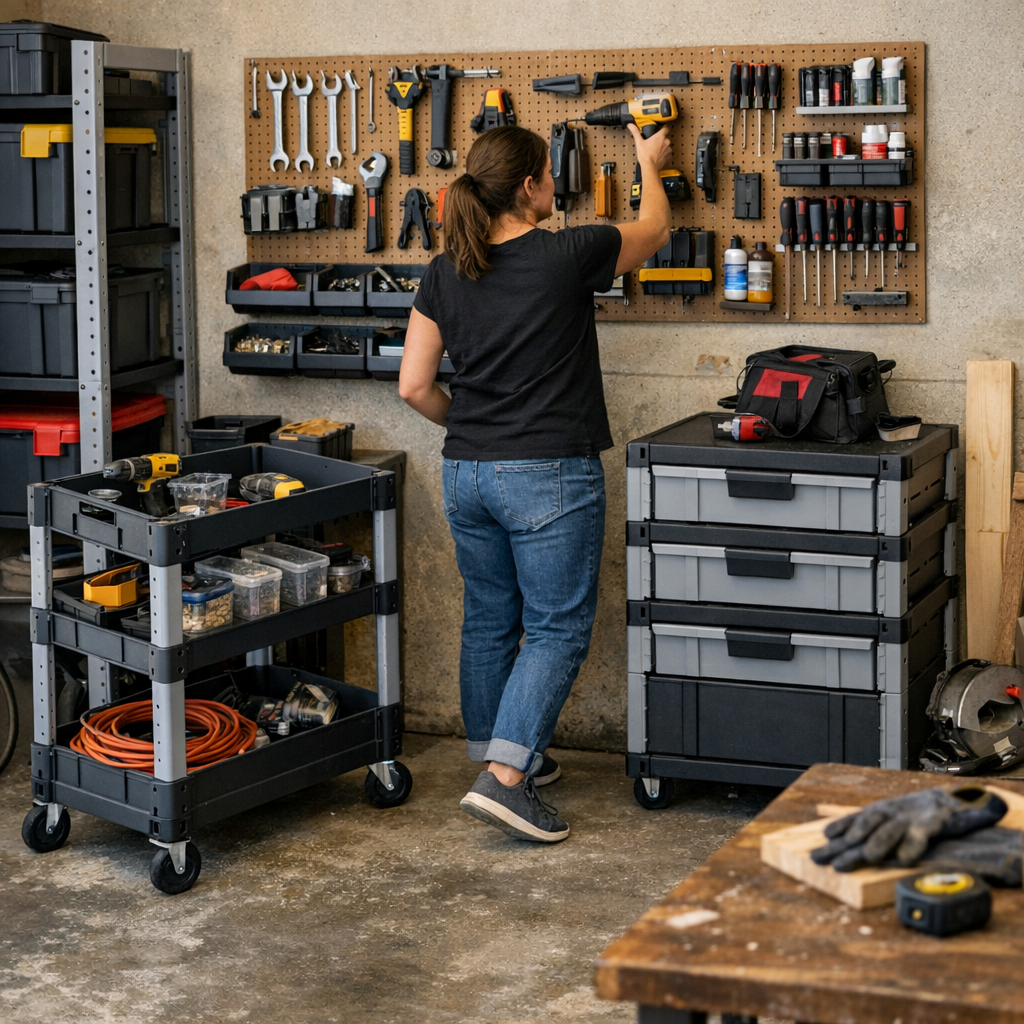
Sometimes, what we expect to bring clarity and ease quietly creates its own kind of friction. Organization looks good at first—a wall of modular storage perfectly lined, mobile carts positioned just so—but the comfort of order can slip away over days, often before we even notice.
You only realize it after a few busy afternoons. What once felt satisfying—every tool with its slot, every shelf balanced—starts revealing new bottlenecks: a cart wedged into a walkway, overflow gathering where you wish it wouldn’t, the smallest tasks taking more steps than before. Tool storage isn’t just about visual perfection; it’s about how well it supports daily movement. When what seems like order interrupts workflow, it becomes a subtle but real problem.
Where Theory Meets Daily Life
On day one, everything gleams—fresh racks on the wall, bins exactly labeled, paths appearing clear. It feels like real progress. Yet within a week or two, the pattern shifts.
You don’t notice it at first.
But you feel it.
You’re detouring around a mobile cart to return a wrench. Someone leaves a drill resting “just for now”—and “just for now” quietly becomes most of the week. Walkways that looked wide enough on paper are suddenly crowded. What was supposed to reduce hassle begins contributing to it, and routines stall on small interruptions.
Seeing the Clues at Eye Level
Picture a pegboard wall—neat, proud in its symmetry—with a cart beneath. The whole scene suggests readiness. But beneath the surface, a subtle mismatch unfolds.
One real afternoon stands out: after bouncing back and forth with a shared drill, I returned to put it away. The cart below its slot had shifted, narrowing the path. At first, I worked around it. By the third trip, threading past didn’t feel worth it; I set the drill down on the closest surface instead. By week’s end, a stray pile had formed—a small overflow cluster that kept growing. Not from lack of intention, but because the path was no longer the easiest one.
It’s rarely the big things that cause trouble. Tiny obstacles appear, and over time, disorder returns, camouflaged by what still looks organized.
Letting the Layout Breathe
The reset isn’t about buying another bin or finding a clever new storage trick. It’s in slight, hesitant adjustments—a cart nudged out of the way, a gap left open in the return lane, main slots kept at a height that feels natural. Suddenly, the flow returns; tools go home quickly, pileups fade, and the system absorbs daily stress instead of adding to it.
The focus shifts from maximizing every square foot to keeping everyday movement smooth. The real payoff isn’t the image of perfect order, but how quietly the space supports you—letting momentum build, not breaking it.
Often it’s the smallest tweaks—a shelf moved, a cart shifted—that matter most on a busy Wednesday afternoon.
There’s a difference between a setup that looks perfect and one that makes you want to keep it that way. The setups that last aren’t flawless; they’re the ones you barely notice, silent in their usefulness, waiting for you to come back.
These thoughts came together while reconfiguring a cramped workshop over a few quiet evenings.



