When Organized Spaces Start to Feel Like Obstacles
Stackable storage bins seem efficient but often cause blocked access and clutter. Lower stacks and separate storage improve flow.
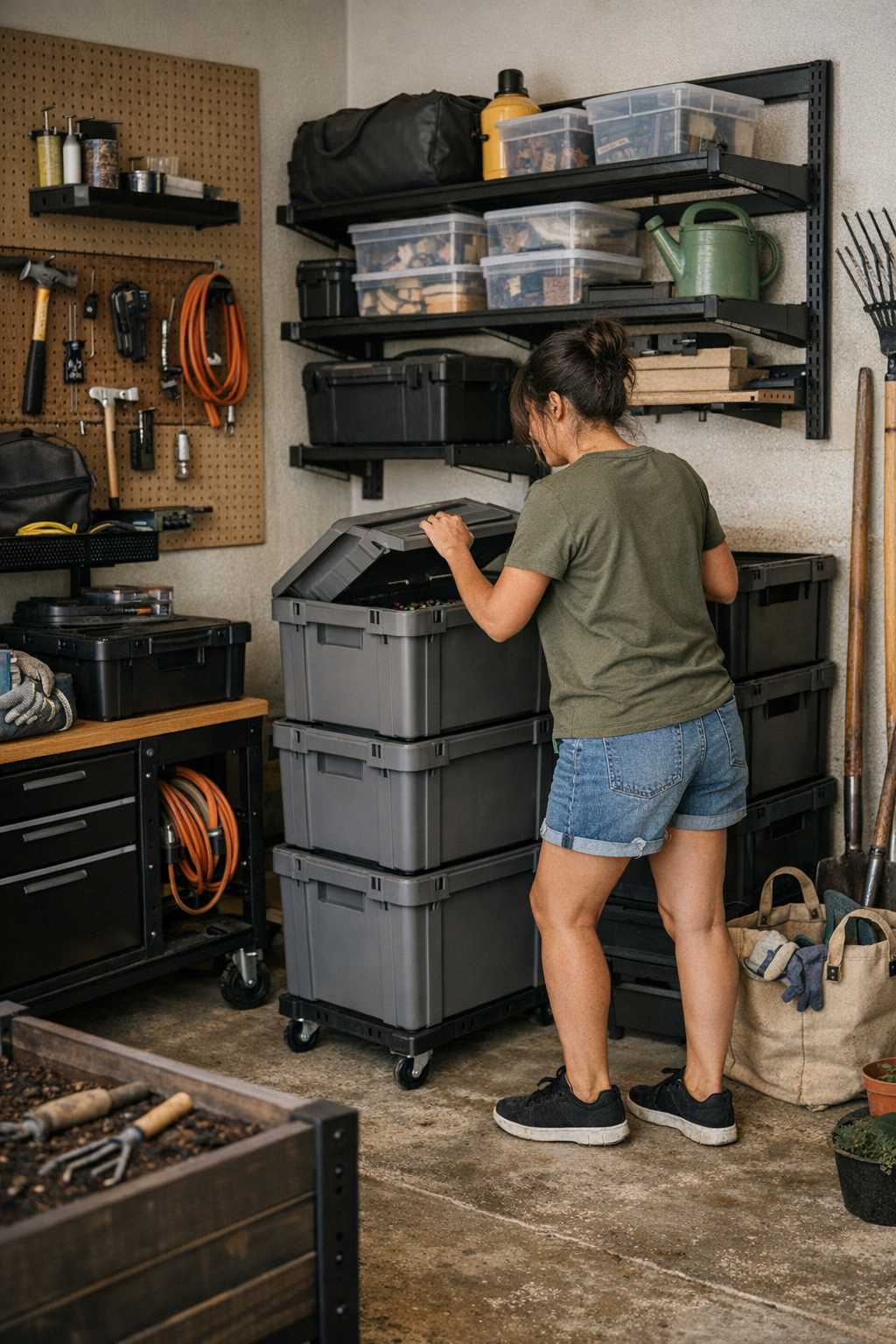
There’s a quiet optimism when setting up new stackable storage bins in a garage, workshop, or small workspace. The rows feel orderly, space seems freed, and hope flickers that this time, clutter will give in. Standing back, there’s a kind of peace in the symmetry—the promise of flexibility, all tucked neatly along a wall or floor.
At first, everything feels within reach. It all slides into place: tools, decorations, odds and ends, each in their own fortress of plastic. The idea feels solid—stacked, contained, efficient. But as weeks go by, a slower shift begins. Piece by piece, the promise gives way to a subtle resistance.
When Stacks Become Barriers
At the start, it’s invisible. But after a few rounds of searching for something, you start to notice the strain.
The bins on top are easy—just pop the lid. But anything lower? The rest of the stack stands in your way. You pause, weighing the effort of unstacking just to reach the second or third bin down. Sometimes, you put it off.
You don’t notice this immediately.
But you feel it.
There’s a small frustration that builds with every added step—a sense that getting to your own things is harder than it should be, slowing down the flow of use and reset in a busy garage or workshop setup.
The Illusion of a Tidy Wall
There’s something appealing about seeing bins lined up perfectly vertical along a wall. For a moment, the space feels controlled, less chaotic. But that neatness is fragile.
Over time, reaching for something—especially if it’s not in the top layer—changes the landscape. Hands full, balancing top bins, it rarely goes back as tidily as before.
In my own setup, what started as a straight line against the wall eventually drifted into the walkway. Trying to swap out odds and ends for a new season or project, what felt efficient at first turned into an obstacle course.
The clutter creeps forward—first a lid, then a full bin—until open floor space disappears, shrinking the usable footprint of the garage or workspace.
The Quiet Shift: Rethinking the Stack
One small change made all the difference: cutting down the height of the stacks—spreading ten bins into two or three shorter towers. This transformed the whole routine.
Suddenly, the things I needed most were easy to grab. The rhythm of resetting lightweight items became smoother, reducing hesitation and unnecessary reshuffling.
This happened almost by accident, but the impact was clear. The old frustration gave way to a space more forgiving to daily change and repeated use, allowing the storage to flex instead of fight against movement.
Sometimes, the solution hides in plain sight: a shelf here for less-used items, a limit on stacking height, or simply accepting a bit more footprint in exchange for better access and return flow. That quiet adjustment creates a kind of ease in floor-based, wall-mounted, or modular storage systems.
I’ve come to think the neat lines of stackable bins hide as many problems as they solve. What begins as order can quietly become an obstacle. But with a few small shifts, space invites movement again—and possibly a little more calm in the everyday mess.
These reflections surfaced one afternoon while reorganizing a garage, half by trial, half by necessity. Here’s where the thoughts found their place.