When Organized Spaces Start to Feel Like Work
Clever storage setups create hidden friction as bins and dividers demand extra sorting, slowing resets and causing daily frustration over time.

There’s a moment when you open a freshly organized closet—baskets aligned, shelves layered, each divider standing at attention—and you sigh in quiet satisfaction. Knowing where everything is brings a calm feeling, at least for now. But over the days and weeks, something subtle starts to shift. The ease you felt gives way to small daily struggles. Scarves slip into the wrong bin. Reaching for a shirt becomes a quick search. Tidiness, it turns out, is only part of the equation. The real test comes later, long after the last label has been stuck in place.
When Convenience Unravels
On day one, clever closet systems invite optimism. Everything slots in neatly, and it seems the routine will flow. But you don’t notice the new obstacles immediately: the slight delay as you nudge aside a divider, the hesitation before stacking one more item in an already full bin.
But you feel it.
The intention behind each compartment was sound—keep things sorted, maximize space—but daily use isn’t as tidy as plans on paper. Life rarely is.
Signs of Unseen Friction
Each morning, familiar actions carry the weight of last week’s makeshift solutions. A belt slides behind the bags, gloves hop across bins, and suddenly the quick grab-and-go becomes a mild scavenger hunt. The closet looks as though organization still rules, yet the categories blur and retrieval slows.
It’s the small frictions—pausing to peek into baskets, rifling past scarves just to find one glove, wondering if that favorite shirt has wandered again—that reveal what’s really happening. Without noticing, you’re working around the system instead of with it.
You don’t notice it at the start.
But over time, it wears on the routine.
Clearing Space for Real-Life Order
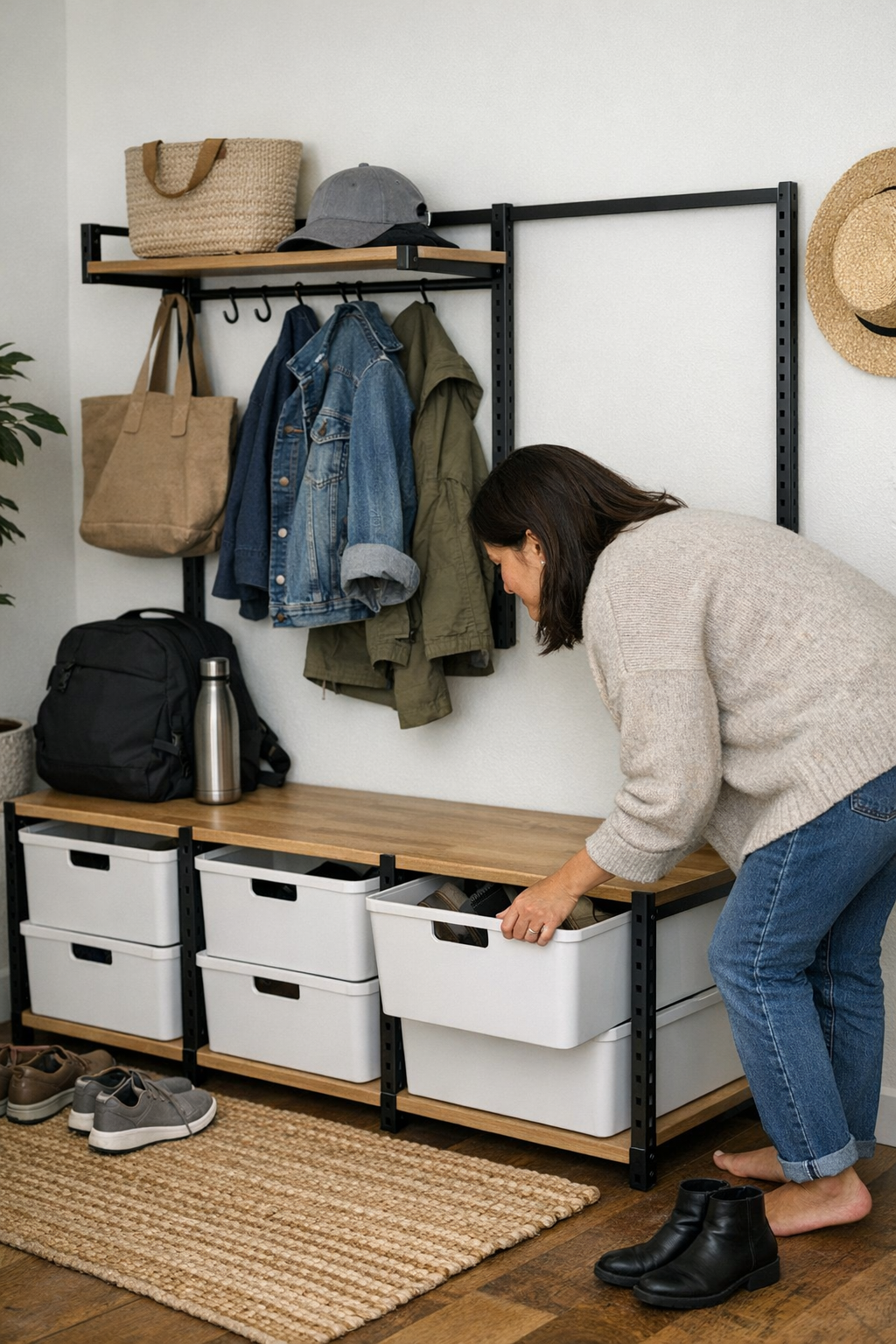
The most helpful changes don’t always arrive with new gadgets or cleverer bins. One afternoon, I took away a multipocket basket and left a single open shelf for just one category. Scarves stopped drifting into the gloves. No more quick calculations about which cubby to use. It looked less pristine, but there was an odd relief in the simplicity.
The closet started to “reset” itself, almost—a drop here, a return there. Nothing special, just easier. The friction didn’t disappear, but it softened.
Maybe the real measure of a useful storage setup isn’t the initial effect. It’s whether the system quietly fits itself to the rhythms that matter, asking for a little less from you each day, not more.
These thoughts gathered quietly while I was reworking a few shelves at home. You will receive a Medium-style blog body.