When Organized Spaces Start to Feel Messy
Most storage looks organized at first, but daily use exposes flaws; simple swaps and dividers ease access and reduce hassle without full overhaul.
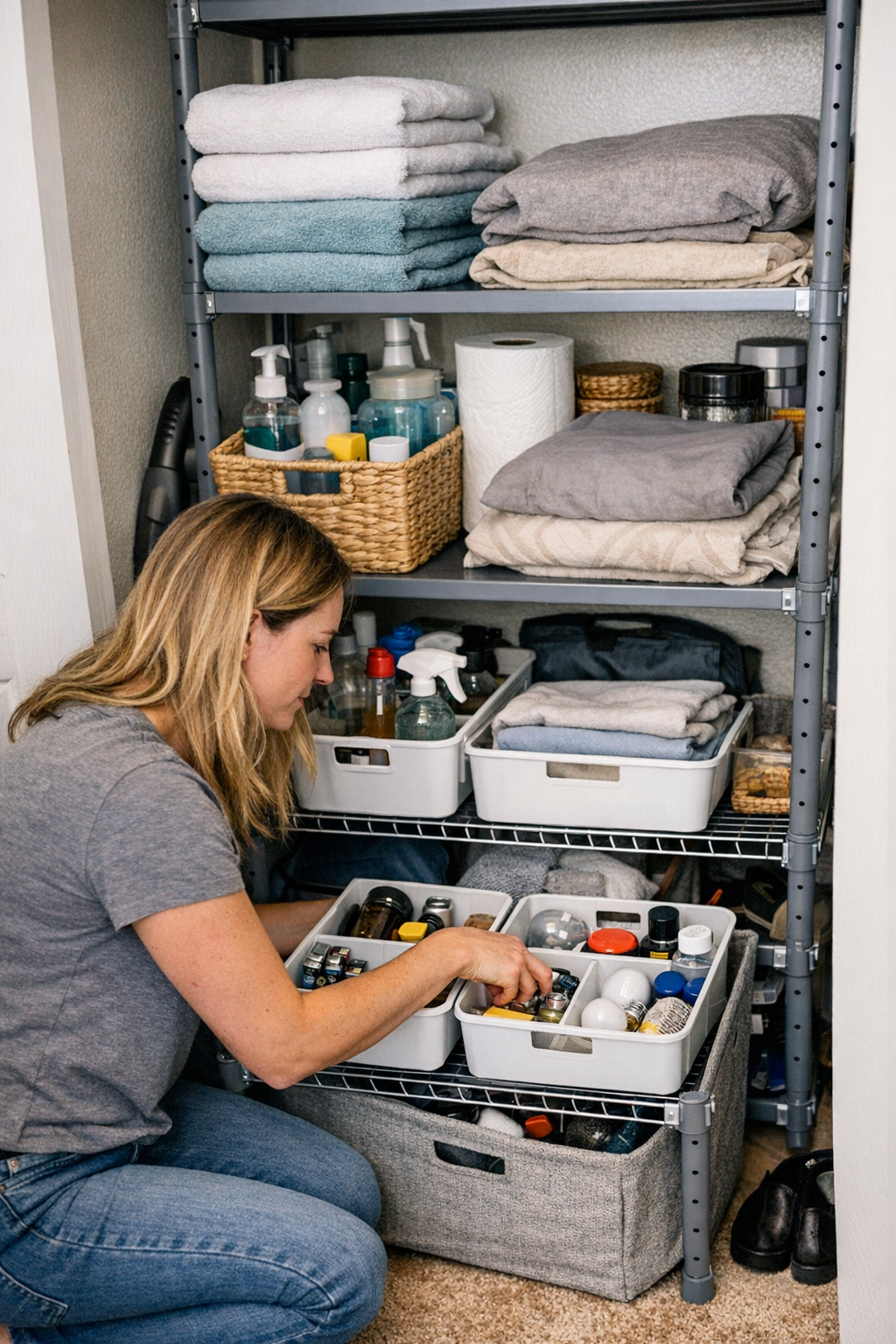
It’s easy to think a closet is finally solved right after you’ve arranged every shelf and bin just so. Satisfaction hums quietly when everything finds its place, and for a moment, order feels simple.
But then, life resumes. Routines settle back in, and what looked perfect a week ago starts to shift in small, almost invisible ways.
This is where the storage system reveals itself — not in the glossy after photo, but in the quiet tug of daily use.
The Illusion of Lasting Order
A closet can look beautifully organized on day one. Shelves are lined. Bins are labeled. It’s tempting to believe the work is done.
You don’t notice it immediately. But you feel it.
A sweater slides out of a too-slippery stack. A pantry can rolls behind another. The sock bin that once seemed perfect now jumbles together after a few hurried mornings. The effort it takes to restore the system — what used to be a quick fix — stretches longer each time.
I’ve watched my own hallway closet slowly absorb loose odds and ends, no matter how tidy it started. One week, the "lightbulbs only" bin collects a box of batteries and a stray tube of shoe polish, all crammed together. You slide the lid back on anyway, trying not to notice that familiar sense of clutter creeping back.
When Surfaces Become Dig Sites
What was easy to retrieve becomes something you dig for.
I remember swapping out a single deep bin for two smaller, divided trays. The change was quiet but real. Suddenly, towels stopped toppling into one another, and the things I actually used found their way to the front. It felt less like rearranging and more like moving with the grain of my own routines.
A refresh like that doesn’t show up in a photo. It just makes mornings run smoother — one fewer step, one less reason to sigh.
You realize the friction isn’t dramatic. It builds as a slow undertow, every time you squint at a shelf or sift through a leaning pile.
The Quiet Cost of Hidden Clutter
There’s a kind of invisible work that comes from ignoring these tiny mismatches.
Left alone, corners collect what doesn’t fit elsewhere. Retrievals slow down as piles lean and lids don’t quite close. Resetting the space becomes a task instead of a habit. You find yourself avoiding certain shelves, letting them become small islands of unresolved clutter.
The answer isn’t always to overhaul everything. Sometimes, just dividing a bin or shifting most-used things forward is enough. Daily life is full of tiny adjustments; your storage should move with you, not against you.
These thoughts came together one evening as I gently reworked a forgotten corner of my own closet.



