When Organized Spaces Stop Working in Daily Life
Fixed shelf heights in entryway storage can’t keep up with real daily items, causing pile-ups and wasted space; adjustable setups fix this.
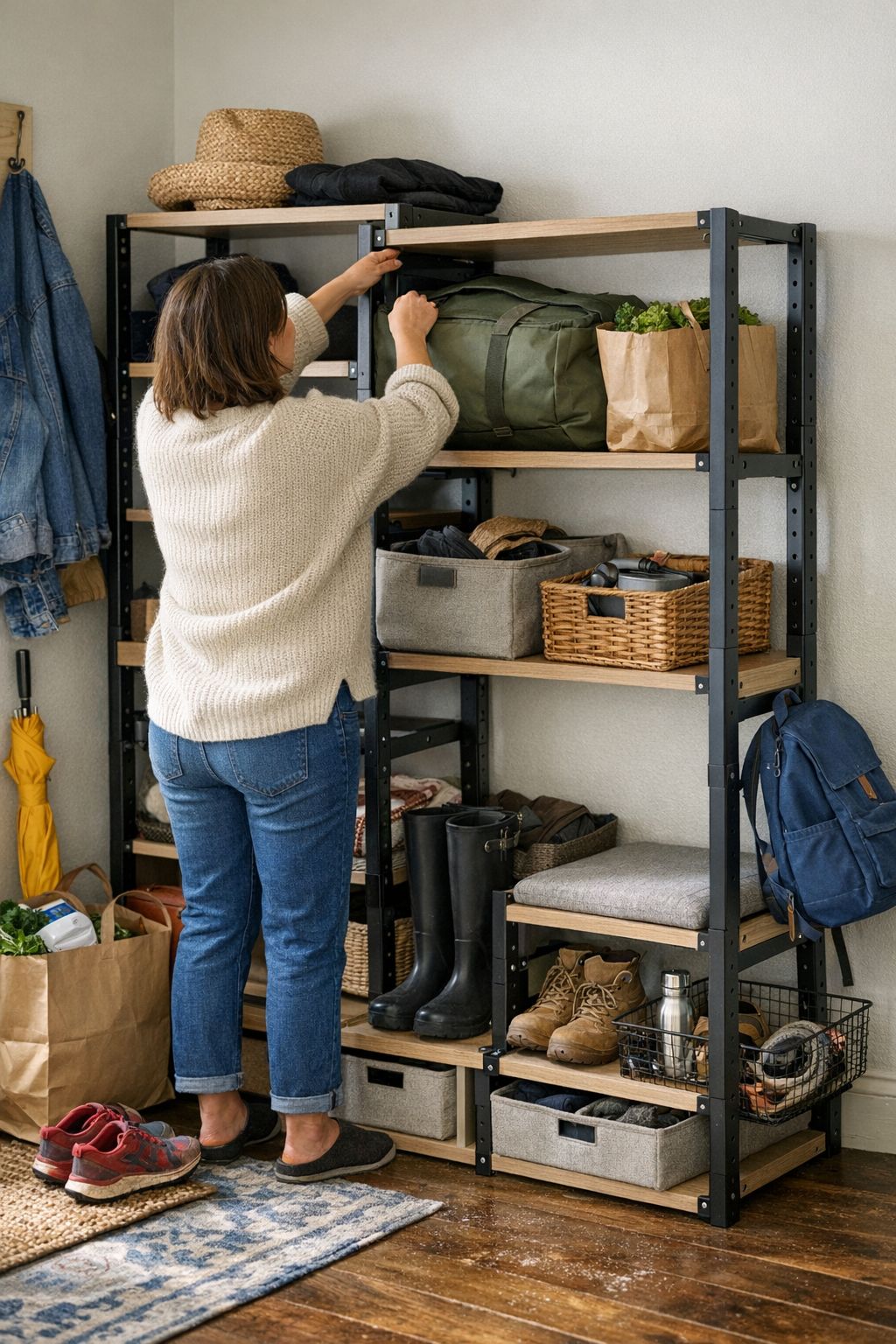
There’s a peculiar ease when a space holds the rhythm of a lived-in day, even just for a moment. I didn’t notice the tension right away—a gentle kind of resistance, almost invisible, where the entryway meets the shifting pattern of arrivals and departures. This is the first place bags land, shoes find their short rest, and gear sometimes piles up before anyone even hangs up a coat. The pull between order and use feels strongest at the point of entry, a space always ready for the next round of movement.
How Quickly “Organized” Becomes Something Else
The first week with a new shoe rack or drop zone setup, everything seems more manageable. Shelves line up, baskets tuck in, and there’s a visible attempt at taming all that transitions through the door. But it doesn’t last long. You don’t notice the shift immediately.
Gradually, the daily routines start to outpace the fixed structure. Wet boots arrive in pairs, but narrow, wall-mounted shelves force them sideways, leaving puddles near the threshold. Grocery bags slump into whatever space remains, often skewed and prone to cracking open. Even the neatest cubby evolves into a holding zone for anything that barely fits its slot. Watching the week’s clutter settle in, it’s clear the “controlled” look was never quite holding against real use.
The Subtle Weight of Repetition
It feels small at first—a bag half-dangling, a row of shoes spreading along the floor. But with each repetition, the gap between what’s supposed to fit and what actually appears widens. The shoe bench or utility cabinet that once looked right starts asking for more attention. Resetting the space takes longer. Shoes pile up on the bench, and the narrow pass-through between wall and storage squeezes even tighter with every new drop-off.
By midweek, overflow stakes its own silent claim on the entry. What held over a quiet weekend gives way under weekday pressure. The real challenge isn’t just visual clutter; it’s the slow, steady threshold pressure that builds when storage can’t flex to handle the mix of gear and traffic flooding the transition zone.
A Quiet Shift—And a Kind of Relief
One evening, I raised a shelf just a few inches and immediately felt the pinch ease. Tall boots stood upright, while gear found new space below. The modular setup adjusted in minutes to fit the rhythm of the day, rather than forcing the day to squeeze into a rigid plan. It was subtle but real—the steady relief of not needing to stack, shuffle, or negotiate passage every time the door swings open.
Maybe the biggest difference is how much less you notice the system when it actually works. Flow returns—benches remain for sitting, not overflow. Walkways clear, even after muddy days or unexpected guests. The structure flexes quietly; mess lingers less, movement reclaims the space.
For anyone curious about the reflections here, they come from lived days and the shifting shape of a truly used entry—some of which is reflected quietly here: http://www.betweenry.myshopify.com



