When Organized Spaces Turn Into Daily Struggles
Complex pegboards look flexible but become high-maintenance as clutter builds. Limiting categories and features eases daily resets.
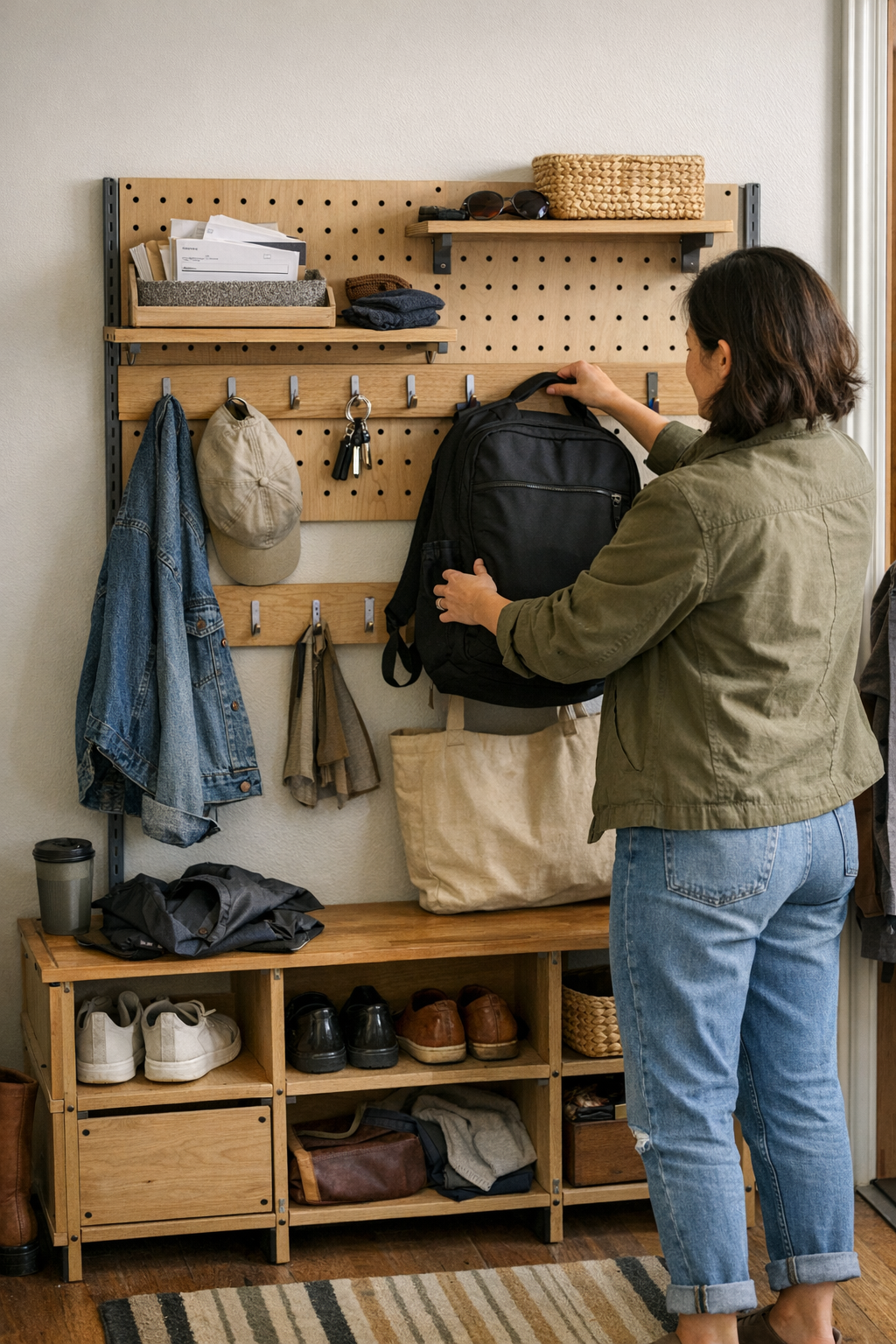
There’s a quiet pressure at the threshold—an odd feeling that hangs where routines cross, shoes pile up, and daily gear gets left behind. I started out hoping to keep every arrival and exit predictable, imagining rows of hooks and small slots holding everything tidy. It was only after watching habits form, dissolve, and return that I began to notice how transition spaces resist that kind of tight order. The entryway pegboard, dense and purposeful at first, slowly revealed its own limits.
When the System Shows Its True Shape
You don’t notice it immediately. At first, even the most intricate transition storage feels ready for anything—a shelf for hats, trays for mail, a peg for every bag and shoe. But all it takes is an off-tempo week for shoes to overflow their rows, or for mail and keys to spill together and never quite separate again. Each arrival brings routines that rarely match the neatly planned arrangement.
I saw this most clearly on terrible weather days: boots stacked above their spots, gloves dropped where they’d dry faster, and the bench edge crowded with fleeting clutter. The original sense of control shifted into a kind of slow friction—the reset after each round of departures becoming heavier, until the pegboard looked less like a solution and more like a task left undone.
Where Convenience Overtakes Categories
It surprised me how little the original categories actually helped when everyone was coming and going at their own pace. One evening, I found two pairs of shoes sharing a peg meant for bags. There wasn’t time to correct the drift, and soon enough the bags themselves were clustered on bench corners or pressed near the door, waiting quietly to be tripped over.
That was the part I kept coming back to. A simple open bin by the bench soaked up more overflow than a carefully arranged wall ever did. There was a strange relief in letting a few things land where they would, at least temporarily, instead of wrestling them back to their perfect spots. The difference was small but noticeable across the whole space: less blocked passage, fewer collisions, and resets that no longer felt like constant catch-up.
Making Space for What Really Happens
I pared down the options—and noticed how the transition zone responded. With only a few shelves, one long row of pegs, and a single wide hook near the door, the space became less about rehearsing control and more about being ready for ongoing change. The obvious boundaries (three pairs of shoes on a lower row, one main landing for bags) meant any overflow stood out immediately and could be tidied up with ease.
You feel it on the busiest days. Instead of a clinging urge to reclaim every inch, there’s space for the mess to show itself, get fixed, and then be forgotten. The occasional crooked shoe or stray bag became less annoying—almost part of the landscape—a steady sign the space is serving its purpose, not failing at perfection.
If you want to see the kinds of modular or pared-back setups that inspired these small changes, you can find more quiet examples here: http://www.betweenry.myshopify.com



