When Organized Turns Overwhelming on the Road
Route overload starts once a pet-travel setup clutters after repeated stops, slowing access. Proper structure keeps essentials reachable, making travel smoother.
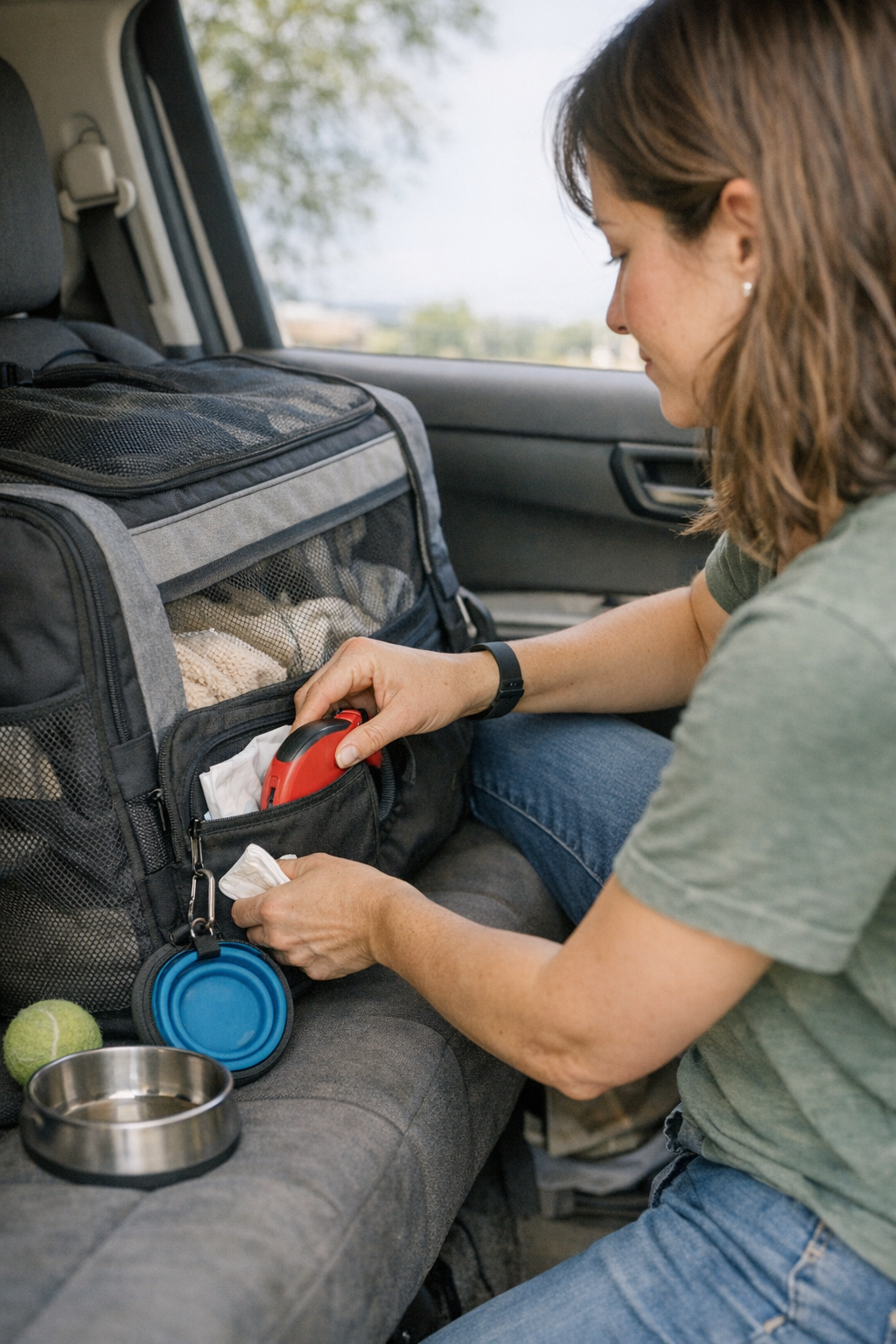
The difference in pet travel organization settles in on day two. Maybe it’s the pause right before you leave again—the sense that everything in your pet travel kit was so well placed at first, but now your hand hesitates. There’s that moment hunting for the leash or wipes, or nudging a travel bowl out of the way. It’s easy to miss until repeated use quietly exposes the friction you never planned for.
You notice it after a few cycles—errands, day trips, those stop-start routines that don’t feel dramatic, just real. The initial sense of control from a tidy, compartmentalized setup wears thin. The little delays begin to add up, each paw wipe or leash grab shifting the arrangement until you find yourself leaving things unzipped, or stashing the bowl loose for next time. What looked organized in the morning feels clumsy before lunchtime.
Organization Isn’t Always Useful in Motion
There’s a funny truth about pet travel kits: the more often you move, the less the original structure holds up. Leash clips end up tangled under backup snacks. Wipes slip behind a spillover stash of toys. One quick clean-up turns into a dig, then a shuffle, then a hunt for the thing you need right now.
It looked fine at first. The slow build only shows up when the next drive comes sooner than the last, and you don’t want to unpack just to get moving. I started leaving certain pockets half-open, then not bothering to restore the original order. That was the part that kept coming back—not the mess, but the sense that the system wasn’t keeping up with how we really used it.
Comfort Is Structural, Not Just Soft
I used to think “pet travel comfort” was about extra padding or upgraded materials, but it’s more about how fast you can settle in again after a minor disruption. When the usual places—seat, bag, door pocket—let you reach and return in the same motion, stress hangs back further. My dog settles quicker when the process repeats calmly, not because the setup is beautiful, but because it doesn’t force a reshuffle every time.
A real refresh comes from moving the most-used pieces—leash, wipes, travel bowl—outward, within a single reach, always in the same place. Instead of tucking them away for the ideal “look,” I keep them right by the bag’s edge, clipped or looped. The biggest change isn’t even speed, but the feeling of fewer micro-chaos moments. Return-to-car stops become smoother, leaving room for small calm—hers and mine.
Returning To Ready Isn’t Automatic
If you end up leaving things out “just in case,” that’s a signal. Clean-up slows down, leash access moves steps further away, wiping paws feels less convenient each time. The original organization fades, replaced by a kind of persistent shuffle. It’s not about neatness alone; it’s about finding a rhythm that really lets you move, again and again.
The setup that keeps moving with you isn’t always the one that looks sharpest right after packing. Sometimes it’s the odd side pocket or add-on clip that ends up making the difference. You figure it out somewhere near the third or fourth repeat—right when another quick stop feels easier than before.
If any of this feels familiar, you can see what I mean here: http://www.pawgotravel.myshopify.com



