When Outdoor Storage Becomes a Daily Challenge
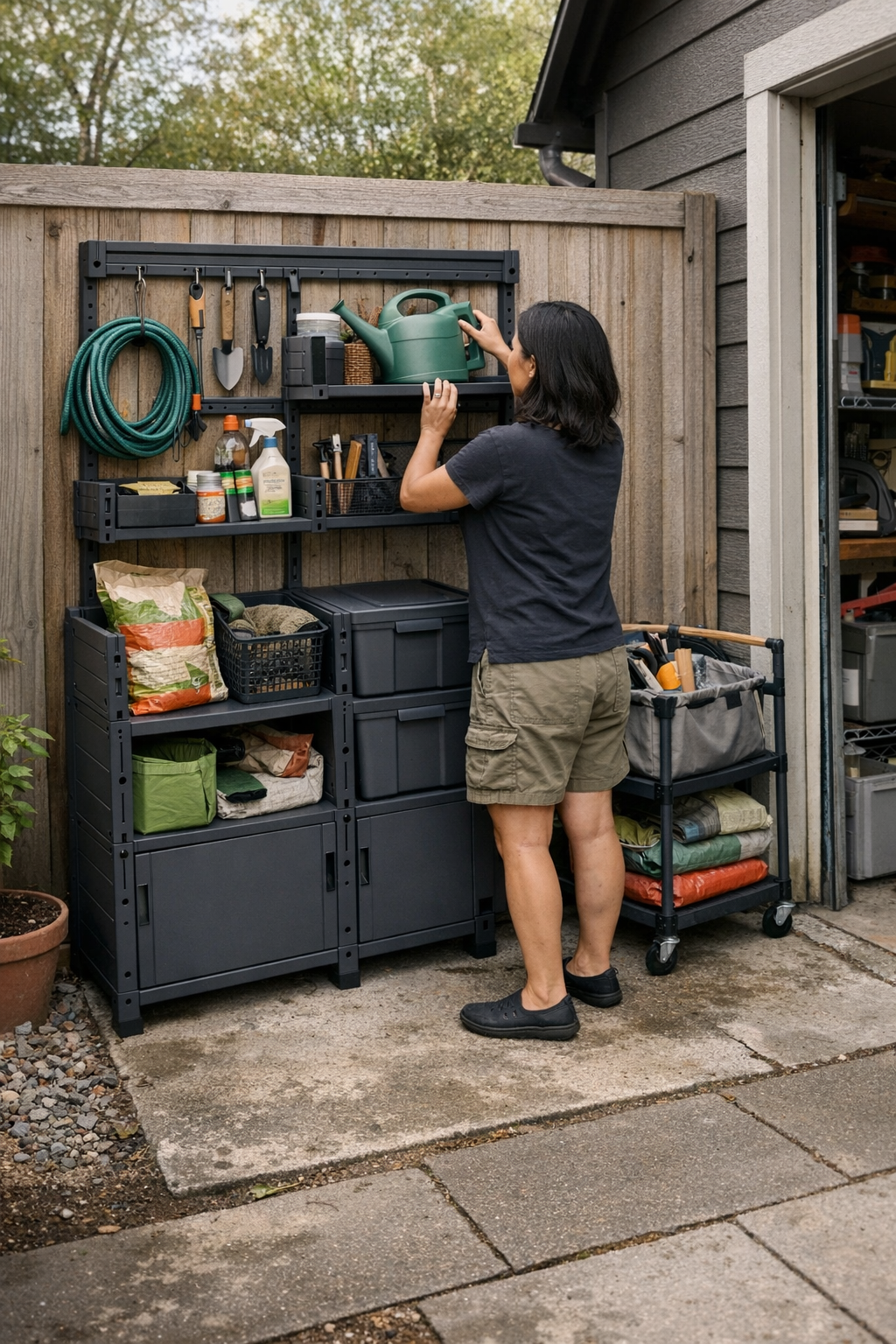
Concrete selection depends on how storage fits your space: wall systems suit light use, freestanding buffer overflow, modular reset faster, and mobile fit repeated moves.
A Place for Everything—Until Life Shifts Again
It’s almost a comfort, that first day you set up storage in the backyard. Everything finds a spot, and for a moment, you can see the promise of lasting order. Yet the strange thing is how quickly that feeling unravels—not all at once, but quietly: the rake leaning against a wall, a bin nudged out of place, clutter creeping back along the edge of the path.
I keep coming back to the idea that storage isn’t just about stowing tools or hiding messes—it’s about how the yard supports the lives lived in it. And not every storage solution holds up once routines settle and seasons roll through.
The Subtle Drift
In the beginning, the system feels solid. Wall racks hold tools neatly, a freestanding shed tucks away overflow, and bins line up empty and ready. There’s a real sense of accomplishment just seeing that order.
But as days pass, small cracks appear. The soccer ball can’t quite fit back in its bin. The garden hose is often left loose after watering. Walking outside to grab something, you find a cabinet blocked by chairs left out from yesterday.
You don’t notice these small shifts right away—but over time, you feel them.
When Setups Meet How You Live
The difference between storage that works and storage that fights your yard's flow is subtle but persistent. A corner unit may turn into an obstacle as seasons change. Wall panels lose their advantage when heavy equipment comes out in the summer. Modular bins solve some problems—until they fill up and stacks aren’t reset.
One thing I now see clearly: if a storage solution adds friction—extra movement, awkward reach, or a blocked path—it becomes a new problem. Even more space can cost you in time and energy, or lead you to avoid parts of the yard altogether.
Every yard has its own flow. The storage that quietly endures is the setup that bends to that flow instead of forcing it into a shape that doesn’t fit.
The Quiet Return Cycle
It’s easy to forget that organization needs a reset—something that feels natural, not a chore every time. The storage systems that stayed easiest for me weren’t just tidy; they were forgiving. They handled overflow without tipping into chaos and made putting things away feel less like a contortion or a detour.
Most of all, it comes down to patterns—how things move out and come back again through weather, weekends, school days. When storage accounts for these rhythms, the effort of resetting slips into the background. It feels lighter.
These reflections grew out of several slow cycles with my own outdoor space. If you want to see where they led, you can find them here: http://www.tidyyard.myshopify.com



