When Outdoor Storage Reflects Everyday Family Use
Storage systems matching actual use in shared outdoor areas reduce clutter and reset fatigue by keeping order visible and manageable.
What Really Holds a Shared Space Together
It’s surprising how quickly outdoor storage can go off track. The first week often looks promising—rows of bins lined up, shelves cleared, a shed that feels more spacious than necessary. Everything seemed in its place. But then, as more people start reaching for tools, chairs, and other items, things begin shifting. One missing trowel here, a forgotten bag of soil just out of sight there. Slowly, the neatly organized setup starts to unravel.
It’s not about carelessness. It’s the nature of shared spaces—items get returned differently, forgotten, or displaced by more pressing tasks. What began as a clear system—floor bins, deck boxes, modular racks—is tested not by intention but by small, accumulated habits. When outdoor gear drifts into the wrong spots, finding it again becomes a chore, and the feeling of order disappears without much notice.
The First Signs Show Up Quietly
It often starts small: gloves tossed on top instead of put away, a rake wedged sideways because the spot is taken. At first, no one thinks much of it. But you feel it nonetheless.
Access slows down. You find yourself scanning a pile twice for a spade or taking extra steps because something isn’t where it was supposed to be. The change isn’t dramatic, but it builds quietly. From experience, neat catalog setups rarely survive repeated group use; it’s as if part of the system dissolves once varied routines overlap.
Visibility Is a Kind of Relief
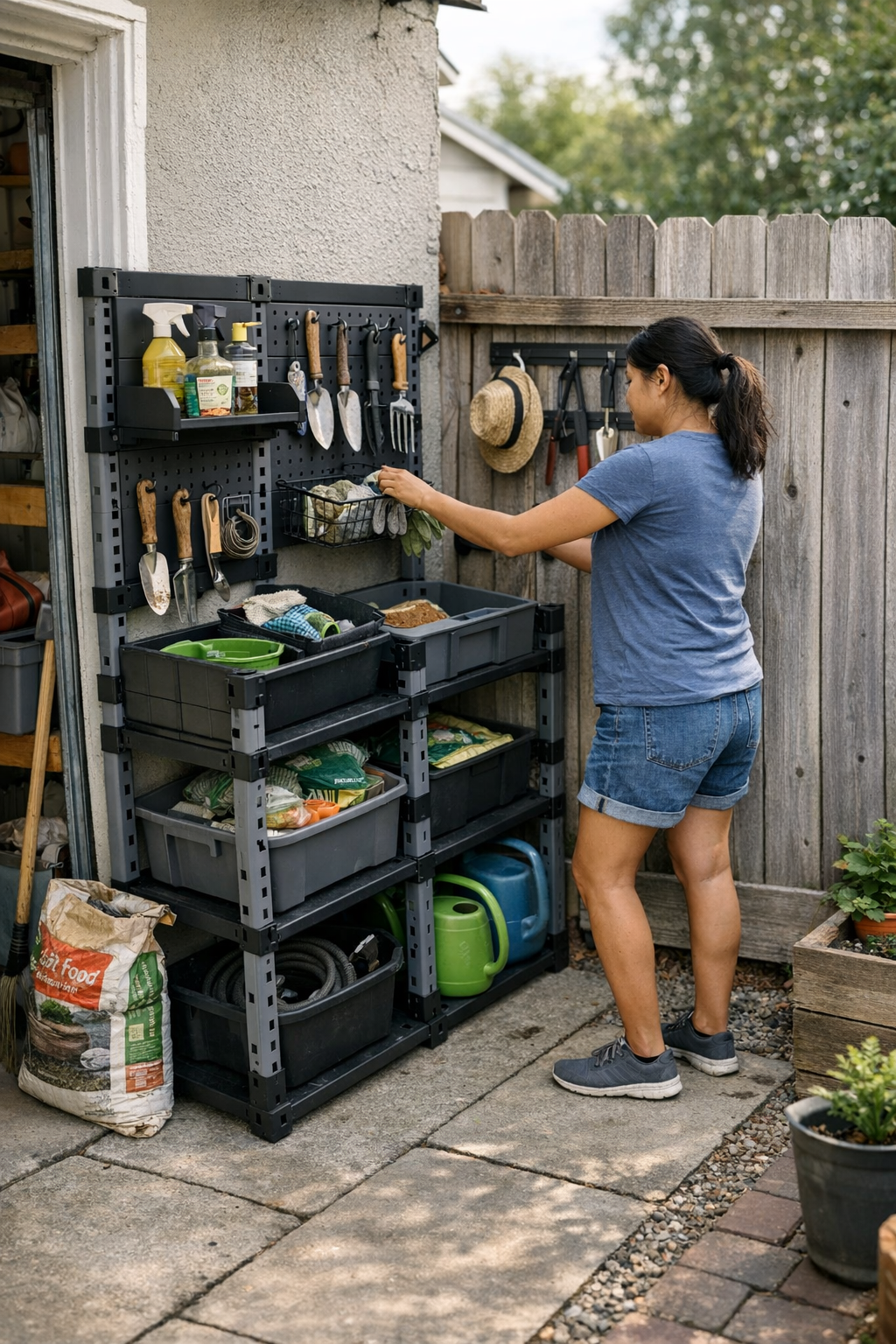
For a while, I thought more space would fix everything—a bigger box, an extra bin, a taller shed. Instead, these just pushed clutter out of sight until it felt overwhelming. The real difference came when I moved the most-used tools to a small wall rack near the gate. Suddenly, finding items became almost effortless. When something wasn’t returned, it was immediately obvious—no more digging or wondering.
You don’t realize this immediately, but knowing what’s missing—as opposed to what’s buried in a pile—is surprisingly calming. Shared spaces soften their edges when accountability is visible rather than enforced.
Adjusting With the Mess, Not Against It
The best setups were those that adapted as the space’s rhythm changed. Wall racks flex when extra hands arrive, while all-in-one boxes tend to bottleneck, pushing gear deeper as more is added. That’s the key I kept returning to: there’s real relief in seeing what’s out and what’s returned, especially after a busy afternoon.
It’s not about achieving a picture-perfect spread. It’s about maintaining just enough order to handle ongoing use—the everyday chaos—without demanding anyone pause for long to figure out where things go. Small, visible changes tend to last the longest.
These thoughts came together while reorganizing our outdoor storage with simple wall racks.



