When Outdoor Storage Shapes Everyday Yard Life
Different outdoor storage types affect yard flow and reset effort over time; choosing the right system reduces clutter and movement issues.
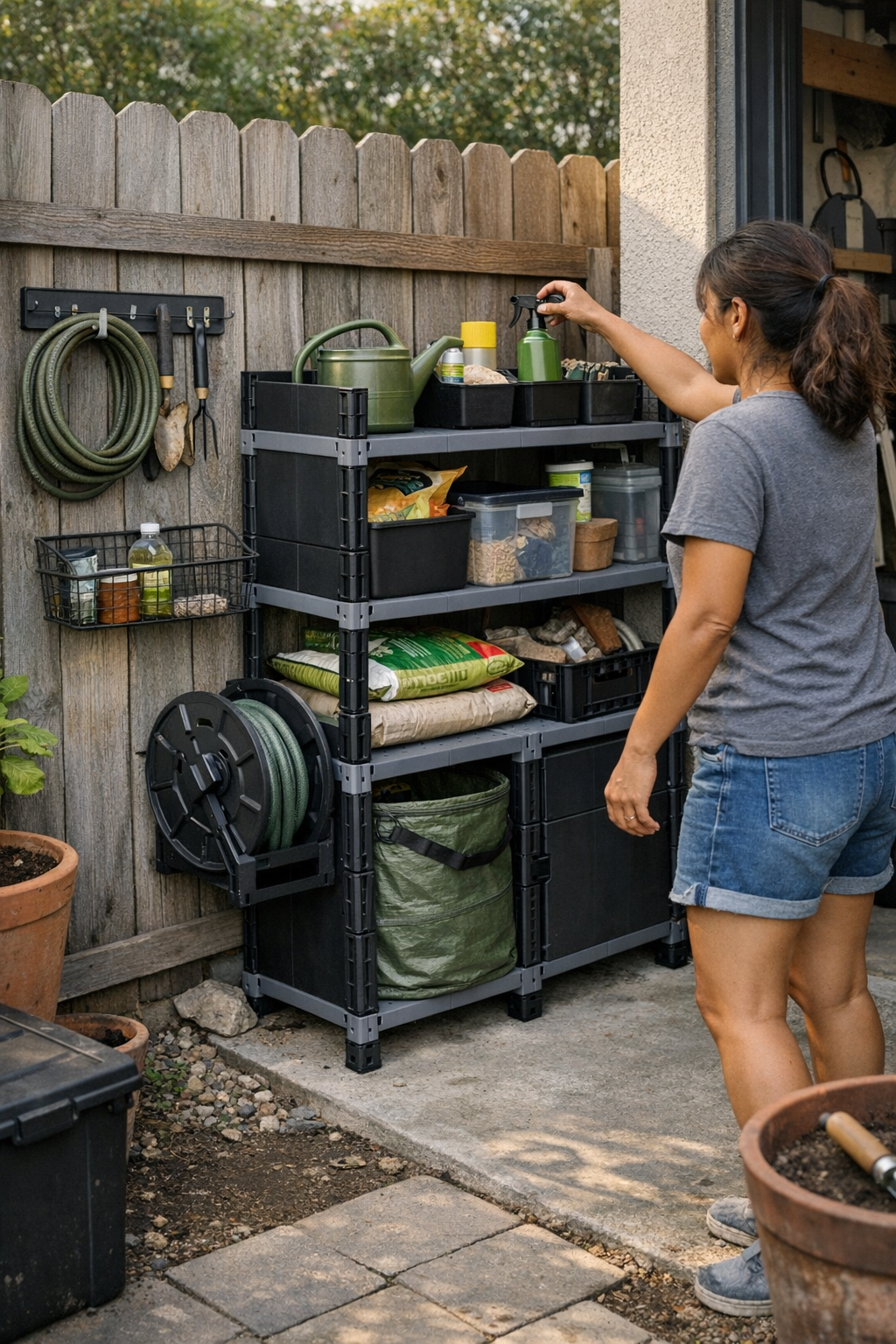
There’s a particular feeling you get when an outdoor space is truly functional—steady, reliable, almost invisible in its ease. But outside our homes, that calm can quickly give way to a slow-building tangle: boots by the gate, hoses snaking across paths, bins nudging into walkways.
It’s not just about “choosing storage.” It’s about how your outdoor storage keeps pace with daily life—week after week, through shifting seasons, and in moments when shared yard space becomes a negotiation. That was the part I kept coming back to.
The Movement We Don’t Notice (At First)
On setup day, it’s easy to admire crisp bins or a freestanding storage unit. But after a few weeks, the true test comes down to flow—how things move, or stop moving, around your system.
It’s subtle. One day it’s a child’s rake, the next a basket of gardening gloves—right in the way of a clear path. The small workarounds build. It becomes easier to step around than put something back. Wall-mounted storage isn’t glamorous, but over time, it holds the line, keeping bottlenecks from creeping in.
That quiet difference isn’t only what gets stored, but how each item finds its way home without friction.
When Flexibility Turns Into Drift
Yards with shifting uses—dinners on the patio, soccer games, gardening sprees—often rely on modular, mobile shelves for adaptability. In the beginning, wheeling things close feels helpful, even generous.
But after a month, I noticed a different pattern. Rolling bins edged into the patio, carts blocked the gate by weekend. The freedom promised by mobility quietly invited disorder, more shuffling than I expected. Sometimes the effort to keep things flexible became another maintenance task.
It surprised me how quickly flexibility blurred the yard’s boundaries. A subtle shift emerged: I began craving not more space, but clearer return paths for items.
The Gravity of Everyday Objects
The true costs show up in quiet, repetitive moments: tangled hoses, shoes left outside the box, small tools wedged into corners. These edges—the overlap between zones—collect the spillover that no system can fully catch.
When storage sits just off the route, items drift; when it hugs the wall, movement stays lighter. It boils down to practical details: grabbing a trowel without moving a bin, having a designated spot for muddy boots that doesn’t block doors. Over time, these small considerations spare more time and hassle than large-capacity containers ever do.
You only notice the lift when visiting a yard that’s quietly working—where you barely think about where to step or where things go. That feeling lingers.
These reflections came while rearranging my own yard and browsing storage options at TidyYard. View the full collection



