When Packing Order Shapes the Flow of Travel Days
Carry-on setups that seem neat at home often cause delays during travel; a layered, accessible structure ensures smoother movement and control.
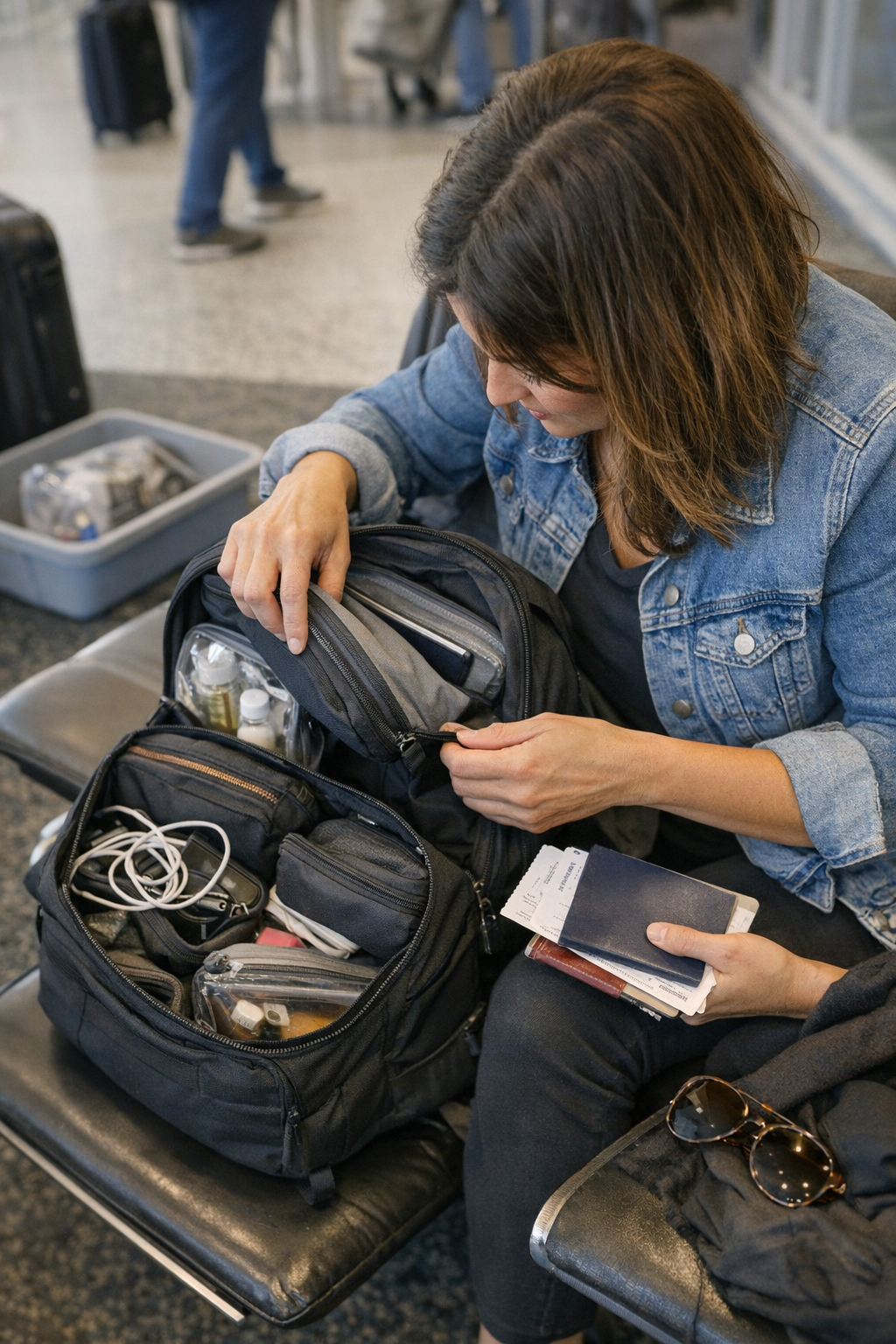
There’s a certain confidence in seeing your carry-on zipped up and tidy, with contents sorted into packing organizers, travel pouches, and tech accessories—all in place and accounted for. Just before heading to the airport, the bag’s structure feels controlled and ready. But later—after repeatedly unzipping compartments or fumbling for a passport in a supposedly dedicated pocket—you realize the shift between order and motion has begun.
This tension becomes clear after a few transitions. The stillness of home packing contrasts sharply with the momentum of travel. The bag looked sorted before, but its logic often collapses mid-trip: separate pockets collide, pouches blend together, and a charging cable gets tangled with a toothbrush. It’s not about how nice it looks; it’s the friction that builds as in-transit routines demand quick access—and the original neatness can’t keep up.
The Real Cost of Overlap
Think about airport security: you unzip one layer just to reach another zipper, sometimes needing to open two or more pouches that look almost identical. A line builds behind you while you search for your boarding pass or your passport in what was supposed to be an organized setup. This delay is the part that sticks with you.
A bag that looks impressive spread out on your bedroom floor can reveal real problems once it’s moving. Overlapping zones—tech gear mixed with documents, comfort items alongside chargers—turn quick retrieval into a series of small frustrations. Each additional step, like searching a buried pocket or digging through mixed toiletries and cables, results in repacking or rearranging mid-trip. You only notice these delays once you’re halfway to the gate.
When Neatness Trips Up Routine
On the surface, matching pouches and a tight layout promise speed and efficiency. But the sameness creates confusion after a few hours. Standing in line with the carry-on at your feet, you ask yourself: “Which pouch has the pen?” You open two or three before you get the right one. I even dropped a boarding pass during this shuffle. The meticulously packed bag, designed for neat completeness, often can’t keep up with needing to grab a single item fast.
You don’t realize how often you repeat these motions until forced to repack items in a rush. At security checkpoints, within narrow airplane aisles, or struggling with overhead bins—the interruptions reveal a subtle mismatch in your packing logic. The neat structure resists clutter well, but it fails under the pressure of real, repeated handling.
Resetting for Rhythm
After several trips, I changed my approach. Comfort items became grab-and-go, tech stayed in one dedicated zone, and travel documents were always accessible within a single zip. The pouches lost their perfect symmetry, but each found a clearer purpose. In the tight airplane seat, I could pull what I needed, pocket it, and move on without awkward pauses or extra handling.
This setup looks less curated, but in practice the bag stayed calmer. The carry-on answers to repeated hands, not just to a neat visual order. Fewer double-handlings, fewer mistakes, and smaller pauses in moments when stress typically builds. Over time, this is what actually lightens the trip.
There’s more detail here, for anyone curious: carryonsupply.myshopify.com