When Pantry Order Fades: The Quiet Battle of Shelf Choices
Shelf baskets organize drifting groceries, hold crowded edges, and support quicker resets, while open shelves blur categories and slow access over time.
There’s a certain satisfaction in a freshly organized pantry. Jars align in perfect rows, boxes nestle together, and everything gleams with the promise of efficiency. You linger, proud, maybe imagining that midweek breakfast will be just as seamless. Yet, it’s not until the fifth rushed morning that you notice how the order quietly slips away.
We don’t really think about the spaces we move through—until something starts to slow us down. In a busy pantry, that means the slow creep of clutter, most obvious when you’re nudging packages aside to find a single, elusive jar. The choice between open shelves and baskets seems small, but over time, it’s what shapes how you move through your day.
The Illusion of Open Space
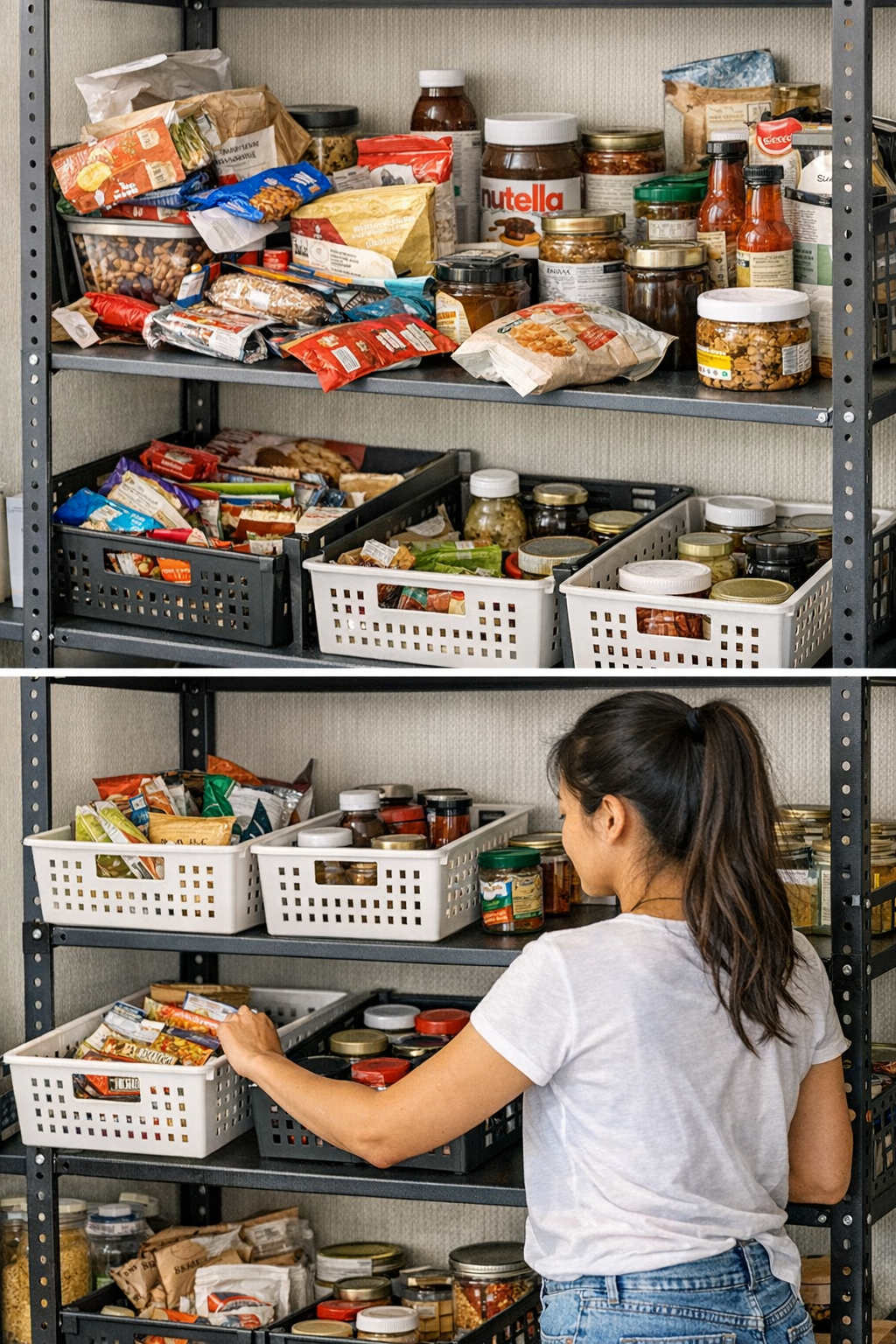
Open shelves look inviting at first—neat, visible, full of potential. There’s a sense of calm in seeing everything at once, categories perfectly lined up. But then life happens. You grab a snack, someone else stacks new groceries on top, and slowly, the rows start to slip.
You don’t notice it immediately.
Bags edge forward, packets lean, and the visual calm gently dissolves. It’s the slow kind of disorder, the type that creeps in quietly while you’re busy with something else. By the end of the week, tiny daily choices have created a shelf where lines blur and restocks feel like a juggling act.
Borders That Hold the Center
Shelf baskets reveal their value in the middle of this steady drift. There’s a comfort in boundaries—loose items corralled together, categories kept in their own space. With a basket, each group of snacks, bottles, or bags sits within its own clear border. Even a messier heap becomes contained.
But you feel it.
Resetting becomes less of a chore when you can sweep a handful of items into a bin, instead of negotiating rearranged piles. Sometimes, just that simple edge—the reassuring boundary of a basket—makes the routine lighter. If you’ve ever found yourself balancing a tower of boxes just to get to a single bag of chips, you start to appreciate anything that keeps things simple.
There’s a small moment of relief when you pull out a basket and everything you need is already gathered.
How the Routine Shapes the Space
The real test isn’t on day one; it’s in the patterns that follow. The pantry that looked so organized at first quickly reflects the rhythms of daily life: quick breakfasts, hurried dinners, last-minute restocks. Open shelves might win for style, but over time, the edges grow crowded and categories wander.
I noticed the shift during one ordinary week, when reaching for breakfast bars meant moving three different things first. Swapping in baskets, suddenly, I could clear a whole category with a single move. No more rearranging every time—just a quiet, predictable rhythm that didn’t ask for much attention.
Sometimes we think organization is about appearances. Really, it’s about how easily we can return things to their rightful place, even on the busiest days.
Some visibility gets lost in the switch—closed baskets offer privacy, while clear ones let you see more at a glance. But the exchange feels worth it, especially when you’re no longer searching for that one missing spice. The moments saved add up quietly.
And maybe that’s the secret: little boundaries make room for everything else to run smoother.
These thoughts came together while reorganizing my own too-often-forgotten kitchen shelf.