When Pantry Order Meets Everyday Chaos
Choosing mesh baskets improves access but loses small items; solid bins contain mess but hide inventory; combining both reduces clutter and speeds resets.
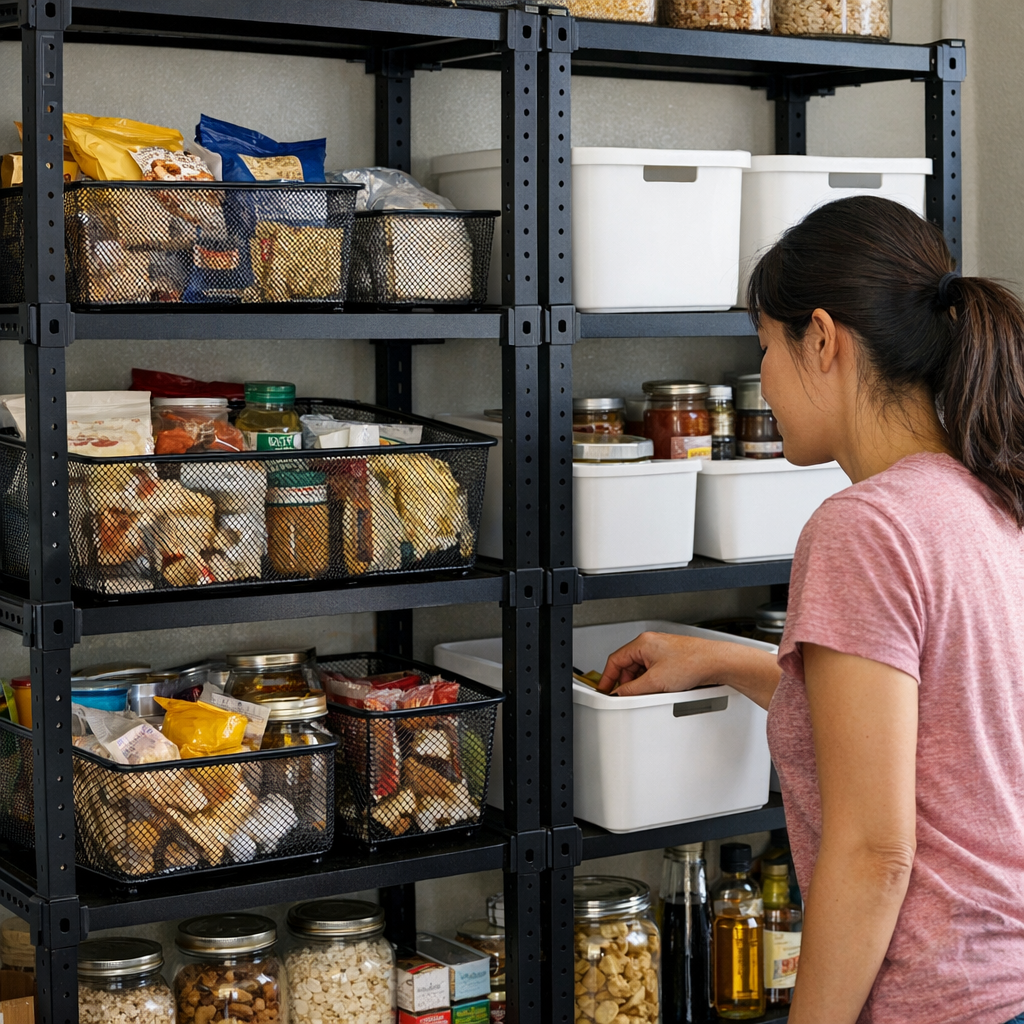
It’s easy to feel good about a freshly organized pantry. Everything has its place; shelves look orderly, and the chaos of grocery day seems tamed—at least for a moment. But as days go by and the rhythm of daily use returns, something quietly shifts.
You don’t really notice it at first. One morning, you rush to grab a snack. Another, you go hunting for a spice you could’ve sworn was stocked. A subtle tension grows each time you reach, search, and sift. The kind of friction you only feel once the initial satisfaction fades. Pantry storage isn’t just about where things sit, but how easily they fall back into disorder.
The Illusion of Order
On day one, mesh baskets and solid bins both shine. Mesh allows a quick scan—everything visible and within reach. Solid bins, in contrast, conceal the mess and promise a tidy surface. But the real story reveals itself on a busy weekday morning, with hands reaching for lunchbox snacks and breakfasts half-assembled.
You don’t notice it immediately. But you feel it.
A mesh basket might help you spot the oat bars at a glance—until a small packet slips through, wedging itself beneath the shelf. Solid bins capture all the loose pieces, but their opaque sides also hide things away. It becomes a small ritual: opening, rummaging, forgetting, then finally giving up after not finding the dressing you thought was there.
Where Friction Hides
Messiness doesn’t always look like clutter. Sometimes, it’s the lower layer of stress when a simple search takes a few seconds longer, or an overlooked bag of seasoning goes stale at the back of the shelf.
When every grab-and-go is a tiny struggle, organizational “systems” add rather than remove friction. Mesh baskets become traps for crumbs and runaway packets. Solid bins become little black boxes—out of sight and, more often than not, out of mind.
Somewhere between these two, daily routines slow down. You can sense the drift—items left out because it’s quicker than lifting the bin again, categories blending as you shove a new purchase wherever it fits, old sweets forgotten at the very bottom. A pantry can start out perfect, but it rarely stays that way.
A Gentle Perspective Shift
I watched my own pantry evolve this way—organized on Sunday, disheveled by Friday evening. At some point, I tried mixing things up: mesh baskets for bigger things, solid bins for the loose packets.
Suddenly, the reset after grocery shopping was smoother. There were fewer lost snacks and less temptation to just leave something “for later.” The lines between categories held firmer. Even a small change—a quick glance into a mesh side or knowing which container held the rogue ketchup—shifted the routine from chore to small relief.
What stays is the realization that storage isn’t static. The best arrangement is the one that flexes with your habits, quietly reducing the moments you waste searching or reorganizing. And that, more than the bins themselves, changes how a pantry feels over time.
Most solutions aren’t found in a single product, but in matching method to the way you actually live and reach for things each day.
These thoughts settled in quietly while reorganizing my own shelves this spring.



