When Perfect Storage Meets Real Life Chaos
Perfect compartments fail in daily use as rigid boundaries can't adapt to item shifts; flexible dividers and margins ease resetting and organization.

There’s a peculiar comfort in tidiness—the kind that comes from a closet filled with rows of neat, measured compartments. You close the door on visible clutter, feeling the faint relief of everything in its place. But over time, that satisfaction shifts. What initially offers peace can quietly become a source of friction.
It’s only with daily use that you notice something isn’t working the way you hoped. That drawer that once held every sock and glove in flawless order—that shelf where every bin fit just so—doesn’t feel quite so effortless anymore. Compartmentalization, for all its promise, can start to reveal its limits.
The First Signs of Resistance
At first, everything feels orderly and satisfying.
But eventually, you feel it: a slow jam, a drawer that won’t quite close, a winter hat that can’t be coaxed into a slot built for lighter days. Those crisp dividers you carefully measured become a quiet reminder that life rarely follows straight lines. Categories blur when a season changes, or an unexpected guest leaves a scarf behind.
It’s a soft kind of chaos. You may not notice it immediately, but the friction builds.
Real life doesn’t stay uniform. Compartments don’t stretch when your routine shifts.
Where Neatness Falls Apart
Labels and clean lines project control, but a system designed for sameness stumbles on variety.
One cold morning, you come home with an oversized pair of gloves—just practical enough that you know they’ll become part of the regular rotation. There’s nowhere obvious to put them. So you tuck them between bins, or balance them on top, making a mental note to “fix it later.” Before long, overflow leaks into whatever space is left: the closet floor, a hallway chair, that one hook that always seems to be overburdened.
Sometimes the struggle isn’t with clutter itself, but with a setup that resists change.
What was once efficient becomes a quiet source of guilt: why is putting things away such a chore? The answer, I’ve noticed, is almost always rigidity, not messiness.
Leaving Room for Change
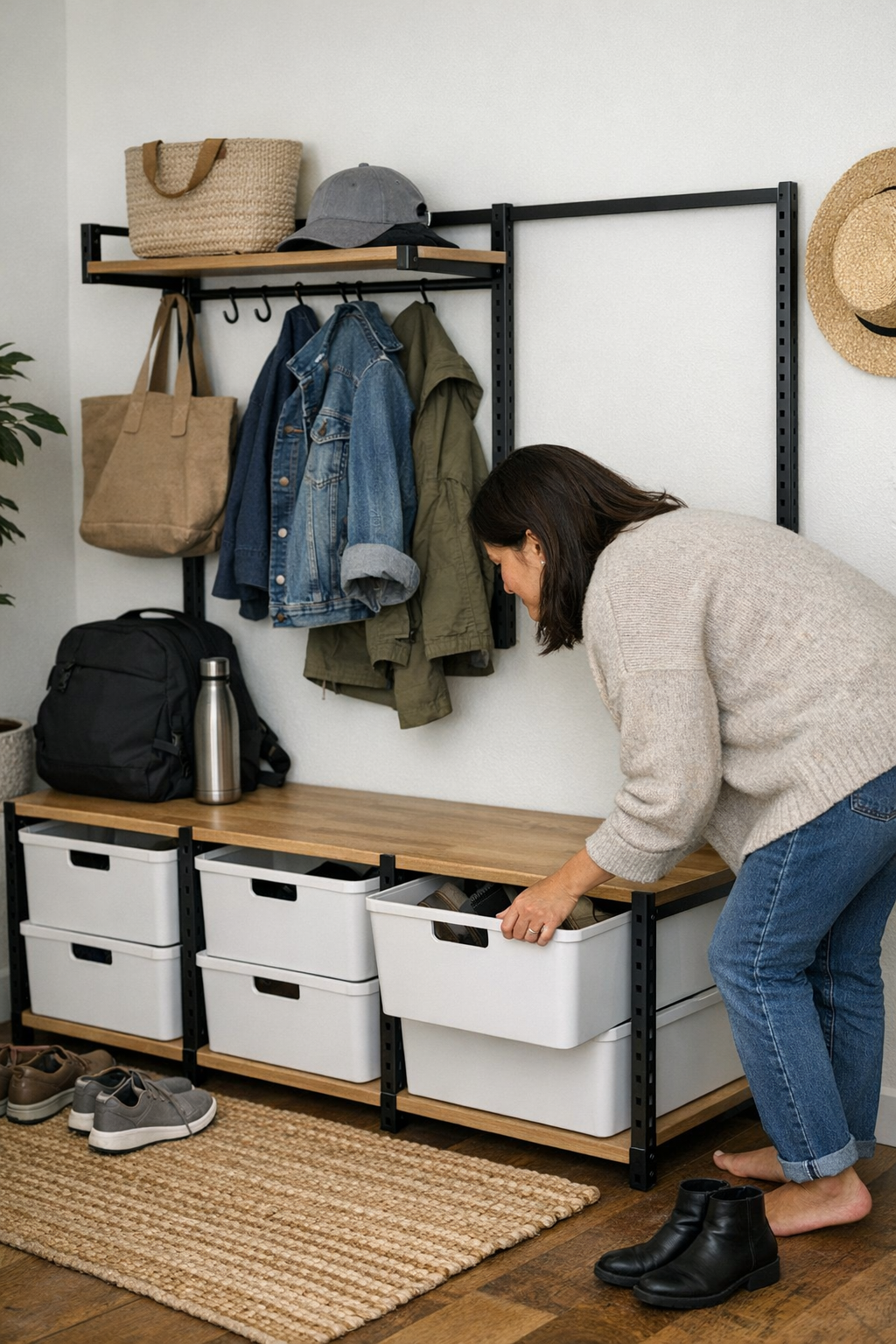
One small shift made all the difference—removable dividers, or even a couple inches of open margin, turned tidying from a fight into a gentle rebalancing. Suddenly, the closet absorbed new arrivals or seasonal extras. There was a bit of slack in the system. Resetting became less about forcing things to fit and more about guiding them back to a rough outline of order.
It felt like exhaling after holding your breath. The right setup, it turns out, isn’t about perfect containment, but about allowing a little give.
Sometimes the best order comes from giving up on perfection and making space for what’s next. These thoughts first took shape as I adjusted the bins in our family hallway closet.