When Portable Storage Stops Feeling Like a Chore
True portable storage works only if anchored and designed for repeat use, keeping clear access and stable, efficient return flow.
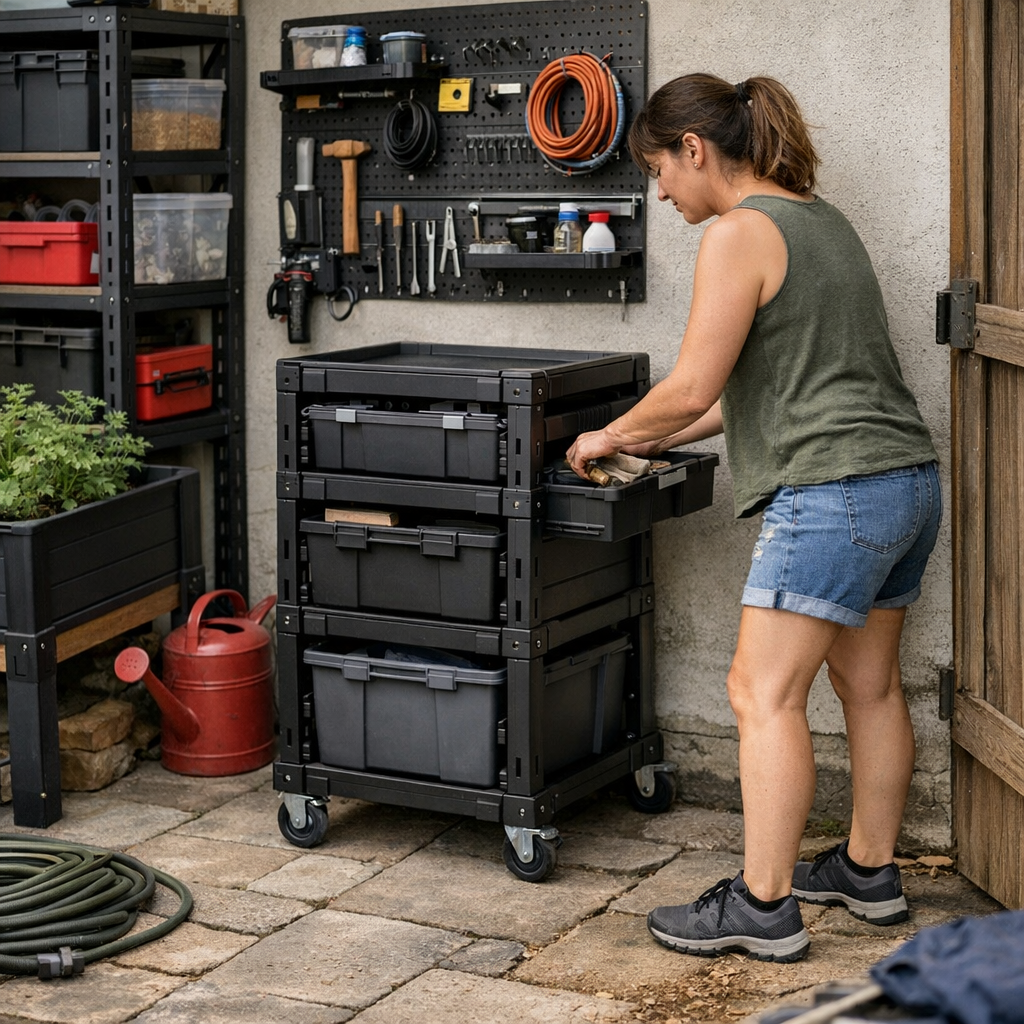
It’s funny how some problems don’t demand your attention right away. You work through a few busy days in your garage, workshop, or backyard—and only later notice the subtle drift in how your portable storage feels.
Portable storage promises freedom: roll a cart out, push a bin around, feel a little lighter. But those small frustrations begin to pile up. Movement slows down. Items don’t glide smoothly but catch and snag. Suddenly, you’re navigating a series of minor obstacles you hadn’t planned for.
This isn’t just about storage. It’s about how ease can quietly turn into friction.
The Pattern You Start to Notice
In the beginning, every rolling unit tucks neatly beneath your bench or fits snugly against the wall. There’s a calm sense of order.
But reality doesn’t stay still. A cart catches on the edge of a mat and shifts sideways. Two bins crowd a narrow path, and one has to be moved just to reach the other. You might not notice it immediately, but you feel it.
Soon, the convenience you aimed for doubles back into one more thing to manage—with bins drifting into walkways, needing to be pulled straight after each use. “Portable” starts to mean something else.
How Movement Quietly Gets in the Way
These interruptions rarely erupt into drama. Sometimes a cart gets wedged under the shed door because of uneven bricks and last night’s rain. Or you find yourself pausing to move three containers before grabbing the tool you need.
The practical promise of mobility fades as you spend more time fixing your setup—pushing things back, keeping stray units in place, occasionally leaving items out of place. There’s no loud failure, just a slow shift in your work rhythm. In the end, the setup you hoped would save time quietly eats away at it.
Even a well-designed system, if units drift from their spot, interrupts your flow. It doesn’t break the system, but it does slow the reset—the small, persistent work of keeping things ready for next time.
The Quiet Fix That Changes Everything
A friend once swapped loose bins for a modular cart that locked firmly in place. Something shifted. Where things once wandered, now every item had a home, and the cart stayed anchored when parked. No more last-minute nudges, no nightly readjustments.
It was a small change—a wheel lock here, a built-in guide there. But the whole space became easier to move through: less effort, less shuffling, more clarity in where to find and return things. The storage faded from your mind—and that was the real benefit.
Sometimes the best portable storage is the kind that quietly stays put until called for. A clear path, a reliable home base, and systems that work with your hands without getting in the way.
Maybe good design isn’t just flexibility to move, but also steadiness to pause.
These thoughts came to me during a stretch of quietly reorganizing my own workspace. For garages, workshops, backyard setups, or small spaces, the subtle balance of mobile and anchored storage makes all the difference.



