When Precision Fades: The Struggle with Slipping Multitools
Oscillating multitool slippage causes drift or rough edges in detailed cuts; switching to a short 10–14 TPI reciprocating saw blade ensures steadier, cleaner results.
When Precision Slips Through Your Fingers (And Why It Matters More Than People Think)
You rarely notice the moment control starts to drift—until you’re staring at a chipped corner or a ragged edge. That quiet frustration of watching a line wander is familiar to anyone who’s aimed for a clean, careful cut only to end up with a mess. It happens almost invisibly, not during big sweeps of demolition, but in those small, deliberate moments when finish work truly counts. Somewhere between choosing an oscillating multitool or a reciprocating saw, the difference becomes clear, quietly but with real consequences.
The Moment Things Start to Drift
There’s an almost hypnotic rhythm to detailed work until the blade begins to wander. You don’t notice it immediately, but you feel it.
Sometimes, the multitool vibrates more than expected. Its nimbleness lets you reach awkward angles and tight corners, but just when you need accuracy, it stutters—maybe skipping off the line, chewing at trim, or leaving subtle burn marks. The slip is so slight at first that you keep going, hardly aware that each pass is tightening a knot you’ll need to untangle later.
By contrast, the reciprocating saw carries its weight more steadily. It tracks along the line even when pressing against dense material or trying to preserve a tidy edge. These differences are subtle—until you see them in the finish.
Accumulating Small Mistakes
I recall a kitchen remodel where speed seemed to matter most. Pushing a multitool along a laminate floor, aiming for a flush cut, things started to go sideways—literally. The blade didn’t just veer; it left scorch marks and frayed edges. What should have been a quick task spiraled into extra sanding, patching, and an hour lost to small fixes.
That’s the part no one warns you about: accuracy isn’t just about skill, but about choosing the right kind of control. Tool vibration, worn blades, even the wrong rhythm—all add up. You don’t see the cost until smoothing out adhesives that didn’t set flat or filing corners back into shape. One correction quietly leads to the next.
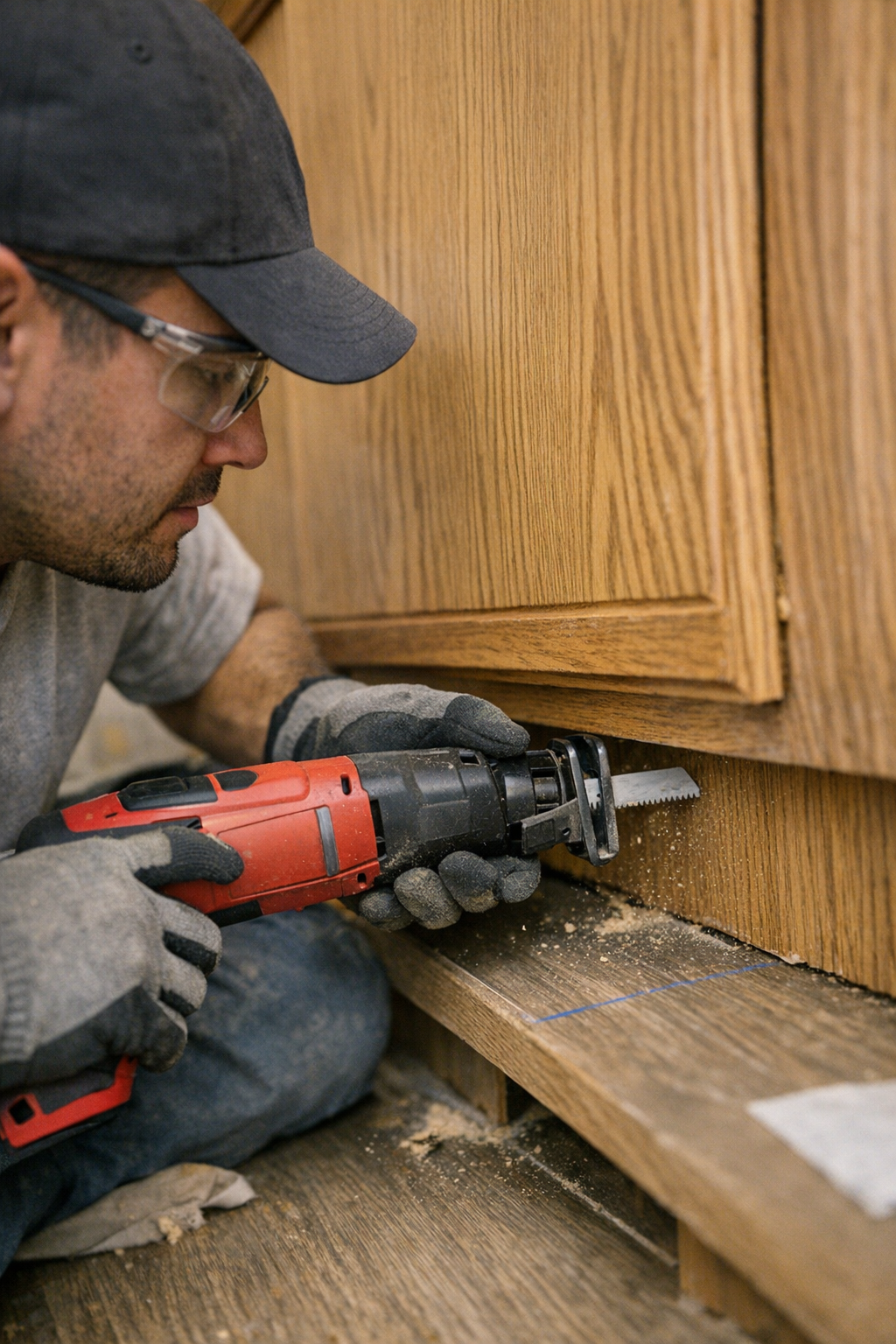
A quieter moment of realization came with the switch—reaching for a reciprocating saw fitted with a fine-tooth, shorter blade. I lowered the speed, feeling the tool settle into the material, rather than fighting it. Suddenly the line held true. Cleanup became an afterthought instead of a second act.
When Tool and Task Finally Align
It turns out the simplest adjustments are the most calming: a smaller, sharper blade; gentler pressure; setting the saw’s speed just shy of frantic; pausing before the first cut to consider—does this edge need to be perfect or just done?
On site, the pace shifts when finish work begins. The right tool holds the line and lets you finish in the cut, not with a sander. The wrong one—usually a multitool forced into a detail it wasn’t built for—demands patience you didn’t know you had.
Sometimes, the only way forward is to recognize that vibration, drifting lines, and fuzzy cuts are subtle messages to choose differently next time.
A little softness, a little patience, and a quiet, clear line—that’s the difference you take with you.
These thoughts came together late, cleaning up sawdust after a long day on a remodel. Read more about the subtle art of choosing tools.