When Quick Cleaning Hides More Than It Fixes
Quick cleanings keep cat spaces neat, but repeated mess shows setup friction; targeted placement changes reduce recurring work for true ease.
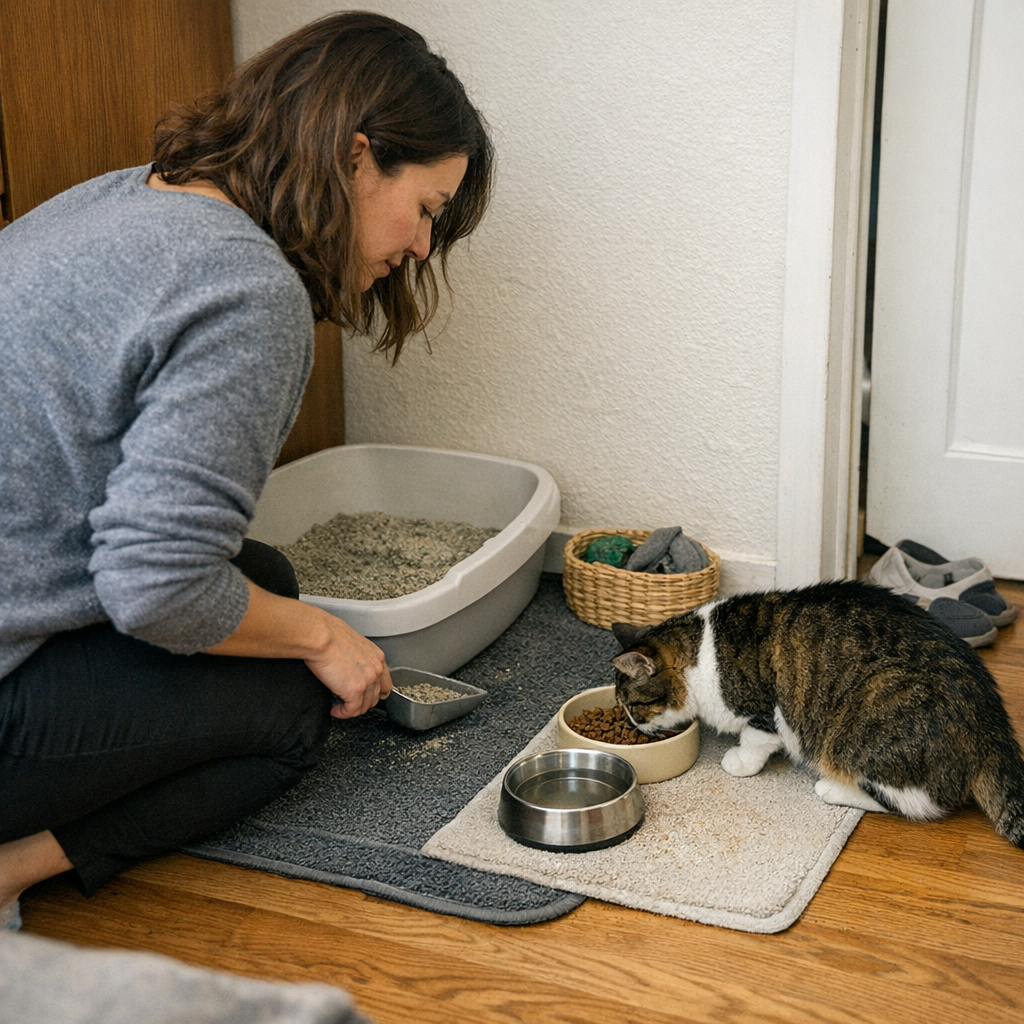
There’s a small comfort in smoothing the mat around the litter box or giving the water bowl a quick wipe—simple gestures that seem to steady the day. But over time, you start to notice which fixes actually last and which only dress up the routine for a moment. It’s a quiet realization, free of drama: the cat’s space looks settled right after a reset, but some areas quietly resist staying that way.
Every few days, I find myself returning to the same spots. Stray litter collects along the grout, water spots appear just off the mat, and even crumbs from breakfast creep beneath the baseboard. At first, it seems the answer is simply more frequent cleaning—a little extra attention each pass. But the pattern kept repeating: some surfaces stayed under control, while others pulled me back into a loop. After a few resets, you notice it. It looked fine at first.
What becomes clearer is that the friction isn’t just about tidiness. It’s about the placement and arrangement—the way a litter box tucked into a corner lets scatter fall into the walkway, or a feeding mat that nearly reaches a seam but not quite. The home holds onto these patterns. Moving the water bowl just six inches away from heavy foot traffic meant the wood seams stayed dry longer, wipe-downs slowed, and the room kept its calm a little more steadily. One small change, and the usual cycle began fading. That was the detail that kept pulling me back.
Even now, I notice it in quiet ways: a larger mat with raised edges does more than catch scatter. It anchors the area and keeps the cleanup loop from creeping back so fast. On days when the routine skips its usual wipe or tidy, there isn’t a mess waiting at the water or food spots. The space feels lived-in but without leaving behind a trail that demands a catch-up.
Most days I still tidy, of course. But the space asks less, and that feels different—like a room holding its breath a little longer. If you want to see what I mean, it settles in best after a few weeks of usual traffic and just one small layout shift.



