When Quiet Breaks, Dogs Find New Hesitations
Sudden breaks in silence can make dogs hesitate, but resetting routines after loud noise leads to smoother feeding, walking, and rest.
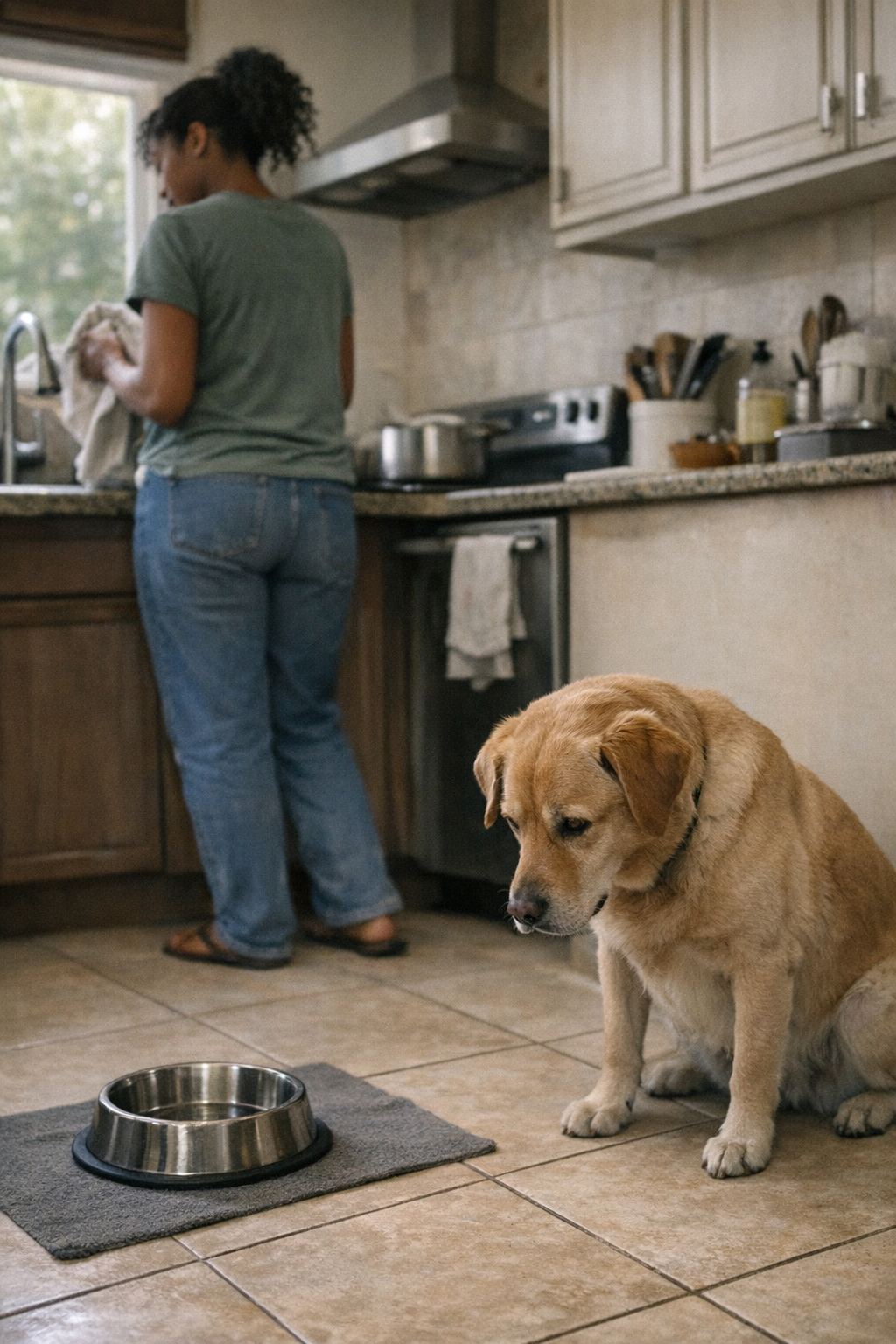
There’s a point you start to notice it—usually during those quiet, in-between moments of the day when the house feels still. Then someone drops something, or a laugh breaks out from another room, and the dog’s head lifts, ears tense. Most days, you expect him to shake it off, but later you see him pausing outside the kitchen or circling his bowl as if double-checking it’s safe. At first, this pattern is subtle. Only after another slow breakfast or a bedtime walk that takes longer than usual does the disruption take shape.
Interruptions are normal around dogs—doors closing, plates stacking, everyday noises slipping in. What I hadn’t realized was how those routine distractions slowly added up, creating friction points that held up simple tasks. Not in one big moment, but quietly and repeatedly: food left untouched for minutes, cleanup dragging out because the bowl gets nudged off the mat and the floor turns slippery. It looked fine at first. Then the delay showed up again the next morning—smaller, but still there.
The hesitation isn’t about fear exactly; it’s more like how people hover at the edge of a room after being startled, waiting before finishing what they started. Some days he’d approach his water, pause with his head low, glancing toward the corner before drinking. Other days, he’d hang back, waiting for me to move away before coming to his food. I used to think he was just picky or moody, but the same pattern returned after every sudden noise followed by quiet: longer pauses before meals, more pacing before settling on the rug, as if one small disruption echoed through each routine.
When Pauses Become Part of the Routine
You see it after a few mornings. It’s not dramatic standoffs but minor slowdowns—the leash takes longer to snap on, the entryway fills with more circling, the feeding spot feels a little less inviting. Each time, the process loses a bit of its smoothness. You wait an extra beat for the tail wag or notice the dog leaning back instead of forward before a walk begins.
Household rhythm isn’t set just by schedule or habit, but by how smoothly the dog moves through each step—doorway to bowl, bowl to corner, corner to crate. One messy interruption repeated a few times during the week settles into the bones of the routine, making once automatic tasks feel less reliable. For me, cleanup dragged on longer—the feeding mat stayed out after breakfast because the bowl was untouched too long, or water spilled with a startled step backward from unexpected kitchen sounds.
Small resets turn out to matter more than they seem. After the third or fourth time I stood at the door, leash in hand, waiting for the pause to end, ignoring it no longer felt like an option.
Noticing the Space Between
These pauses are almost invisible—everyone eventually moves through them, but the space grows heavier if left unchecked. Sometimes it makes the difference between the dog quietly waiting by the door or pacing down the hall, or a bowl nudged just far enough that I wipe up water I hadn’t seen before. Living with these shifts, I started to watch not just big moments but the little in-between ones.
One simple thing helped: a brief pause before each routine, especially after disruptions. Instead of calling the dog over immediately or rushing cleanup, I’d stop, wait for the room to feel neutral, then start. A quiet “all done” while resetting the bowl, or a few silent seconds after noise before opening the crate. The change wasn’t instant—the dog still hesitated. But over days, his movement to the bowl sped up, and the walk toward the crate felt less tense. That pattern kept returning.
Routine folds around these pauses. It’s not about eliminating every disruption but about starting each task from a steadier place after something unsettles the flow. I wouldn’t have guessed that waiting a few extra breaths before moving on would ultimately make things faster.
A Smaller, Smoother Reset
Things aren’t perfectly smooth now—real life with a dog rarely is. Bowls still get nudged off the mat; towels for muddy paws aren’t always where I expect. But on days I remember to give everything a moment to settle—especially after noise, dropped plates, or hallway footsteps—the routines that follow come easier again. Over time, the difference isn’t just a quicker approach to food or a calmer walk, but the sense that the routine is reliable, something we can both relax into.
It’s strange how a house can look organized but still run with friction. The lesson, if there is one, is that a routine depends less on neatness and more on noticing how tension sneaks in and quietly resets. The changes aren’t obvious, but they last far longer than the noise that caused them.
Sometimes I wonder what other small resets I’ve missed along the way in the routines we share. For anyone curious, there’s a little more about everyday routines here: http://www.dogpile.myshopify.com



