When Quiet Dogs Hide Restlessness in Familiar Spaces
Real relaxation for dogs hinges on subtle signals like fidgeting; correcting small details, like bowl placement, eases tension and steadies routines.
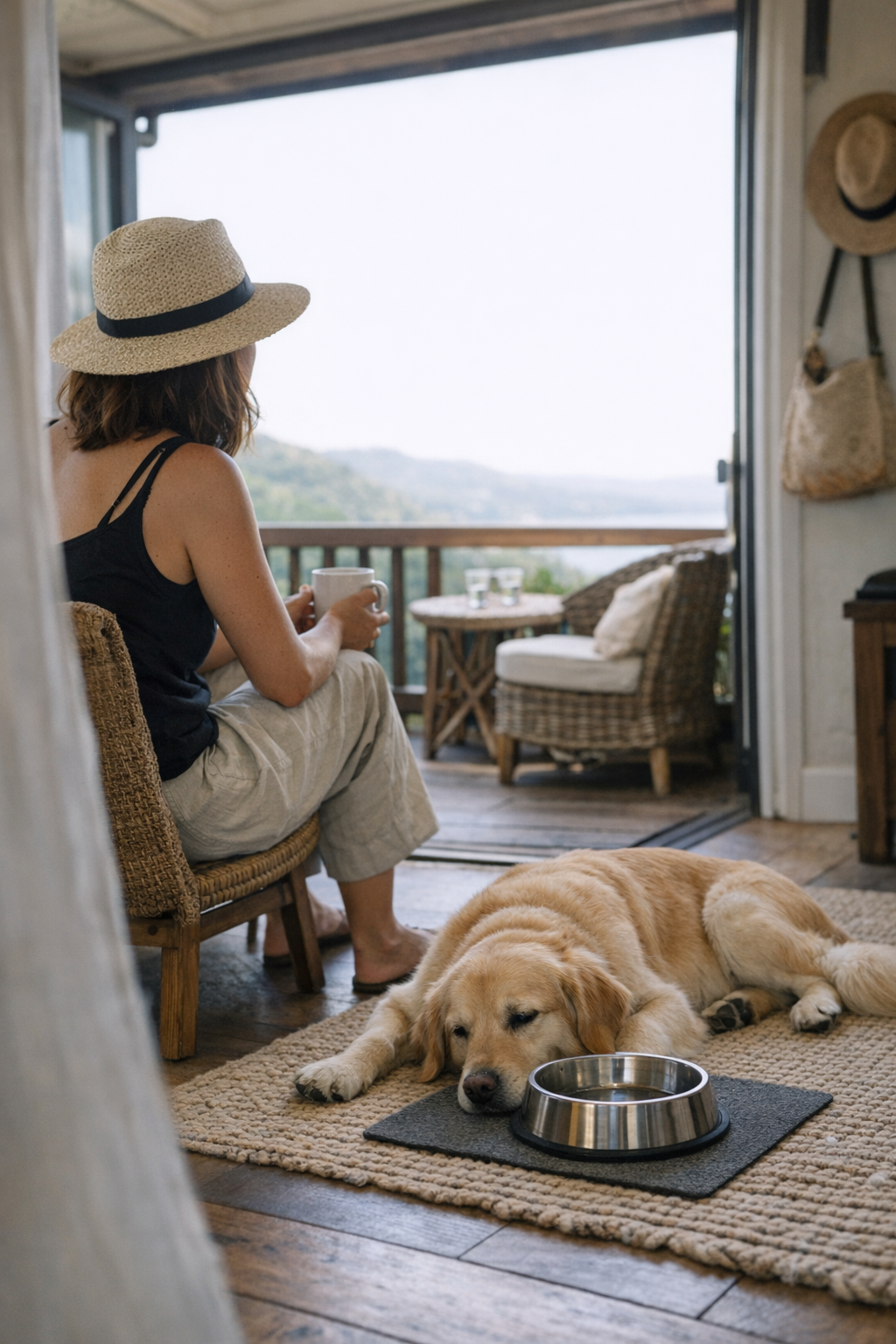
Most mornings, the living room clears out. The dog’s food bowl finds its way back near the radiator, and for an hour or two, the house feels light and quiet. I used to think that marked the end of the morning fuss—a sign we'd both stepped away from the blur of breakfast. But living with a dog long enough shows you it’s the routines that begin to matter most. Not the big moments. The little ones after. When a bowl rests at a strange angle or a mat bunches up underfoot, it seems small at first. Then you start to notice it day after day. That’s when routine reveals itself as a web of small hinges, any one of which can catch.
Morning: dog finishes eating, bowl inches north. I watch her circle the mat, settle down, then shift again. There’s a restlessness in that pattern, repeating more often during weeks when I rush cleanup. Some routines fray at the edges before you realize they’re unraveling.
The Trouble With Good Enough
At first, I ignored the bowl, letting it sit wherever she left it. She’d nudge it carefully as she settled—one paw stretched out, nose pressed to the side, shifting just enough. Most days it was off by an inch or two. Not a crisis.
But after several mornings, a rhythm emerged: I’d hear the faint scrape of the bowl pushed slightly, then a round of shifting paws on the rug. It felt like a zipper that won’t quite close but mostly works, so you learn to live with it.
You start to notice it after a few days. The room looks settled, but everything else drags. The leash is harder to find, the walk starts late, breakfast cleanup stretches longer. By week’s end, a small misalignment compounds into a string of minor delays. It looked fine at first.
Little Shifts, Long Tails
Some mornings the bowl faces east. Other times it’s half off the mat, wedged against the wall. My dog finds the exact edge—never tipping it over, but never quite returning it to where it started.
It’s not frantic or dramatic. Just quiet corrections: a stretch, a mild circle, a sigh before settling again. I kept stepping over the bowl on the way to the door, or catching myself fixing the mat out of habit every afternoon.
That small but steady return was what stuck with me. Not bad enough to demand attention, but enough to unsettle steady rhythms. Small interruptions build up differently over time than big ones. I realized this after reaching for a towel yet again, because the bowl had tracked water past the mat’s edge.
The Return to Center
Eventually, mostly without thinking, I started placing the bowl back in the center of the mat each time. It wasn’t a planned system. Just a reset.
The change showed up in smaller ways than I expected. The days smoothed out. The rest period after breakfast lasted longer, with fewer shifts and less circling. Walks began closer to schedule. My own cleanup routine tightened. It wasn’t really about neatness—more a quietly reestablished order that let everything else flow without interruption.
A misplaced bowl isn’t a crisis. But after living with these patterns, you learn which little frictions build up. Some things, once set right, stay that way—at least until tomorrow’s paws, water, and breakfast roll in again.
Sometimes it’s that simple, even if it never stays perfect for long.
If you’ve noticed the shape of your own routines, there’s more to see here: http://www.dogpile.myshopify.com



