When Quiet Hesitations Disrupt Our Shared Spaces
A cat hesitating but not fleeing signals small routine disruptions. Adjusting care steps and placement eases daily maintenance.
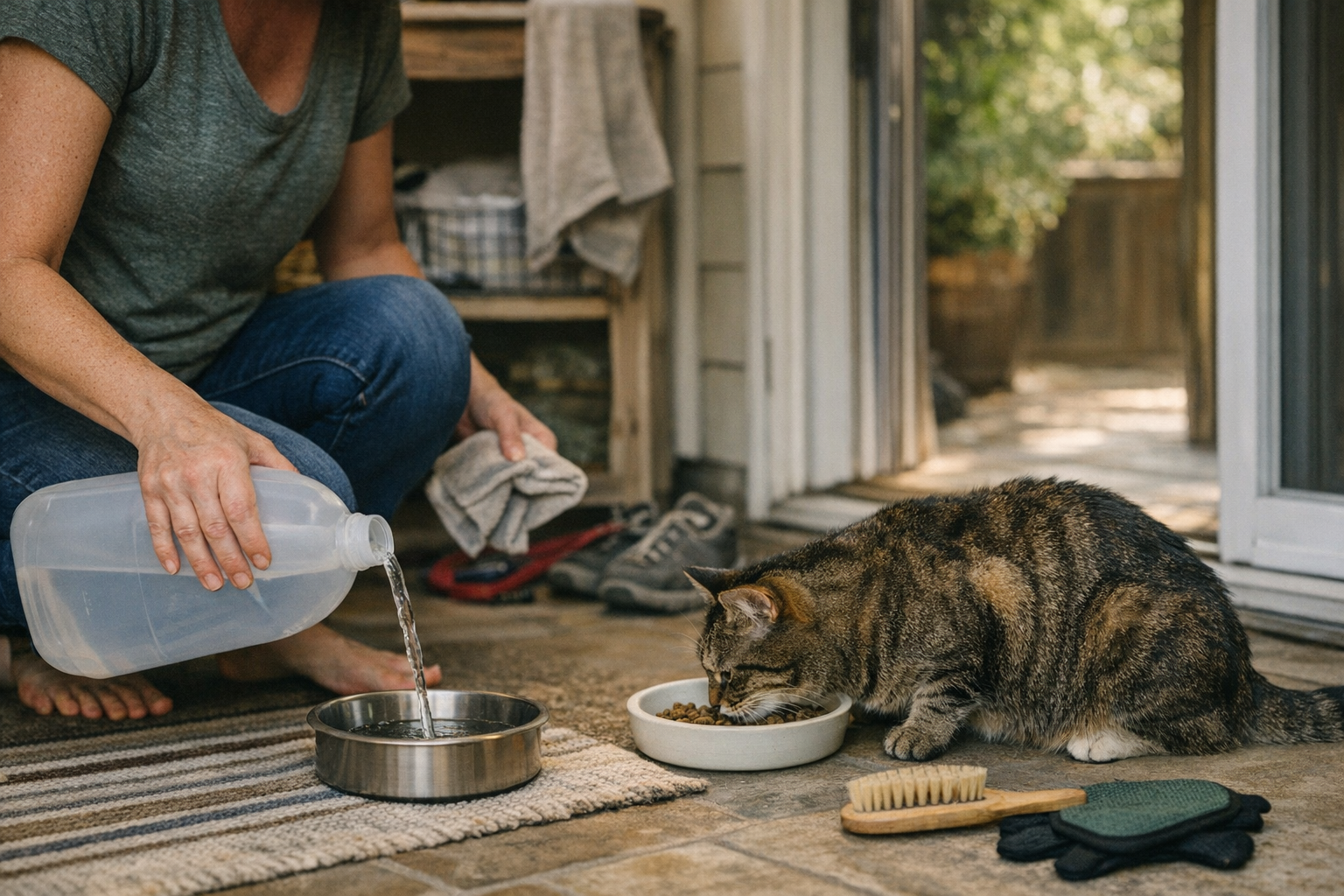
There’s a small comfort in believing a routine is working—especially with a cat who doesn’t dash away when something shifts in the house. For a while, the surface calm feels reassuring: the bowl stays roughly where it should, there’s water left by the end of the day, and the brush waits near the door. But over time, a quieter pattern edges in. The skipped mouthfuls, the unfinished fills, the towel that stays damp until far too late. It’s the kind of disruption you only notice if you’re the one repeating the steps.
I used to think my setup was smooth enough. Yet the difference kept showing up. My cat would hesitate at mealtime without bolting, circling the dish with ears forward but paws anchored. Sometimes the food just sat there until the room emptied out. A bowl went untouched for hours. The brush landed on the counter—still in plain sight—another short session deferred. Later, when I bent to check, a half-dried towel draped the chair back and the refill bottle nudged against the sink, not put back on the shelf. It seemed small, but these little shifts kept asking for just a little more attention each time.
You notice it after a few repeats. One missed reset leads to another, and the routine that felt easy starts to slow down and scatter. Feeding, cleaning, tidying—the basics that once seemed manageable now drag on. No drama, just pauses where things don’t quite finish themselves. That was the part that kept returning: a sense of almost-done at every turn, details demanding another round of care.
In the end, the smallest change made the biggest difference. I moved the feeding setup just a little—close to where my cat naturally lingered without blocking the way. The grooming brush stayed nearby, not hidden but out of the main traffic. But the real shift was in the reset: after every refill, I started wiping the bowl edge before setting it down. Just the edge, every single time. Familiar scent, familiar feel. Over a week, the old pattern faded. Food got eaten sooner, the brush stayed familiar, and one evening, I looked up to see the whole routine quietly working again, with no leftover pieces trailing behind.
The effort, I realized, isn’t always where you expect it. Even when things look calm, a shift or two can settle the routine—making the next step feel easy instead of overdue. Most days now, the bowls finish empty and the towels dry on their own.
For anyone still feeling that weight of “almost done,” I’ve left a more detailed routine here: http://www.calmpetsupply.myshopify.com



