When Quiet Lighting Meets Everyday Clutter
Slim lighting keeps interiors calm, but ease depends on cable management and mounting; poor support causes clutter and dim edges over time.
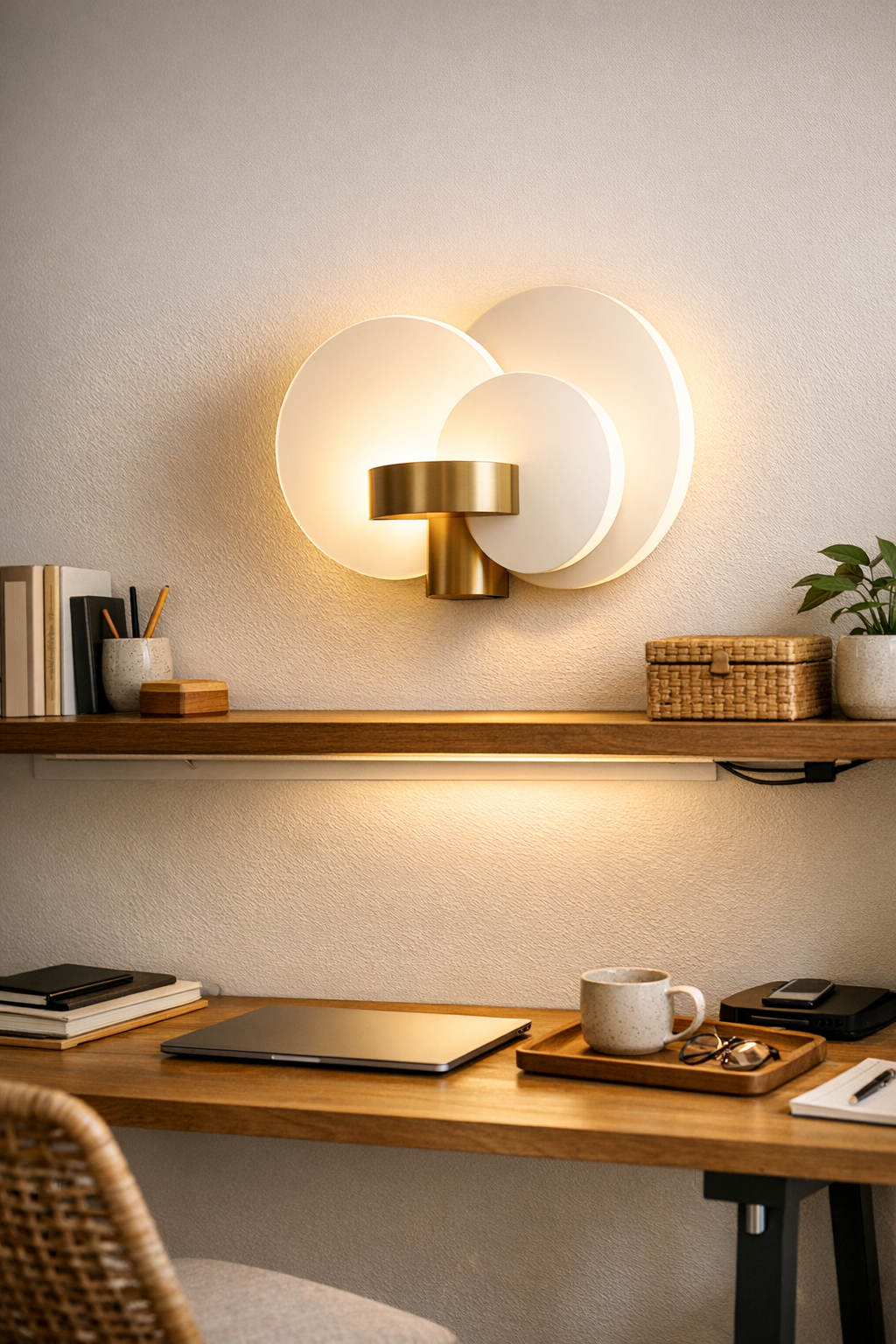
What Quiet Lighting Misses (After You’ve Lived With It Awhile)
Some details in a room’s lighting don’t fully reveal themselves until you’ve settled into your usual routines. At first, I was mostly relieved just to have slimmer, low-profile LED panels and strip lights over my worktable and tucked beneath the shelf—barely noticeable, as intended. That sense of clean order is easy to appreciate right away. But later, the small complications start creeping in.
Lighting often feels like an instant fix for clutter and distraction. Minimal fixtures, cables neatly hidden, glare softly contained—everything designed to be quiet and low-impact. But that quiet can be deceptive.
The Moment It Stops Being Invisible
You don’t notice it right away.
A carefully mounted linear light or under-cabinet panel looks resolved at first. But over time, cables begin to drift. A cord sags behind a row of books; a plug shifts just enough to brush a lamp’s base and waits for an accidental knock. That clean sightline becomes clutter again—flatter and subtler, less dramatic but somehow more persistent.
For me, it was the small movements that made it clear. Sliding my laptop up the desk, dragging an adjustable task light’s cord behind a mug—just enough to remind me a cable was there. The dim strip of light at the desk’s edge, a persistent shadow hanging low along the wall. These tiny, often invisible flaws unravel the calm order I’d set up.
But you notice it.
The Support Is the Setup
All the promises of minimal lighting depend quietly on what’s hidden: cable routes tucked just right, brackets chosen for the fixture’s weight and reach, wires that hold their shape no matter how often you move a book or close a drawer. These aren’t finishing touches—they decide whether the lighting truly disappears or keeps demanding your attention.
I kept thinking about setups I thought finished—the ones where wires still arced behind a shallow shelf, or magnetic mounts loosened and caused a slight tilt in a panel light over time. What made a difference wasn’t the light fixture itself but the quality of its connection—where cables follow predictable, practiced routes, not just the bare wall behind it.
A strip of adhesive cable guides at the back of a shelf stopped a cord from nudging books, so I stopped noticing it. Moving the light inch by inch toward the front edge of my work surface finally erased a half-lit gray shadow across my notepad. It was small, but it lasted—just enough to keep the setup in the background, out of my way during the day.
Lasting Visibility
Every neat lighting solution invites a small test over days and weeks: heat from LEDs loosening a magnetic clip; a hidden cable vibrating free; a fixture slowly creeping away from its original mounting spot. There’s rarely a final adjustment—just the rhythm of living in the space, where support, mount, and cable management become as routine as the work done below.
That is the detail I keep coming back to: real quiet in lighting, or anywhere, only holds when the underlying setup keeps pace with daily movement. A fixture matters less for how little it shows and more for how little it asks of you over time.
If you find yourself noticing those lingering details—exposed cable distractions, awkward bracket shifts, or persistent shadows around your desk or shelf—there are quietly practical ways to address them here: http://www.lightsupport.myshopify.com



