When Rain Reveals the Flaws in Our Everyday Storage
Wet weather reveals storage flaws—warping and rust hinder access; raised modular systems improve flow and keep areas functional.
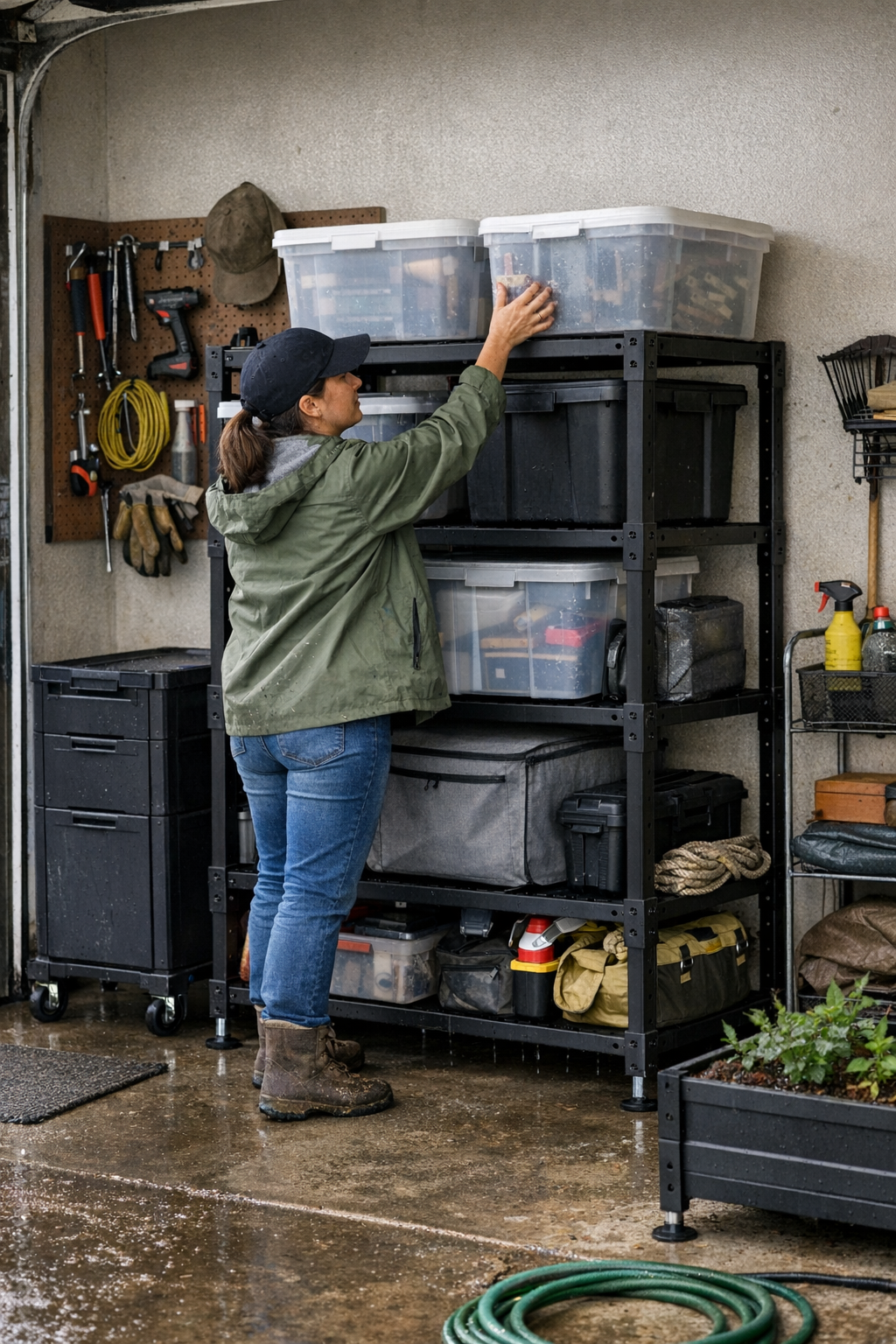
The first sound is usually the rain against the roof, muffling everything else. It’s only later that the little interruptions start—just as you’re ready to put things away. You don’t notice the frustration at first, but you feel it quietly, as order gives way to inconvenience.
It’s funny how easily a garage or workshop setup can look right at the start. Metal shelving tight against the wall, plastic bins stacked, hooks holding up whatever doesn’t belong in a drawer. All of it—at least in theory—assembled to keep chaos in check. The keyword hiding in plain sight: storage. It’s supposed to offer control. Until the rain returns.
When Surfaces Betray You
After a few downpours, the system you designed starts to misbehave. Bins that once slid easily across the floor are now difficult to nudge—humidity gluing them down. You think you’ve outsmarted the water, but then you notice a shelving leg with new rust, and a warping board near the door. Even the air feels less fresh, weighed down by a trace of mustiness.
You don’t notice it immediately. But you feel it with each stuck container and every shelf that suddenly leans—not quite what you remembered building. These disruptions gather quietly. One rainy evening, returning a shovel, you realize the straight path back to “order” has slowly filled with small obstacles, until clearing space feels like rearranging after a party that never ends.
The Quiet Appeal of Raising Things Up
Once, after too many resets, I swapped out my old shelving for something unexpectedly simple—a frame with panels set just above the floor. No magic to it: just a buffer between your stuff and all the unpredictable wetness. Suddenly, nothing felt glued in place. Air moved underneath, condensation stopped sneaking in, and after-storm wipe-downs turned brief and almost easy. I found myself moving in and out without sighs or pauses.
There was a kind of relief in that.
Raising storage above floor level changed more than just the look—it brought back the flow that had gone missing. Instead of strategizing around damp zones, I could lean on a quieter promise: everything in its place and always reachable, even after a storm.
Adaptation, One Unhurried Change at a Time
Maybe your own garage never gets wet. But most have just enough seams and vents for weather to find its way in over time. Metal and wood start giving subtle signals: a little stiffness here, a spot of swelling there. It’s not a disaster. But eventually, the system meant to save time becomes something you work around.
A modular, water-resilient setup isn’t about chasing perfection. It’s about making fewer repairs, spending less time undoing small annoyances, letting things evolve at your pace. It’s quiet maintenance—not constant reorganization.
And over seasons, the difference is measured in all the chores that quietly never come up.
These thoughts came together while looking over my own garage, listening to rain on the roof, and thinking about what really stays organized in the long run. More like this here.



