When Repair Boxes Become Unseen Burdens at Home
Big repair boxes shift from temporary help to clutter, blocking flow; slim, segmented storage keeps repairs visible and maintains daily ease.
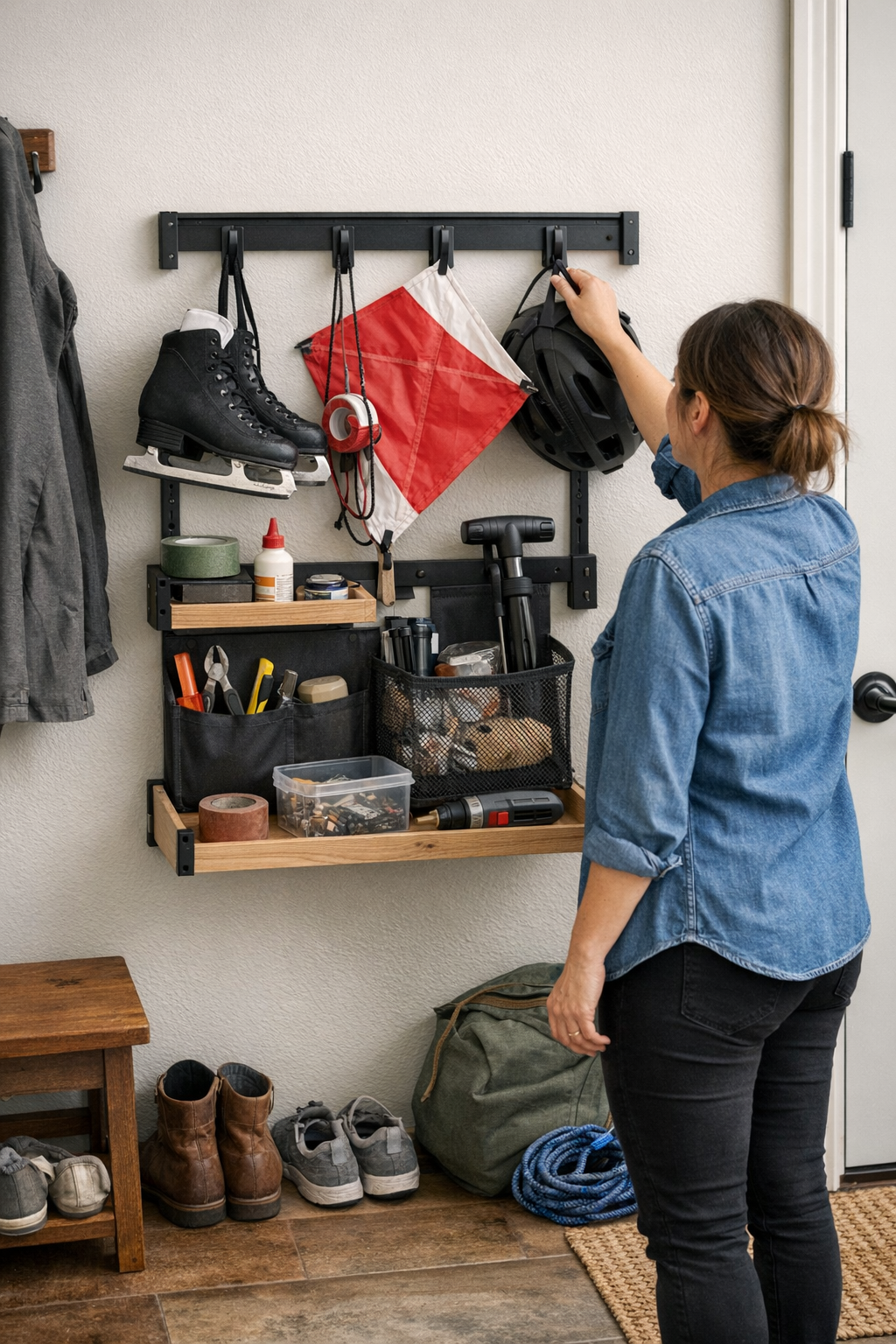
The feeling arrives before you really notice it—there’s suddenly less space to move, a subtle drag every time you pass through the door. At first, it’s just a box sitting by the entryway bench or utility rack, holding a couple of wobbly wheels, a snapped strap, an umbrella waiting for glue. It looks temporary, almost helpful. But living with it day in and day out changes the tempo of arrival and departure. This is where transition-space storage can quietly get off track—when a practical repair box starts to pull the whole threshold into its orbit.
What Starts as Order Becomes Pause
It doesn’t all fall apart at once. You don’t notice it immediately. A storage bin right at the door seems tidy on day one—a relief, even, compared to tools and broken things spilling out on the bench or shoe row. But just as quickly, the box becomes magnetic. After a few rounds, stray gloves and unclaimed chores drift in, mingling with overdue tasks and things for “later.” Walking in, you feel it: the path now slows, the reset gets heavier, and the visual calm isn’t quite matched by actual ease.
When shoes stack in front or bags wedge between the box and the wall, a routine trip outside starts to feel like a shuffle. This was the part I kept coming back to—even if nothing spilled out, the box had changed how the entry worked and felt.
The Shift Is in How Turnover Happens
There’s a difference between storage that organizes and storage that simply contains. With a big, low box, everything blends—out-of-season boots, half-fixed gear, forgotten errands—all in a single, slow-moving bundle. Each pass adds something. Very little comes out unless there’s a deliberate clear-out.
One afternoon, swapping the catchall for a slim wall rack was quieter than expected. A few hooks and a small cubby made it impossible to ignore what remained. Each item waited in plain sight, inviting a decision, shrinking the time things spent “in transition.” Somehow, the lingering weight at the threshold lifted. The routine itself seemed to flow better.
Living With the Space, Not in Spite of It
It’s almost never about perfection—nothing in a family or shared household stays staged for long. But letting a utility zone work as a circulation space, with a real limit on what lingers, shifts more than appearances. Now the bench stays useable; the shoe line doesn’t keep migrating; the door doesn’t catch on stray bits. Less gets stalled, more finds its way back out.
That was the practical part that stuck with me: keeping everything visible made reset part of everyday motion, not a separate chore. It’s a quietly different way to keep these in-between spaces alive and forgiving.
For more rhythms and tools that work with the pressure and pause of threshold spaces, I’ve been visiting Betweenry here: http://www.betweenry.myshopify.com



