When Rigid Hooks Turn Entryways Into Daily Challenges
Fixed hooks seem neat initially but often cause overflow and clutter as routines change; adjustable storage adapts better to shifting needs.
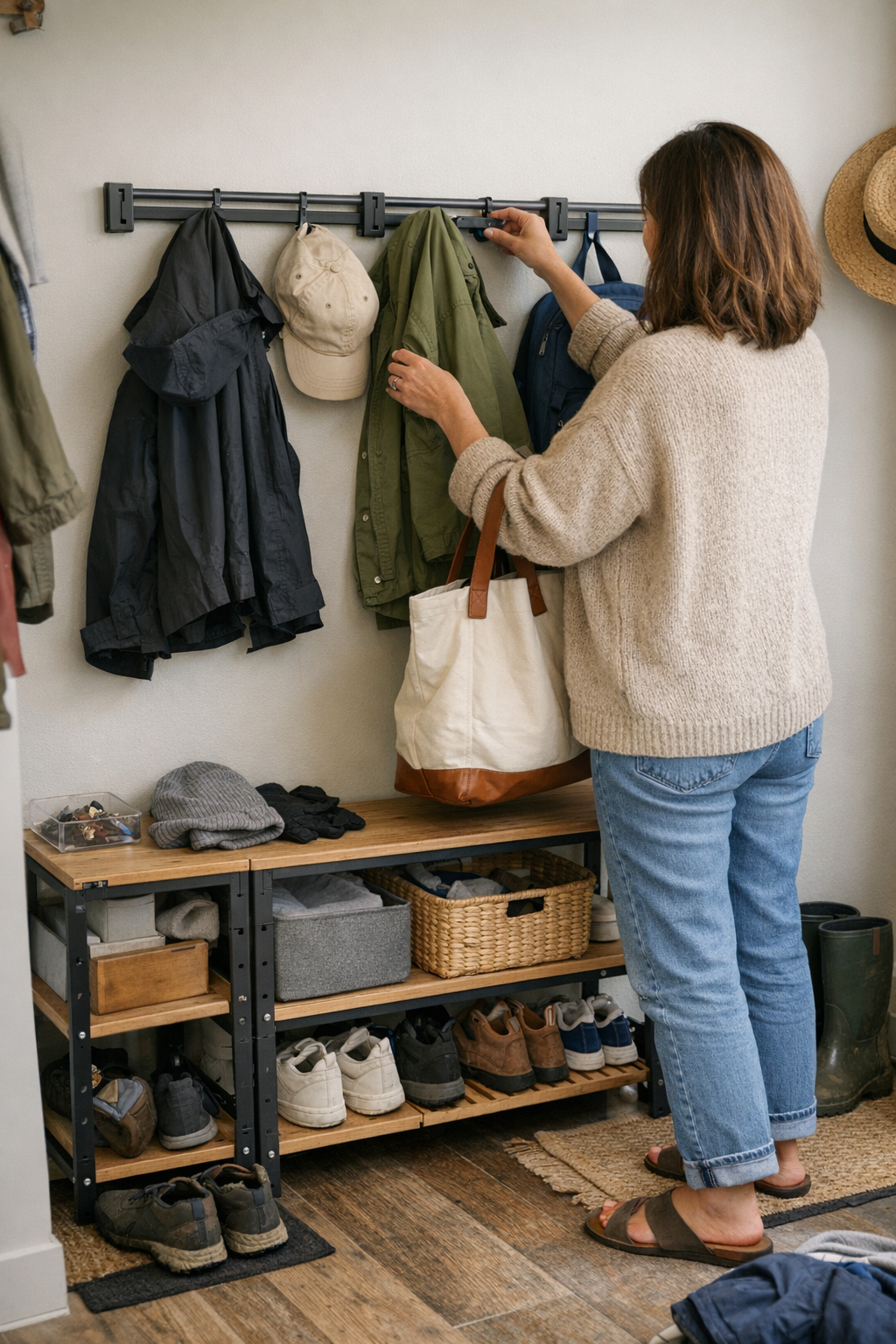
Some days, the entry feels rehearsed—shoes half-aligned, bags resting just off the bench, coats draped in cautious repetition. There’s a relief in seeing order at the door, but the real comfort goes beyond surfaces and lies in the subtle give-and-take just beneath. In these transition spaces, where movement pauses and restarts, even small storage choices shape the day’s rhythm in ways you end up feeling, especially when the routine gets crowded.
What Fixed Looks Like When Life Isn’t
There’s a temptation to believe that a neat row of hooks will keep things in check. For a little while, it works. Coats hang with intention, the space offers a clear face, and each departure seems to leave the area intact. But routines rarely keep pace, especially as families grow or seasons layer in more gear and unpredictability.
It sneaks up on you. A shoe bench begins bristling with extra bags, a jacket or two gets demoted to the floor, hooks fill and overflow. Somewhere between rainy weeks and late arrivals, order strains. The fixed storage, so clean at first, quietly becomes the source of blockages: shoes drift into walkways, keys vanish beneath piles of bags. I noticed this most on rushed mornings—the old setup just couldn’t stretch when real life pressed in.
When Small Shifts Matter More Than Perfect Rows
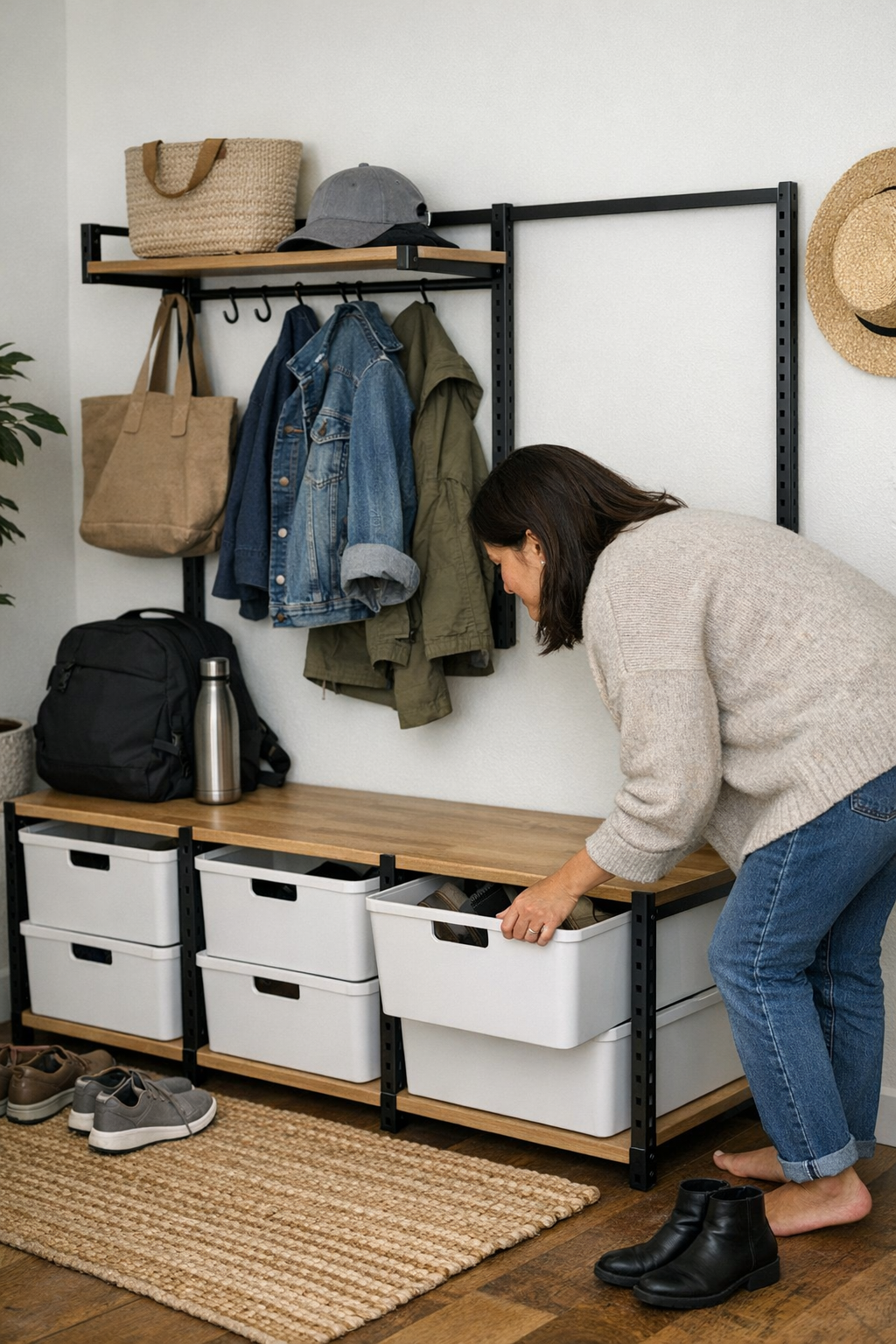
The awkward, temporary piles we end up making aren’t really mistakes. They’re reminders that transition means change, over and over again. I started to see how much difference it made to have wall-mounted storage you can move around—a bracket, a modular shelf, a hook that slides left or right.
It isn’t dramatic. Sometimes it’s barely visible. Yet being able to slide things aside or make room for odd shapes changes the quality of an exit. The threshold clears, the bench edge breathes again. Gear for one wet week isn’t forced to share a spot with last month’s routine. It’s not just about more storage but storage that gives just enough for the moment.
I kept coming back to that feeling. Not everything in a transition space needs a permanent home; sometimes what matters is that things don’t get stuck.
A Sense of Ease at the Threshold
Eventually, what you miss when it’s gone is the ability to reset without friction. A flexible rail, a small movable bench—even a slim cabinet that can shift to fit taller boots—these aren’t grand statements, but they keep return and departure from clashing at the door.
You don’t notice it immediately. But you feel it—the subtle difference as you move through the space a little more easily, the way clutter loosens its grip. In the end, the entry holds its calm not by looking perfect, but by quietly adapting, again and again.
If you want to keep thinking about how these spaces work, Betweenry shares a few quiet solutions here: http://www.betweenry.myshopify.com