When Routine Walks Start to Stall Our Mornings
Short, familiar walks may cause friction like stalls and lingering energy. Changing routes or routines reduces tension and eases daily dog life.
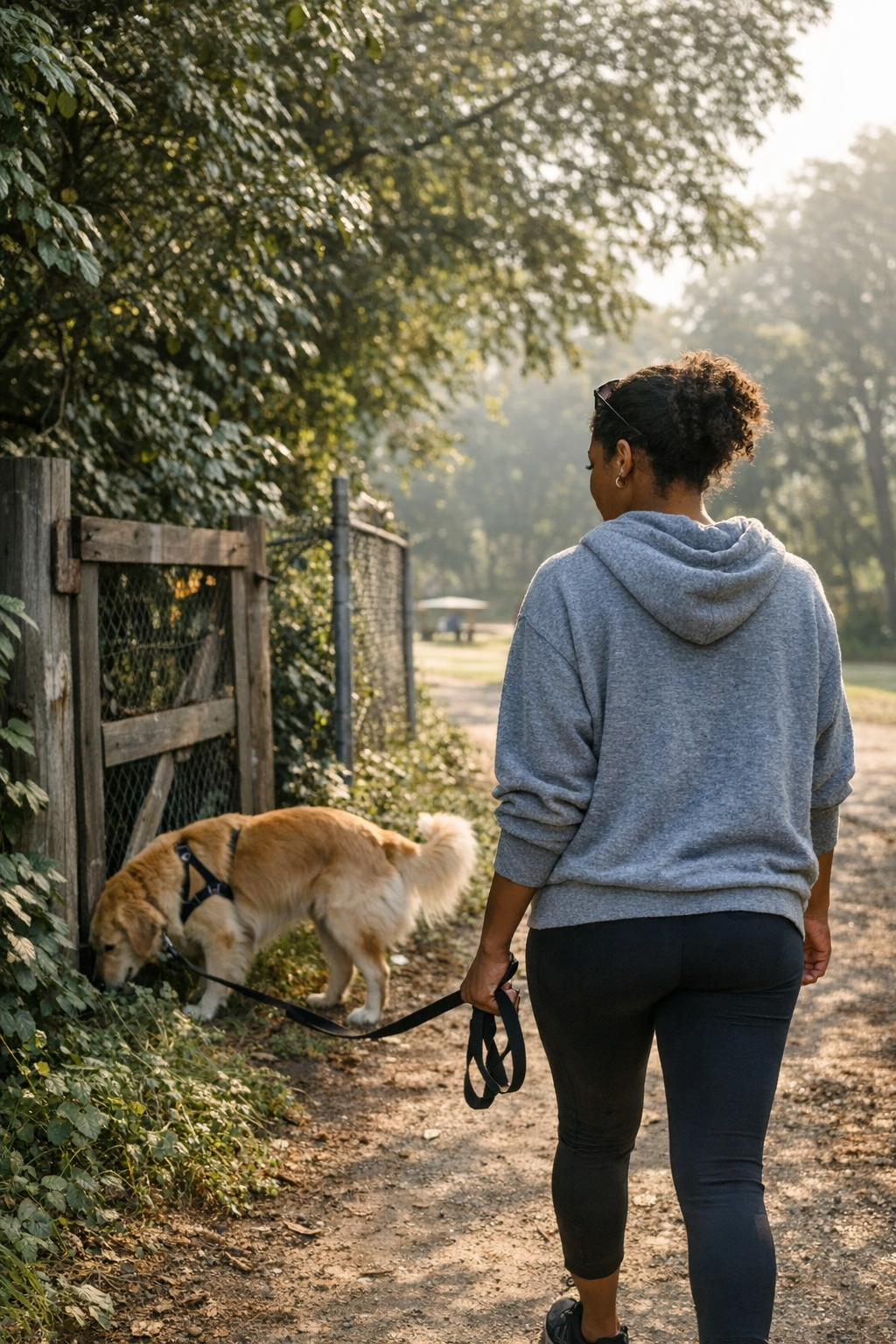
It became easiest to see on those mornings when I tried to save time. The leash went on, shoes left by the door from the night before. We took the same quick loop around the block that had become habit—supposed to buy a few extra minutes or at least keep the day from starting off rough. But after months of repeating these familiar steps, a different pattern showed up, nudging at me. Even when the route looked efficient on paper, the morning unraveled in smaller ways. The bottleneck always found us in the same spots: a too-interesting fence post, the neighbor’s gate, the little patch of grass by the hydrant.
You notice it after a few mornings. What everyone says about dogs—that they settle into a calm, ready mood with routine—only holds until the routine itself starts causing more friction than relief. Our dog’s pace would slow, almost on cue, at those familiar points. He’d dig in by the same curb or toss a hopeful glance back, as if asking why stopping there was suddenly non-negotiable. I thought it was just his curiosity burning off, but the more it repeated, the more I felt our walk slipping into an unspoken standoff. The time “saved” never arrived. Instead, breakfast got half-rushed, water spilled around the wrong side of the bowl, and my coffee cooled on the counter while I hustled us back on schedule.
Where the Routine Looks Smooth, But Isn’t
The route appeared sensible from a distance—fewer distractions, fewer unknowns. That was the plan. There’s something reassuring about not needing to think first thing. But sameness didn’t erase the snags. Every time we passed the neighbor’s car or reached that patch another dog had marked, my dog hesitated. Some mornings, it was just a sniff and move on. But on hurried mornings, those slowdowns felt like deliberate interruptions. I kept thinking they’d fade. They didn’t. Instead, the stop-and-go rhythm blended into the rest of our morning.
That part kept returning. The more predictable the walk became, the more certain the slowdowns. It looked fine at first—no real effort to plan, nothing to remember. But repetition left friction built into the bones of the routine. The walk got finished, but the hurry never drained away. It tagged along into feeding, wiping paws, setting kibble down in the same corner where, on tired days, I’d bang my knee against the cabinet edge.
Making Space for Change, Even in Small Ways
It’s easy to think this is just how it has to be—walk, slow down, hurry, repeat. The invitations to wake up a bit, to change something, were small and easy to ignore. But on rare days when I broke the routine, starting our walk from a different direction or opening a side gate instead of the front, something shifted. He didn’t stall at the usual points—the old magnets lost their hold. The whole loop moved smoother. When we came back inside, things fell into place faster: paws up, towel within easy reach instead of under a pile of shoes. The difference showed up in smaller ways than I expected. I spent less time prompting him past distractions and more time just letting the walk finish, ready to slip into the next part of our day.
It wasn’t a dramatic save—in fact, it was quieter than that. But it traded a cycle of predictable small delays for a rhythm that let both of us move through the morning with fewer rough edges. Later, I slid his water bowl a little to the right, finally leaving space to kneel without knocking it over. The routine started to breathe a bit more.
What Lingers After the Walk
I kept trying to find the real difference. Most advice about efficiency never mentioned these returning slow spots—the way real routines refuse to stay neatly on track once friction creeps in. What I noticed, especially on weeks when I gave in to sameness, wasn’t boredom. It was the lag that clung to breakfast, the half-finished cleanup, the extra tension sneaking into the rest of the day.
Routines that look clean on the outside can pull at you from inside the moment. Sometimes the best reset isn’t a perfect plan—it’s the quiet shift that prevents sticking points from taking over the whole routine.
Some days I still take the shortcut, and some mornings I don’t notice how much the pattern has settled in until the routine runs rough again. But I’ve started to treat those slow-downs less as nuisances and more as nudges. The small adjustments—switching up the walk or moving a bowl—don’t need to change everything. Whatever shape they take, they’re just enough to keep our routines breathing, one less spot to get stuck in, morning after morning.