When Safety Gear Shapes the Workday Mood
The right dynamic harness and shock-absorbing lanyard prevent tool drift, fatigue, and poor finish during repeated indoor angle grinder use.
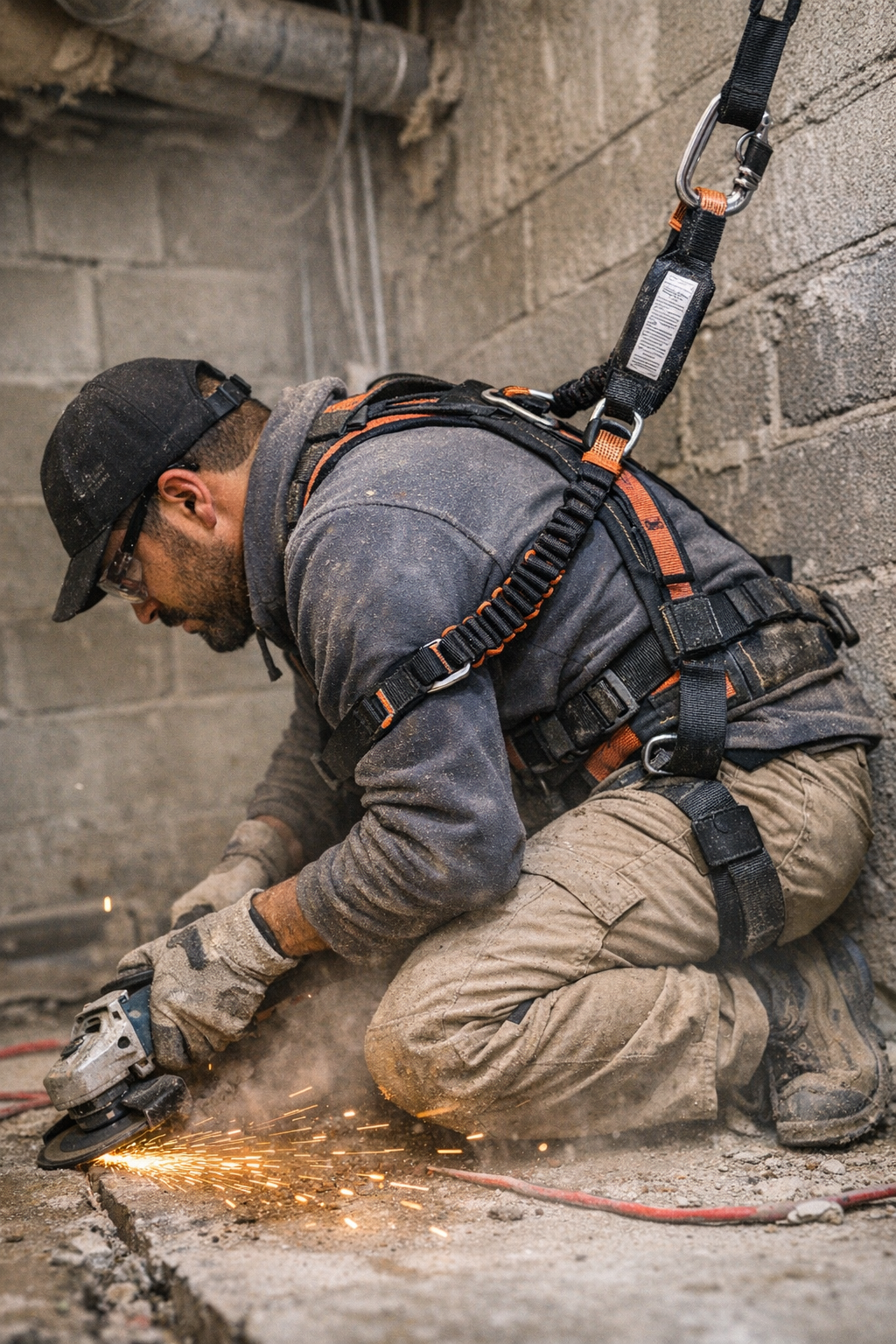
It’s easy to become numb to the everyday rhythms of a job—until something throws them off. Working indoors with an angle grinder involves a sequence of small interruptions, not all of them obvious at first. For a long time, I thought safety harnesses and lanyards all worked the same. You grab what’s available, strap in, go to work, and trust it to keep you steady.
You don’t notice it immediately. But you feel it.
There’s a difference between true steadiness and just being tethered. The right harness doesn’t announce itself. It lets you forget about it, even when resistance changes or dust starts to swirl into the edges of your mask. That’s the quiet heart of indoor safety. Not just protection—control.
The False Comfort of “Any” Harness
In the glow of warehouse lights, harnesses and lanyards hang side by side, looking nearly identical. Strong stitching, heavy buckles, D-rings—the usual safeguards worn like a uniform. But most aren’t built for the small, repetitive jolts of indoor grinder work. They’re made for the worst-case fall.
You notice what’s missing only as you work. The familiar grind against concrete or metal, the shiver that runs through your hands as a wheel snags on something stubborn—rebar, maybe, or a pocket of grit. A static harness jerks you with it. At first it seems minor; a bit of a pull, a stiffening of your back. Over a few passes, it becomes a persistent tug, pulling the grinder off-line, scarring your cut.
Experience rarely shouts. It accumulates. Tool drift, surface scuffs, fatigue. The harness that felt safe now feels like a wrong note, just off-key enough to throw the whole rhythm.
Where Control Actually Comes From
The gear that makes a difference isn’t always obvious. It’s in the quiet flex at key joints of a dynamic-force harness or the subtle give of a lanyard absorbing shock mid-cut. I didn’t notice this until a morning spent hunched under rusted pipes in a low, dust-choked crawlspace. The right lanyard let each vibration fade away without yanking my arms or grinding my patience raw.
When every rebound is absorbed, you notice the steadiness. Edges stay true; the grinder feels lighter, almost as if it’s working with you. Fatigue sets in much later, and the line you cut follows intention, not accident. Control, it turns out, comes from gear designed for the messiness of the job—the small surges, the snapping changes in resistance—rather than just surviving the rare fall.
It’s the gentle, almost hidden adaptability built into these tools that lets you work longer and finish cleaner.
A Quiet Realization, One Pass at a Time
Plenty of us reach for whatever harness is on hand, especially if work is piling up and time is tight. The difference doesn’t show up in the first few cuts. But by midday, the pattern’s clear: less shoulder ache, fewer accidental scrapes, and the work zone feels… more manageable.
There’s something grounding about relying on equipment that truly matches the work. Not overthinking it, just noticing, as the hours go on, that your focus can stay with the task—not with fighting your own gear. It’s a subtle refresh; a reminder that the smallest adjustments, almost invisible, can transform the whole day.
When every cut is a little steadier, the work itself grows quieter—almost effortless.
These thoughts came to me beneath the echo of grinding wheels, testing harnesses that finally made sense.