When Saw Blades Drift: Quiet Frustrations in the Workshop
Circular saw blade wobble appears after repeated cuts, causing poor fits; a stiffer 2.2 mm blade reduces drift and sanding, improving accuracy.
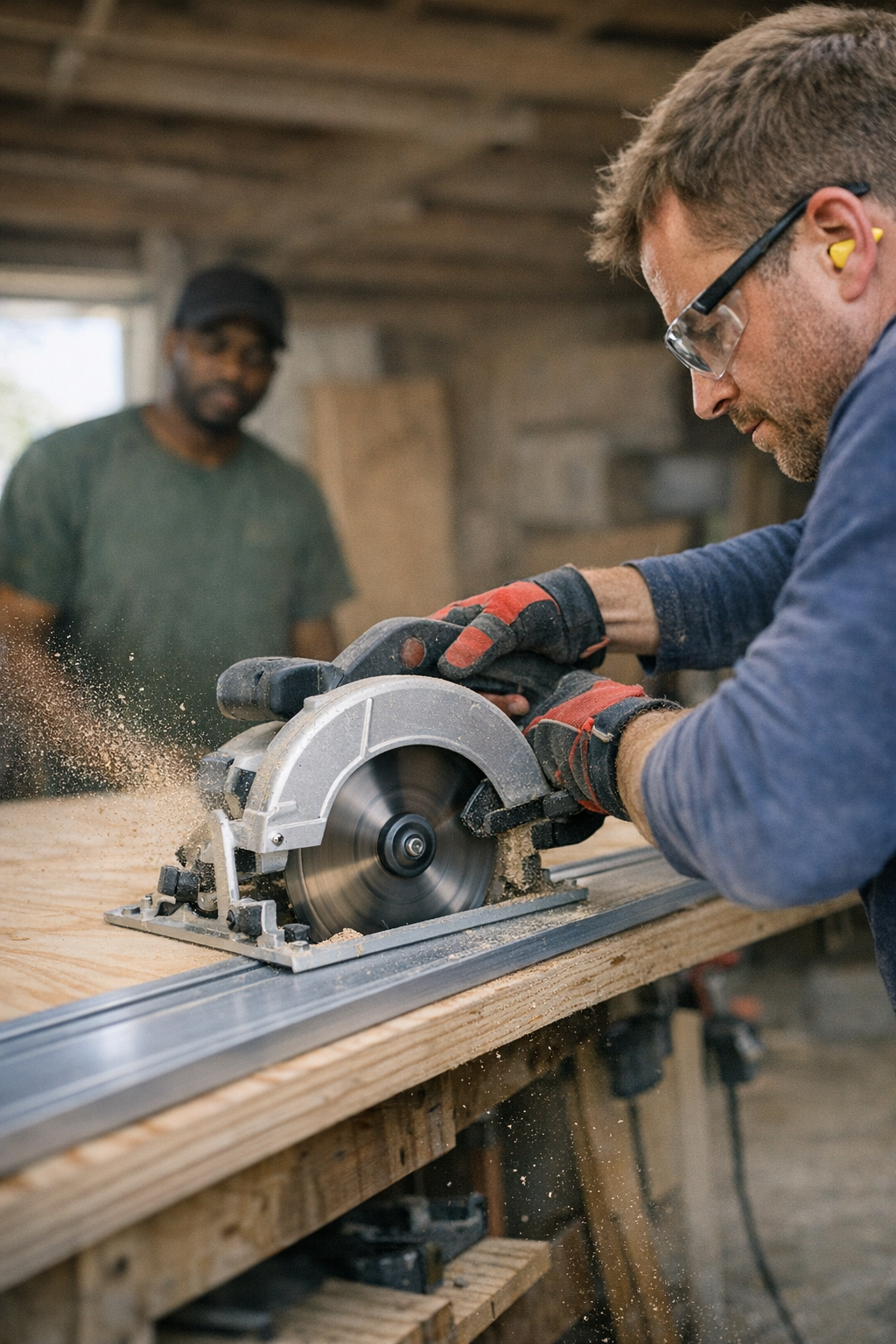
Sometimes, it’s the interruptions you don’t see coming that are the hardest to shake. Deep in the flow of a project, you expect your tools to just work—the rhythm of cut after cut, a gentle hum of progress—until, without warning, every joint gets just a little more difficult, every seam requires a little more sanding.
You don’t notice it immediately.
But you feel it.
Most folks think about circular saw blades only in terms of sharpness. A sharp blade, a smooth result—it seems simple. But accuracy starts to slip for reasons that aren’t obvious on the first pass. Crooked cuts may not announce themselves with a dramatic gesture, but over time, they quietly add up, shaping the way a project unfolds.
Where Accuracy Actually Begins
Two blades might look identical out of the box. The same tooth count. The same shine. But with use, differences emerge.
Soft pine asks little of your saw—almost any blade plays along. But move to stubborn hardwood or thick plywood, and suddenly, the narrative changes. Even a new blade can drift. It flexes a little, strays wider at the cut, and the saw hum shifts from steady to stressed.
You might see a flutter of dust, a faint edge scorch. The work slows down, cleanup increases.
It sneaks up on you—one crooked cut at a time.
The Subtle Cost of Letting It Slide
Sometimes, it’s the small issues that are easy to ignore. I’ve watched perfectly planned assemblies get derailed, not by a glaring mistake, but by panels that just won’t sit flush, little gaps of light peeking out where tight seams should be.
There’s a moment—usually halfway through a stack of boards—when the realization lands. Maybe it’s an odd sound from the saw, or the feel of a panel snagging at the edge. What started as a minor irritation becomes a quiet backlog: extra sanding, more time with the plane, edges that need coaxing to join.
One day, I paused halfway through trimming finish panels for a built-in. Just for a moment. The joints weren’t closing clean. I swapped in a thicker, stiffer blade. The change was immediate: straighter cuts, dust kept in line, panels ready for assembly with almost no correction.
It felt like a small revelation.
The Difference Holds Quietly
A thicker saw blade doesn’t promise dramatic results. But what it gives is steadiness—a cut that doesn’t wander, edges that simply meet as intended.
That’s the practical change I came to trust: a blade with a little more substance (say, 2.2 mm thickness instead of the lighter standard). The work moves faster, with less drift and rework. Accuracy shifts from aspiration to habit.
You notice it most in what doesn’t happen: less vibration, fewer rough seams, a workflow that keeps its own quiet momentum.
It’s easy to miss the moment small wobbles become bigger problems. Easy to ignore the signals—until the hours add up, and the gap widens between effort and result. But a mindful change, even in something as ordinary as a saw blade, can bring that rhythm back.
Sometimes, the real work is just in noticing.
These small lessons surfaced while trying to dial in a clean fit for a stubborn cabinet project.



