When Saw Dust Turns Into a Daily Struggle
Persistent sanding dust starts at sawing; fine-tooth, narrow-kerf blades cut dust and cleanup time, improving finish quality.
The Invisible Layer That Slows Every Project (And why it matters more than people think)
It starts quietly—a thin haze settling on your bench, a faint grit under your fingertips. You don’t notice it immediately, but you feel it.
Most days, sanding is an ordinary chore, just the routine sweep between rough and finished. But sometimes, the dust feels endless—no matter how careful or thorough the clean-up. That lingering powder, slipping past the vacuum, isn’t just a byproduct of sanding. Its roots go deeper, back to the moment the saw first meets the wood.
When the Saw Shapes More Than the Cut
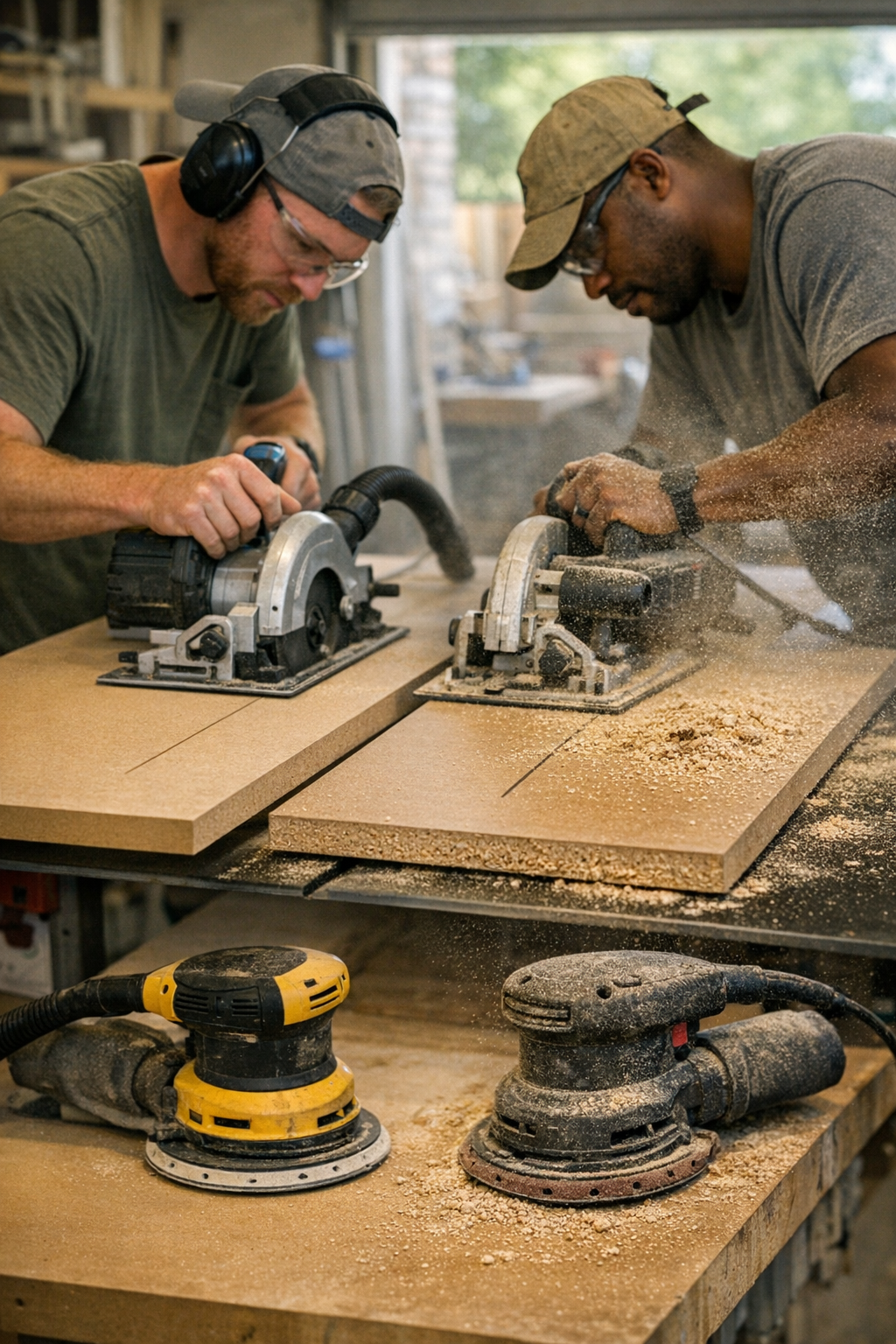
Watching two saws work on hardwood can be revealing. One leaves a sharp, tidy line with barely a whisper of debris; the other, almost identical in size and power, scatters powder across the bench with every pass.
The difference sneaks up on you—more in the time spent wiping down between cuts than in the cuts themselves. The surface texture changes too. Sometimes, running your hand along an edge—especially on melamine or MDF—you catch faint bumps: tiny chips, stubborn and resistant to sanding.
What seems like a small detail—the width or shape of the blade, how snug the shroud fits—shifts the entire rhythm of the job. A smoother cut might barely register when all goes well, but a rougher one leaves its mark all the way to the finishing stage.
The Ripple Effect No One Talks About
Sometimes, only a deadline makes you notice. Cutting sheets for a shelf, alternating between two circular saws, the difference grows with every pass. One saw, fitted with a tight dust shroud and a fine-tooth, narrow blade, leaves little for the sander. The other, just a bit out of tune—a wider blade, a looser port—creates a mess that lingers.
It goes from manageable to inconvenient quickly. Dust clogs the sandpaper, roughening instead of smoothing. Each time you vacuum, there’s still more—a cloud in the air or a gritty layer stubbornly clinging to the surface. Over several projects, or even a long afternoon, the extra work adds up.
There’s quiet satisfaction in finding a tool setup where dust control works silently in the background. Less wiping, fewer abrasive tracks left behind. The change doesn’t feel dramatic, yet the absence of dust becomes its own kind of reward.
A Small Shift, a Lighter Clean-Up
What finally changed things for me was a simple adjustment—a narrower, fine-tooth blade matched to a vac shroud that fit the saw snugly. The very first afternoon I switched, the bench was noticeably clearer after a series of identical cuts. Sanding, usually a repetitive task, took less time and the surface just felt right.
It made me realize how much earlier frustration was avoidable. That feeling of always chasing dust, cleaning and re-sanding, often creeps in before the sanding even begins—with a single overlooked decision in the saw setup.
Sometimes, the quickest improvements are quietly practical. A blade just a bit narrower, a shroud that fits perfectly—these little things help the work move forward with fewer interruptions.
It’s strange how the biggest differences can stem from what barely changes at all.
I started noticing these details in my projects, quietly testing what made the shop feel lighter at the end of the day. If you’re curious where these thoughts led, you might appreciate the deeper dive I put together here.



