When Seasonal Storage Starts to Blur and Slow Us Down
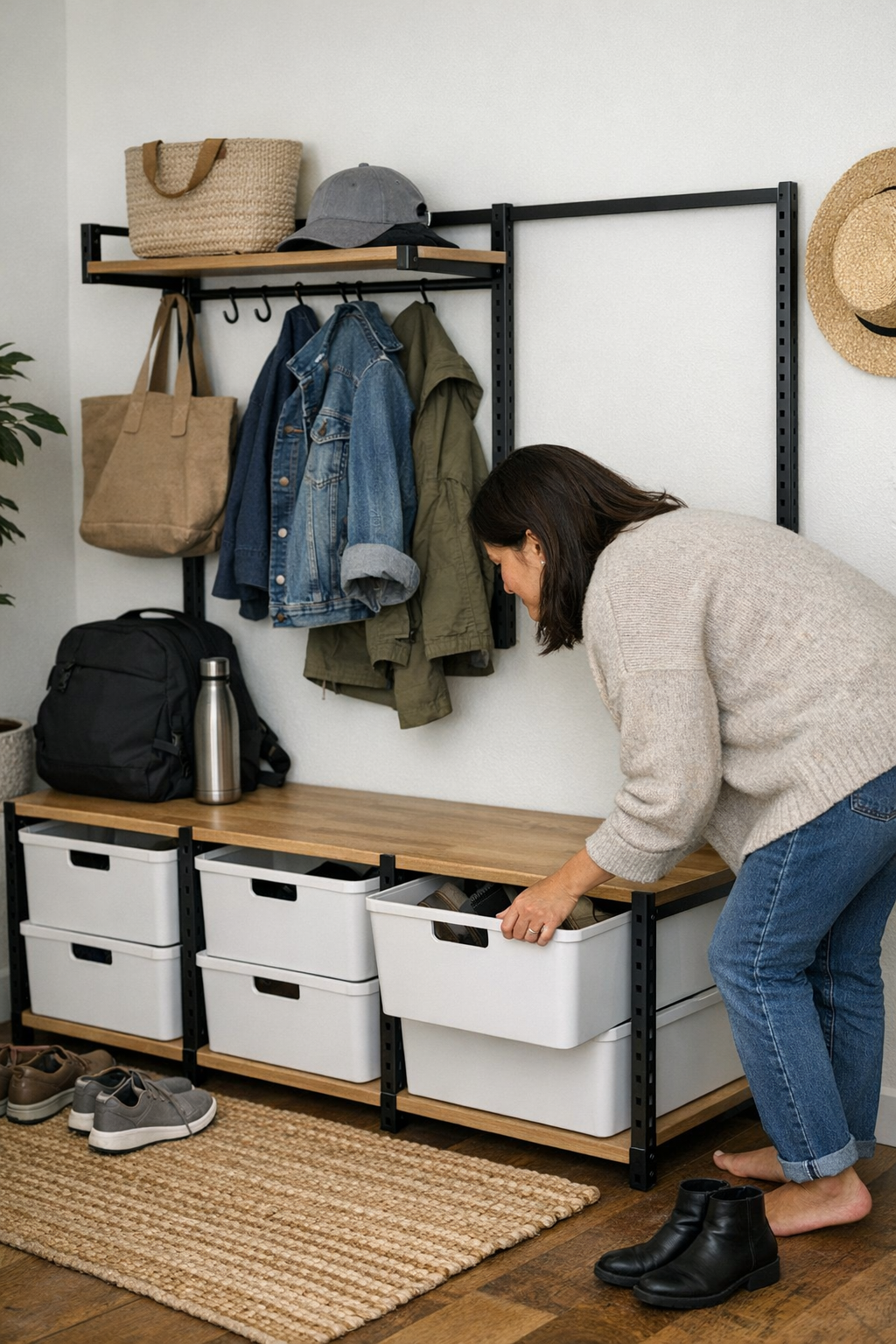
Seasonal bins rotate well only if clear category boundaries are maintained with dividers and lids, keeping resets easy despite daily use.
Most changes arrive quietly, somewhere between noticing and ignoring. In transition-spaces—those thin lines between inside and out—what starts as a tidy promise can slide so softly into friction that you only feel it in the rush of shoes, bags, and wet mornings. There’s a particular kind of tension that builds at the entryway threshold when the bins, once so neat, begin to lose their edges. Not immediately, but with the repeat of the week: quick drop-offs, small delays, the family in and out. The space meant to smooth every coming and going quietly becomes its own kind of stopper.
The Quiet Drift of Categories
At first, everything fits where it should. There’s a small satisfaction in placing boots upright, stacking hats in a neat line, letting each tote land exactly in its assigned zone.
But you don’t notice right away how those categories start to soften.
A sneaker mixed into the snow boots bin. Rain gear collapsed across gym bags. In a lived-in entry zone, these lines are fragile. A heavy work week or just one person late for practice, and the bins absorb whatever lands nearby. That was the part I kept coming back to: it only takes a few days of hurrying for the labels to fade and the original categories to dissolve. The setup shifts from streamlining arrivals to quietly slowing them down, adding a few seconds here and there to each re-entry, each search.
When Structure Does More Than Surface
It’s easy to forget how much daily routines depend on these thin, partly-visible systems. Walls of matching, labeled bins look like order, but under daily use, visual neatness can hide subtle drift beneath.
One drizzly Tuesday, I watched gloves and umbrellas find new homes—shoved wherever the nearest space opened, their intended slot blocked by last week’s groceries or a sports kit out of rotation. The effect wasn’t dramatic, but you feel it: passage slows, the spread widens, temporary items become semi-permanent clutter along the bench edge and beneath the wall hooks.
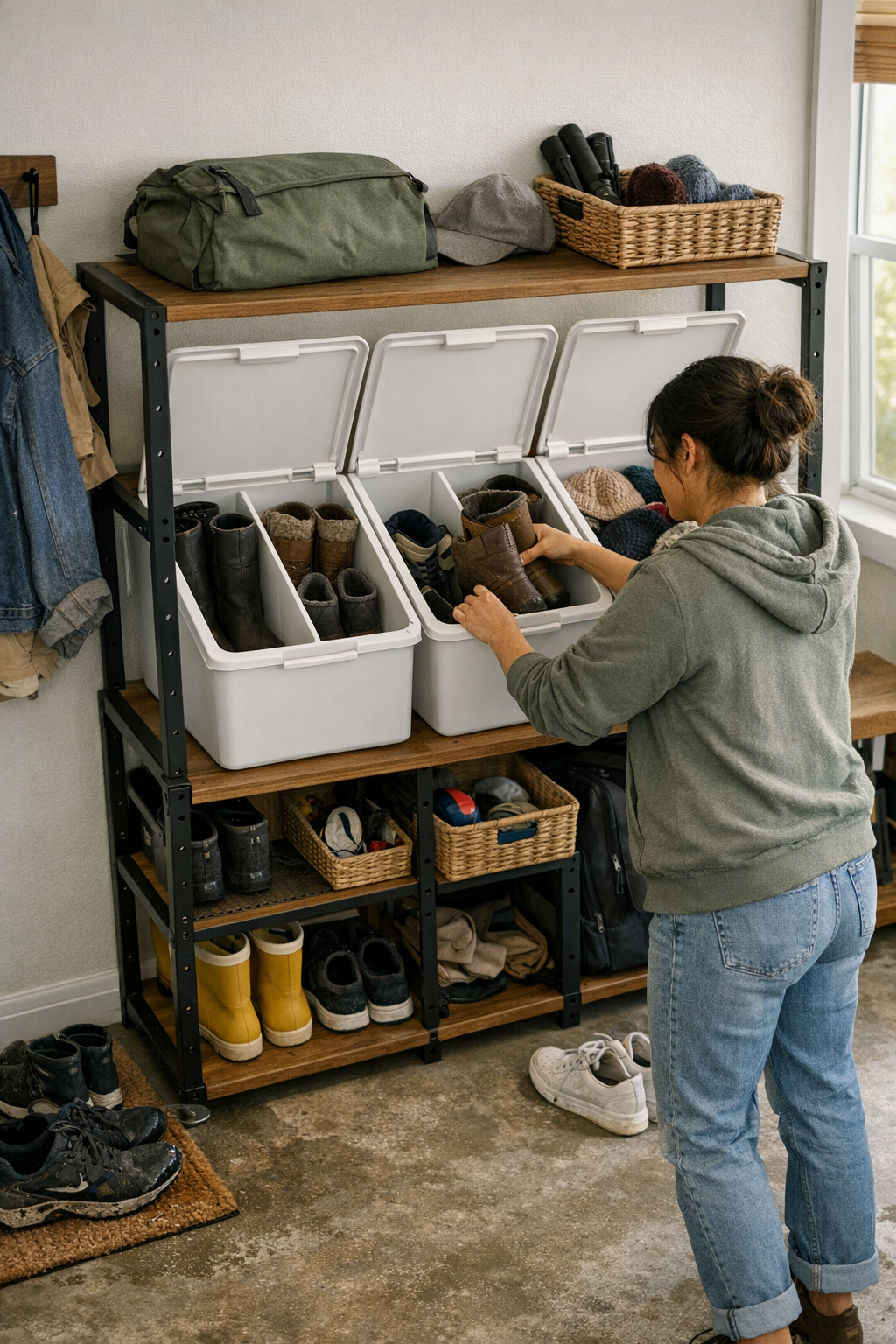
There’s an odd realization here—the structure matters more than the surface. Hinged lids and fixed vertical dividers force each category to keep its place. Each slot becomes a visible checkpoint; even in a hurry, it’s clear when something doesn’t belong. Returning the space to its intended flow takes a single glance, not a full reorganizing session.
Restoring Boundaries, Restoring Flow
That’s the gentle, practical insight I needed. It wasn’t about bigger bins or more storage, but about boundaries that quietly resist blending. When a system presses back against overflow—physically separating shoes from hats, out-of-season gear from what’s in rotation—the threshold stays open and passage clear. Resetting became routine rather than a Sunday project. I started to see it less as “organizing” and more as keeping the small, resilient edges that shape how a space actually works—especially under pressure.
You don’t truly notice the effect until one morning you don’t trip over someone else’s boots and realize those invisible boundaries are doing their quiet work.
Sometimes it helps to see what other solutions are out there, and for that, Betweenry has a few ideas: http://www.betweenry.myshopify.com