When Simple Cat Setups Start to Feel Like Work
Starter kits cover basics but cause extra maintenance as items cluster. Separating food, water, litter, and toys reduces friction and eases daily cleanup.
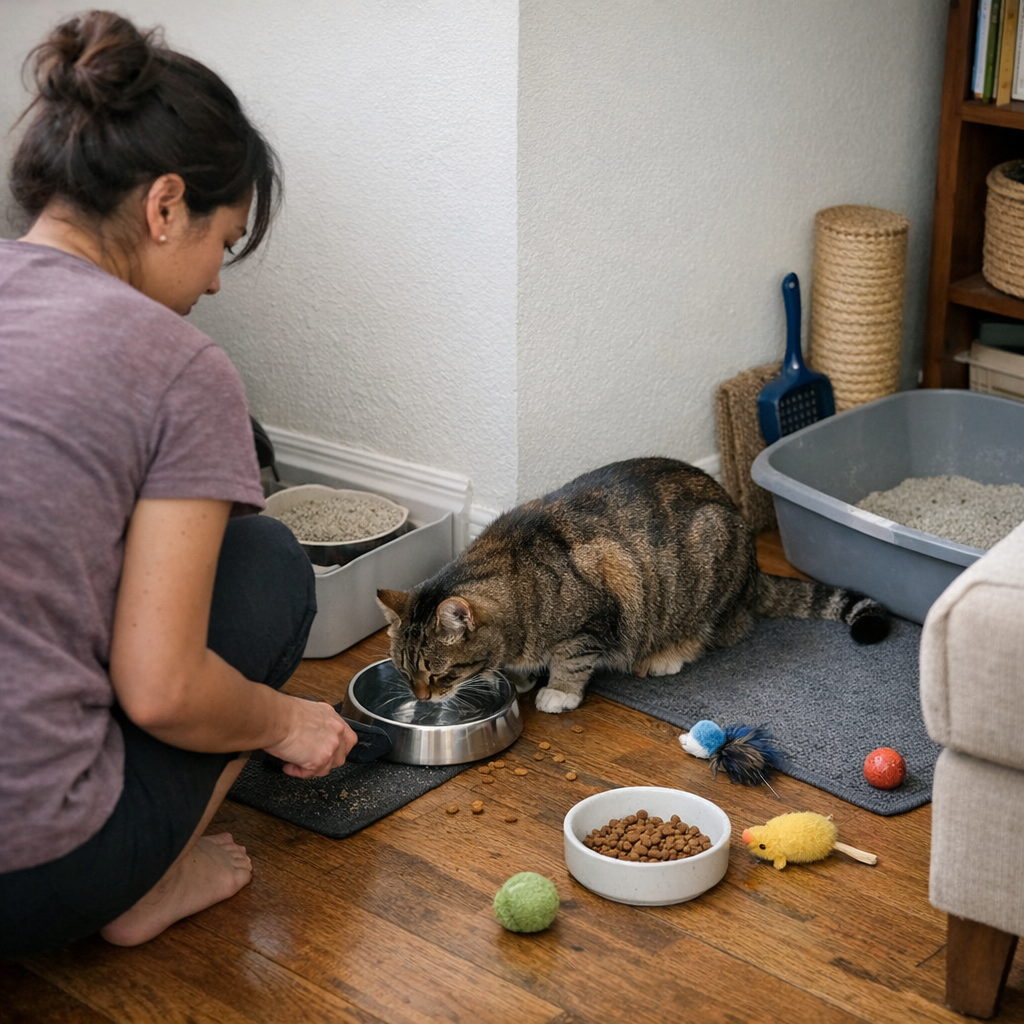
There’s a certain hopefulness to starting out with everything in a box. I remember the promise clearly: food bowl, water dish, litter pan, scratcher, toys—all lined up and ready, the floor clear for once, and no single item out of place. For a brief stretch, it felt like I’d found a shortcut to ease. The essentials were together, a whole routine seemingly solved, as if a neat starter kit could make living with an indoor cat less complicated.
But it only takes a few days for small realities to appear. The stacking of objects, their closeness, seems fine until refill time or cleaning, when the water dish creeps toward the edge of the food mat, and stray kibble piles next to a small puddle. The first week is mostly shuffling: sliding bowls back, fishing toys out from beneath a mat’s corner, brushing up grains of litter that always seem to escape. Each reset exposes little friction points that weren’t obvious when everything was new and still.
Arrangement Layers
At first, the single-zone setup feels right. Everything has its section, and nothing is missing. But the differences show up in how routines overlap—topping up food while dodging splash zones, cleaning crumbs that collect between areas, tracing a stray toy hiding behind the litter scoop. This constant overlap kept returning: the pinch points where convenience turned into recurring mess, little overlaps multiplying the effort. It looked fine at first, but day after day, the strain of doing three things at once in one spot nudged the arrangement off balance.
Layout vs. Living Space
After several resets, you start to notice. The packed look—a mat under trays, scoop dangling from the litter box—gives a tidy impression, but every refill or quick pass-through means shifting something out of the way. Toys especially tend to migrate into feeding zones, blurring boundaries that matter only when the setup is pristine. Left long enough, the difference between “organized” and “lived in” becomes a constant micro-movement: a bowl edging toward the wall, a mat that never quite catches everything, the sweep of the hand catching mess not made by the cat but by competing objects cramped into one spot.
Space Where It Counts
The change I stuck with wasn’t major. Just more real space between main setups—water moved away from the feeding area, the litter runner angled out of walk paths, snacks and toys separated from cleanup zones. It cut down extra passes and let each task feel separate instead of tangled. Cleaning, refilling, wiping: these routines became quieter, lighter, and much quicker. Letting go of the perfect “kit look” meant fewer small chores and less doubling back. The practical shift was a routine that stopped feeling like a loop of minor recoveries and started holding its shape, even with ordinary, sometimes messy use.
Some routines need their own real estate more than they need a matching surface. That’s one thing I wished I’d realized before all those slow, repeated cleanups settled into the day.
For anyone wanting to see how StillWhisker arranges the basics, you can quietly look here: http://www.stillwhisker.myshopify.com



