When Simple Lighting Turns Complicated at Home
Lighting plans run lighter and faster with accessories that block daily frustrations, keep cables stable, and prevent support drift.
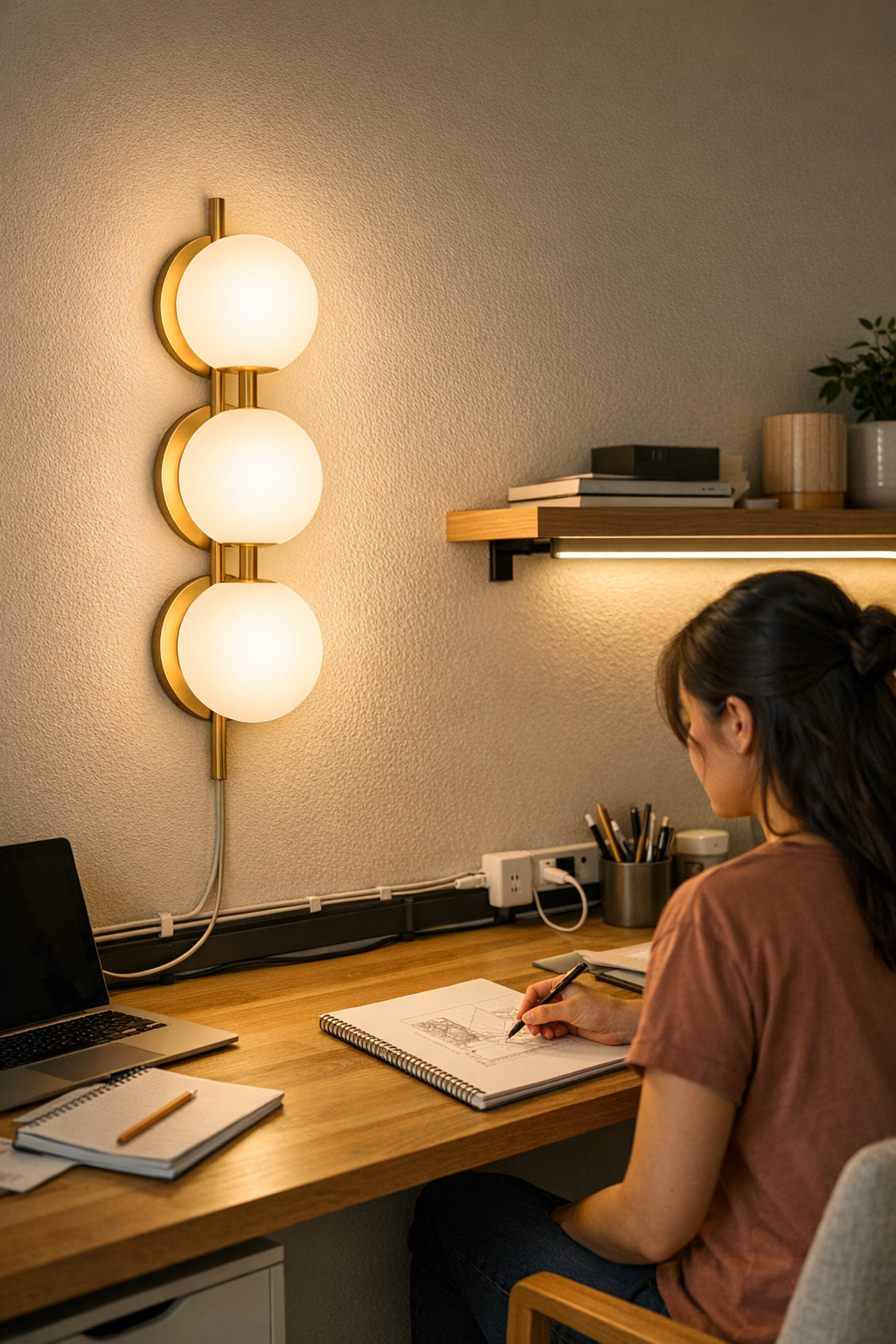
I thought I’d settled it. The lamp in its place, wires tucked back, surfaces as spare and intentional as I could make them. I remember sitting down those first evenings, feeling that little current of satisfaction that comes with clean, clear workspace surfaces. Since then, nightly routines seem to pull tiny problems out from that neatness—cords slumping edgewise, shadows creeping in, and the way one bracket loosens just when I want to swing a lamp closer. It’s remarkable how quickly a lighting setup, which once seemed resolved, can slip back into friction.
The Surfaces We Return To
You don’t notice it immediately.
A desk lamp clipped to the edge might look minimal from across the room—no stray switches, no visible tangles. But in everyday use, every hand motion tells another story: extra cable pooling near the keyboard, the lamp shifting on its bracket until the beam quietly drifts off target. Before you realize it, you’re nudging the cord back or twisting the mount so the light finally lands where you need it. These small, repeating corrections have a way of resurfacing.
The thing is, setups that seem simple—at least from a modest distance—don’t always feel that way after weeks of daily use. Out of sight isn’t out of mind if what’s hidden won’t stay put.
When Adaptability Turns Awkward
I kept thinking the right arrangement would hold everything steady: one device, all cables neat and snug. Maybe it would, if no one ever moved anything. But routine use exposes the edges. I work at a desk that becomes a shared surface after lunch—someone else sketching, me shuffling monitors and chargers. Lamps slide across the top, adapter ends drift into hand space, and sometimes, a bracket finally gives way, sending a beam off-center and disrupting the flow.
But you feel it.
The smallest supports—cable guides pressed quietly along the edge, a bracket that grips a bit firmer into the desk—make all the difference by their absence. I replaced the old extension cord with a cable channel running under the ledge, and added one reliable mount for the lamp. Tangling stopped. No more sifting for the adapter when it disappeared under a stack of books. The light, finally, stayed right where it belonged.
Why the Invisible Pieces Matter
That was the part I kept coming back to.
Most days, I hardly notice when the accessories work—just the desk, the light, my routines. But it doesn’t take much for a cable to sneak back into the reading area or a lamp to slip, throwing glare onto the page or leaving shadows where I don’t want them. Lighting support only draws attention when it fails—the bracket that twists loose, the cable drooping over a trackpad, or the strip that decides to light the wrong shelf.
It’s not just about how it looks, but the small frictions that accumulate: shifting things back, plugging and re-plugging, dodging the same cable every day. The practical fix wasn’t about new devices. It was about keeping each piece where it belonged, without demanding attention.
Sometimes the most functional setup is the one you rarely have to think about—until, quietly, you realize you haven’t had to fix it in weeks.
If you’re curious to see some of the supports that softened these edges for me, there’s a selection here: http://www.lightsupport.myshopify.com



