When Small Changes Lighten Morning Walks and Feeding
Mornings drag when small placement errors repeat daily; fixing them creates a lighter, steadier start for both dog and owner.
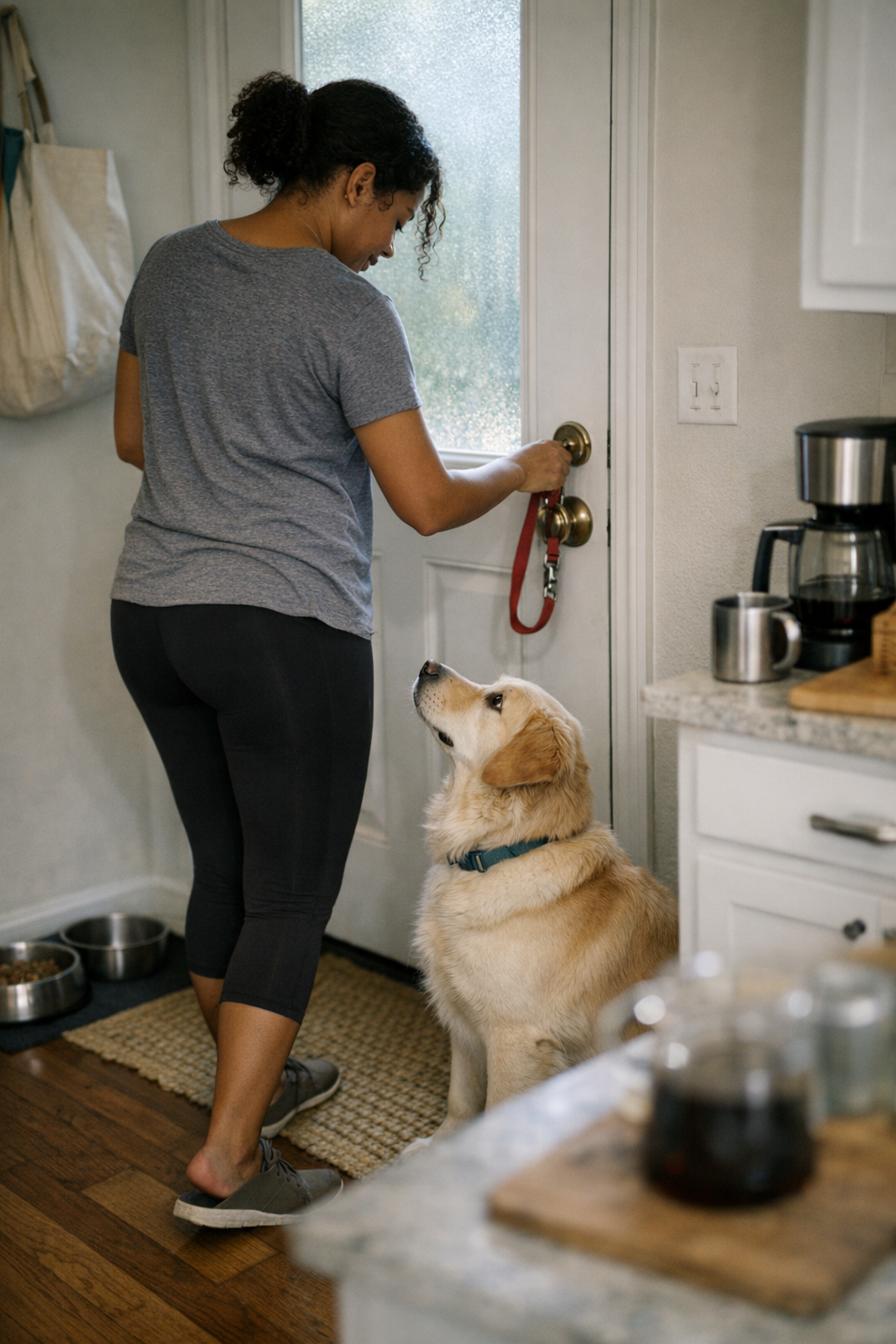
You notice it after a few mornings: your day doesn’t stall because of anything big. Instead, it’s the way your dog circles the door while you search for a misplaced leash, the slight impatience when you reach for a bowl that’s just out of place, or the tangled mess in the kitchen corner when breakfast prep runs into feeding time. These are small glitches, not disasters. Yet they stretch out the start of the day more than you expect.
At first glance, everything looks fine. The bowl is just a few steps away, tucked under a chair; the leash hangs just slightly out of reach on the wall hook beside yesterday’s coat. But each tiny pause—each detour from the usual path—carves out its own little routine. These tasks aren’t just chores; they become the morning’s undercurrent, where every misplacement turns into a friction point that doesn’t resolve itself. It’s not loud or obvious, but it builds up: a rhythm thrown off, energy stuck behind every unnecessary step.
You can ignore this. Most days, maybe you do. But there’s something about the way a dog waits—shifting from foot to foot by the door—that eventually makes you stop and pay attention.
Seeing the Patterns, Even When You’re Rushing
Every dog’s morning has a reliable rhythm, and it’s easy to take for granted—until it slows down. One day you realize you’re circling the kitchen table to grab a bowl, doubling back for the leash, pausing to clear chewed-up toys out of the feeding area before you’re even fully awake.
It looks like clutter, but the real problem is placement. A food bowl that’s just out of direct reach forces a small backtrack every morning. A long reach for a towel or an awkward detour around a pile of chewed rope toys resets the whole pace.
The difference is subtle and quiet. It doesn’t announce itself. Instead, it makes the morning feel noisier and less composed, turning that first step outside into a recovery rather than a beginning.
The Small Reset That Actually Stuck
One weekend, almost without thinking, I moved the food bowl right up against the kitchen entry—almost within arm’s reach of the coffee maker. The change was so small it barely registered at first. But the routine didn’t just look neater; it started feeling easier. Dog feeding ran alongside my breakfast moves instead of overlapping or colliding with them.
Moving the leash to hang on the doorknob instead of the coat rack meant the next morning’s walk began smoothly—no repeated fidgeting, no circling dog, no lost seconds adding tension.
These small shifts felt minor. Yet by midweek, the difference was in the air—less rushing, less verbal prompting, and a dog matching the pace I actually wanted. What made this work wasn’t a new system or product; it was simply noticing where repeated reaches or ongoing cleanups kept breaking the flow and resetting those trouble spots where the routine most often stalled.
That quiet relief—the feeling of everything in its proper spot, just when you need it—kept coming back.
Living in the Middle of the Routine, Instead of the Edges
Dog life resists permanent fixes. Toys drift; bowls migrate; towels are always a few hours away from the washer. Even so, I’ve found small, intentional shifts—putting anchor items where the hand naturally goes—not only reduce clutter but also cut down on the silent waiting I used to tune out.
Most stalls still come down to the same old patterns: a bowl not quite right, leash just out of reach, crate covered in yesterday’s toys. None of it is dramatic. All of it is fixable in ways that, once corrected, barely draw attention. Yet those spots are where the routine either holds together or falls apart.
Some mornings run smoother than others. On the rough days, I notice the dog’s trust in the rhythm—waiting at the door, stepping into the kitchen for breakfast, settling back on the rest mat—is tightly connected to these repeat placements. It’s not just about the objects, but the calm that comes when the routine quietly and reliably resets.
Everything moves a little lighter now. Not always perfect, but closer to it. Less doubling back, more moments fitting naturally together. Those small lived-in changes—starting out looking merely cosmetic but ending up carrying real weight—turn repeated stall points into smooth habits, almost without notice.
Sometimes, all it takes is reading the pauses to see which part of the day needs rearranging most.