When Small Cuts Make a Big Difference at Home
Choosing the right oscillating tool blade is crucial for clean, repeatable cuts and minimizing cleanup during repeated fine detail work.
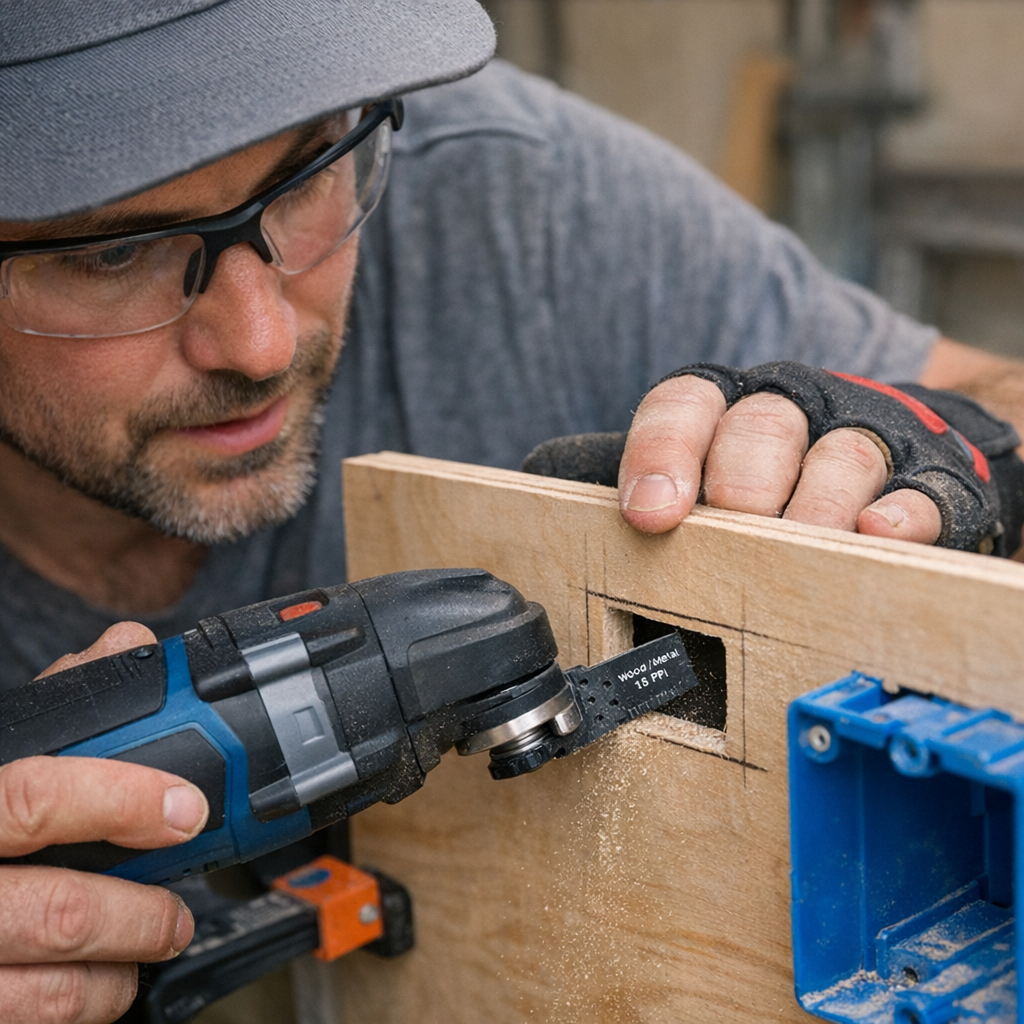
You don’t really notice it as you start. The soft hum of the oscillating tool, the subtle press of the blade—at first, everything feels smooth, as though any blade would do. Only after you fall into a rhythm, marking line after line, does something begin to change. Suddenly, you’re not cutting; you’re correcting. And the difference comes down to a single overlooked detail: which blade is in your hand.
There’s a quiet divide in detail cutting with oscillating tools. Most of the time, performance seems identical. Until it isn’t.
Where the Difference Hides
A few cuts go by. You’re moving through plywood, tracing the same shape again and again. There's an ease with a sharp, fine-tooth blade—lines are true, dust gathers in small, clean curls at your feet. But when you swap for a general-purpose blade, the shift is subtle at first. A little more vibration. Edges fuzz ever so slightly. You barely notice.
But you feel it.
Maybe you spend a few extra minutes on one inlet, then another. Corners aren’t quite as crisp. Clean lines start to drift. You set the tool down and reach, almost unconsciously, for sandpaper, putty, a vacuum. The work has stopped being about progress—and started revolving around repair.
The Cost of Small Errors
In my experience, it’s not the first dramatic miss that wears you down, but the accumulation of minor fixes. One cut leads to another, and suddenly, the attention and effort you intended for the actual project have been redirected. You’re smoothing splinters, filling gaps, brushing away debris.
All because the blade didn’t keep up beyond those first simple passes.
Real performance only becomes clear when fatigue creeps in, or when you’re racing daylight to fit out those third or fourth panels. A multipurpose blade, handy in theory, starts to wander. A fine-tooth blade—the real kind, one with purposefully packed teeth—leans into each line and stays there. Things just work better. Not in a marketing sense, but in that small but significant way: fewer interruptions, less frustration, work that feels under control.
A Gentle Shift in Approach
One project changed how I thought about this altogether. I switched to a bi-metal fine-tooth blade, 18 TPI, and clamped the panel tight. I noticed I wasn’t forcing anything; the motion became careful, deliberate. Each cut mirrored the last. There was less to clean, less to cover up, and, surprisingly, a little more confidence in every pass.
It made me realize—sometimes, the answer isn’t just getting better at fixing mistakes, but quietly preventing them from happening at all. A sharper choice, a steadier setup, and a pause before the first cut can save you from the drudgery of endless fixes down the line.
These thoughts came together after a long afternoon of second-guessing my own process—turns out, the smallest decisions really do stack up.