When Small Details Shape a Long Day’s Work
Choosing a high-quality, low-friction drill bit reduces motor strain, heat, and vibration, preserving hole quality during repetitive drilling tasks.
There’s a point in working with your hands when you stop noticing the tools and start noticing the toll. Most days it’s quiet background noise—a drill humming, the repetition of motion, the tactile satisfaction of a job getting done. But every once in a while, the rhythm falters. That’s when you feel it: the difference a single drill bit makes.
The Friction You Don’t Notice—Until You Do
At first, it’s easy to believe that all bits are the same. They look nearly identical out of the box—bright, sharp, full of promise. You don’t notice it immediately.
But the divide becomes clear somewhere around the sixth or seventh hole. Instead of a crisp, clean bore, you start hearing a rougher note from the drill. It takes just a split second longer to break through, and you feel a bit more drag in your wrist. Not much at first—just enough for a quiet sigh.
That’s when small inefficiencies start piling up. They creep in while you’re focused elsewhere.
When Rush Turns Into Resistance
The true moment of realization often arrives during repetitive work. Imagine lining up twenty pilot holes in a hardwood cabinet frame. After the fifth or sixth hole, friction mounts. Vibration climbs up your arm. Each pass feels slightly more labored, and the exits show splinters that weren’t there before.
By the time you’re halfway through, you’re fighting both the material and the machine. Sometimes the drill’s clutch slips; sometimes you pause, subconsciously flexing your fingers. You don’t notice how the momentum has shifted until you realize you’re spending more time sanding edges and checking for burned fibers than actually drilling holes.
It’s not dramatic. But it is cumulative.
A Small Change, A Subtly Easier Day
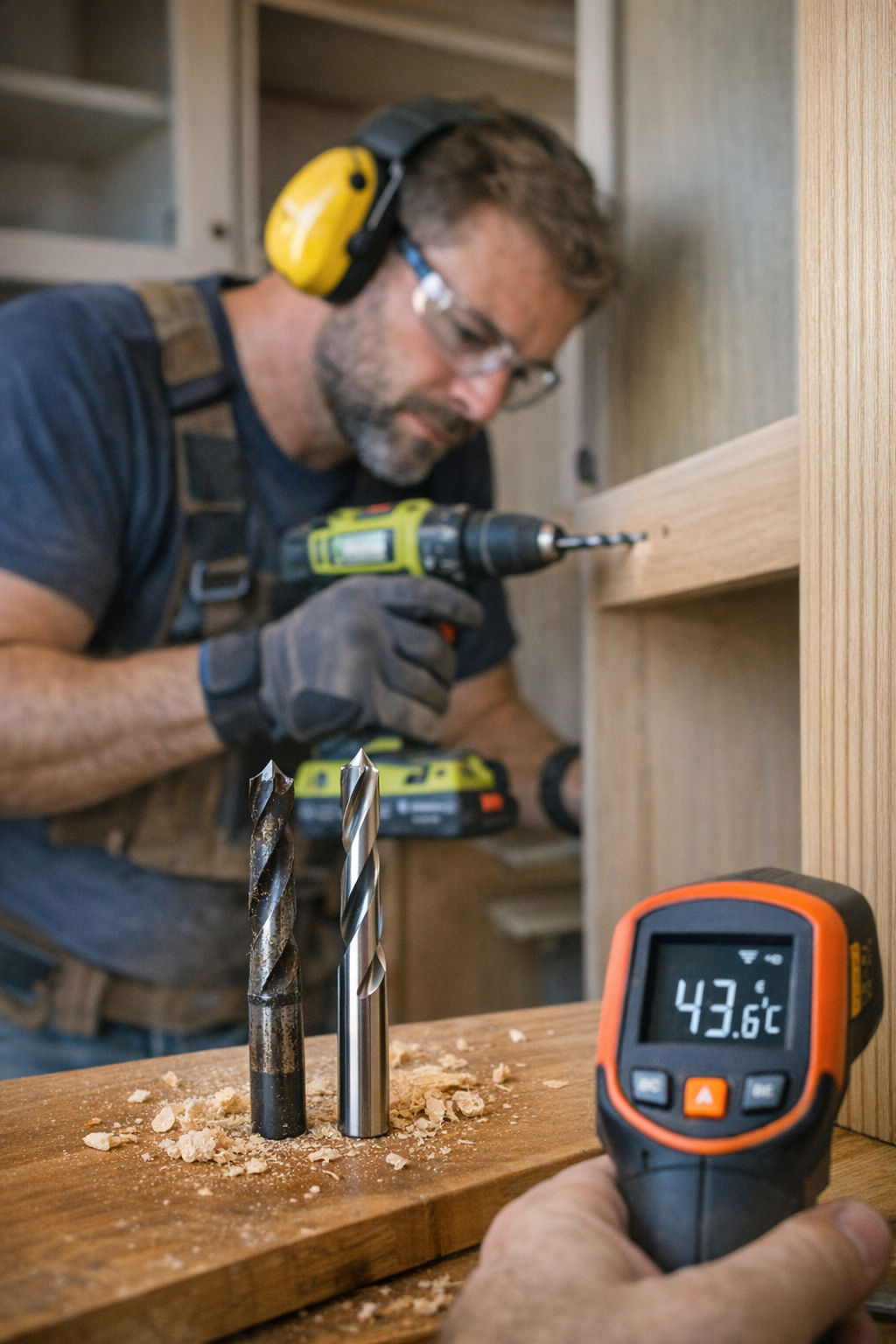
There’s a quiet kind of relief that follows a well-chosen bit. Swapping out a stock piece for a precision-ground, low-friction bit turned what was once a slow grind into something nearly effortless. I remember running an infrared thermometer across the tip after ten holes in dense maple—the temperature stayed steady, vibration fell away, and the holes were bright and clean.
The shift isn’t always about gear. Sometimes it’s as simple as matching the bit to the material, rather than forcing one size to fit every job. You start to notice more—less binding, fewer burned edges, and a rhythm that actually feels sustainable.
It’s like breathing easier in a room you didn’t know was stifling.
Most lessons in the shop are subtle, but they linger where the body meets the work. The right bit doesn’t just save a machine; it keeps pace with your hands, your patience, your day.
These thoughts came together while quietly reorganizing a tray of half-used drill bits.