When Small Fixes Make Your Workspace Feel Right
Lighting accessories matched to room use prevent annoyances like sagging fixtures and drifting wires, making setups reliable over time.
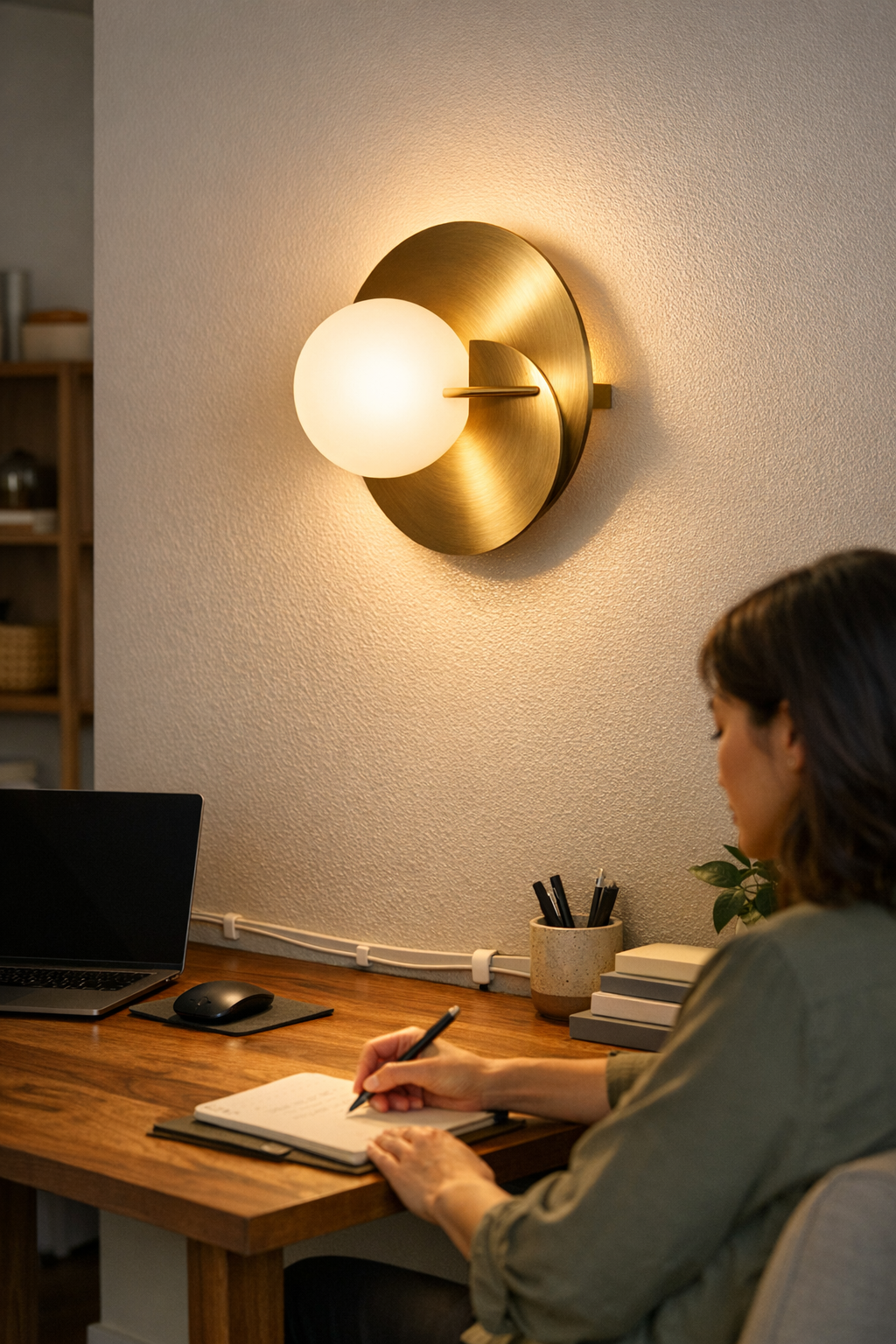
Sometimes it feels like the clutter and distraction aren’t in the objects themselves, but in something less visible—a sense that the space almost works, almost supports you, but not quite. I’ve felt it while sitting at a familiar desk, settling in to send an email or finish a bit of work, only to realize, again, that the lighting setup I once called “sorted” was quietly off-balance. A cable slipping behind the leg, the lamp a little off-kilter after one absentminded nudge, or a drifting patch of glare on the screen. On paper, these are minor details. But they keep coming up. And over time, the distance between “tidy enough” and “really works” becomes harder to ignore.
What Almost Holds
Day one, everything appears secure—brackets lined up, cables tucked behind a monitor, lights poised over the shelf. Even the cable that dips behind my laptop looks purposeful. It’s only after a few evenings that I notice myself untangling it again, tapping the lamp back into position, or trying not to bump an exposed cord as I reach for a notebook. You don’t notice it immediately. But you feel it.
That was the part I kept coming back to: how a lighting setup that looked organized was subtly wearing me down, not because of any single failure, but through repeated, fractional losses of focus and ease. The lamp that kept shifting left by a few degrees, the under-shelf light that cast a line of glare each time I leaned in close—none of it dramatic, all of it persistent.
When Movement Matters More Than Looks
After a few weeks, the difference between accessories that just look good and those that actually hold up became clear. The bracket that seemed slim and clever, but never really locked the cable down. The clamp that let the lamp drift under the weight of the cord. These choices slowly unraveled as the room went back and forth between two people, or as I reached across the workspace repeatedly.
In a shared area or a tight corner, the need for gentle, nearly invisible support starts to outweigh the promise of a minimalist facade. It’s not about eliminating all visible cables or brackets, but about placing them where the most subtle movements actually happen. I still catch myself looking for the source of a random shadow or a cable in the corner of my eye—reminders that the smallest things stay unresolved if the support isn’t anchored where life really happens.
Small Fix, Quiet Return
After some hesitation, I added a single cable guide at the back edge of the desk. Just that—one fixed point. It stopped the lamp cord from inching forward, kept the line out of my elbow’s way, and put an end to half-conscious fussing. One bracket ended up being the adjustment the arrangement needed. The desk, finally, felt finished—not perfect, but able to fade into its use.
There’s almost a relief in no longer noticing the accessories themselves. The difference isn’t loud. It’s a series of days, suddenly smoother, where the lighting does what it’s supposed to do—and nothing more. I think about how many zones in a house or shared office are one calm cable run or quiet bracket away from feeling complete.
If you ever want a closer look into this kind of detail, there’s a quiet catalog here: http://www.lightsupport.myshopify.com



