When Small Messes Keep Returning at Home
A cat area shows its value after repeated use by keeping boundaries tight, stopping messes, and reducing cleanup effort.
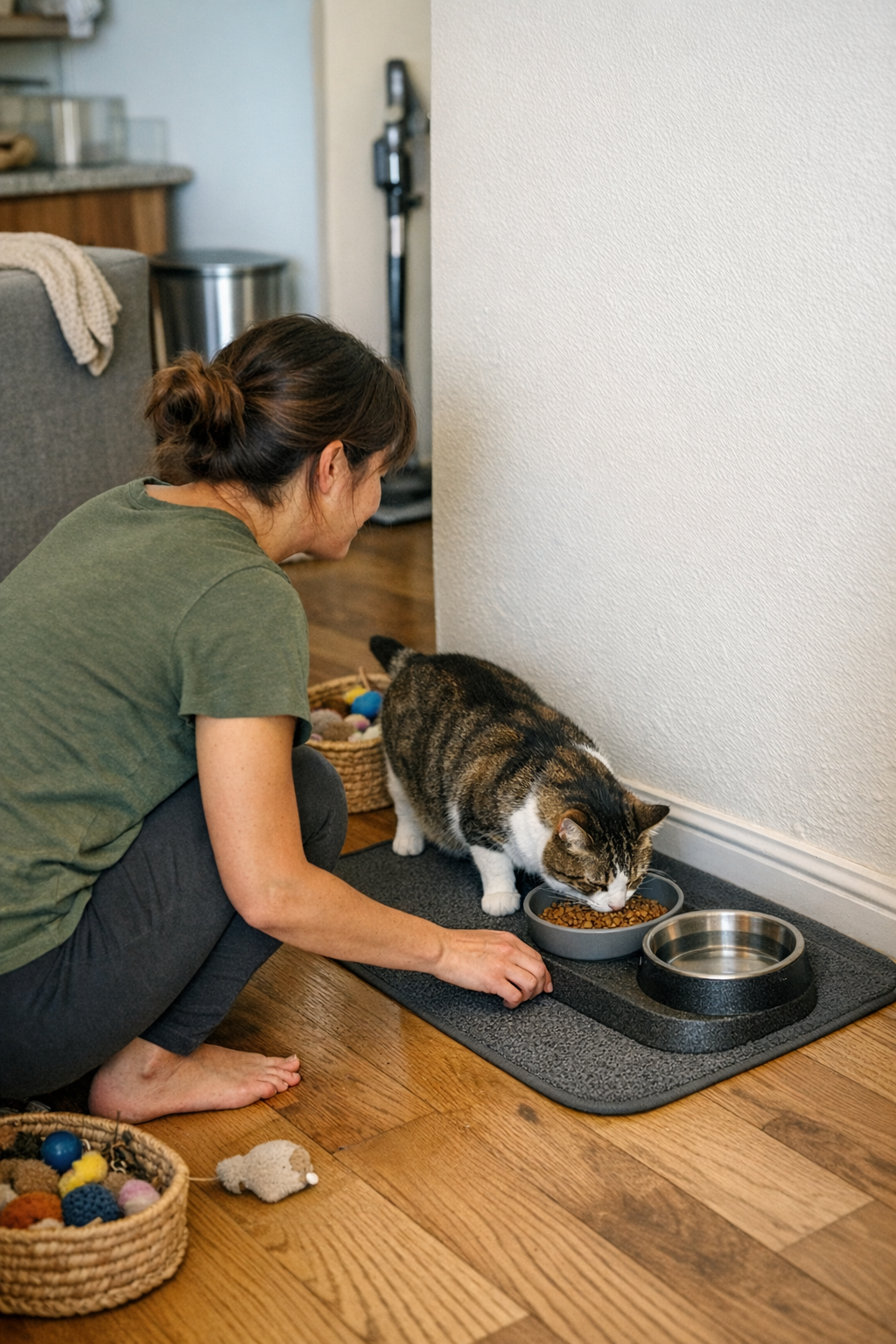
Sometimes, it takes a while to notice what isn’t working in a cat’s feeding or rest area. At first, the space seems settled—a mat at the edge, bowls lined up, the day moving past without a second thought. But as days pass, odd details keep showing up: scattered kibble, or litter dust settling where it shouldn’t. The neat corner needs more resets than you expected. You find yourself bending down for the dustpan twice instead of once. Somehow, this corner demands more attention than a photo ever warned you about.
The Repeat Routine
You start to see it after a few resets. The setup that looked fine in the morning has shifted by evening. Sometimes the mat curls enough for crumbs to slip beneath it, or a water bowl edges up against a table leg, leaving a faint ring on the floor by the third refill. Rest areas—those carefully placed comfort squares—pick up fur tufts or drag their blankets out into the hallway.
These small, repeated signs are where a room that photographs tidy differs from one that works well day to day. Over time, the gap widens. A feeding mat that’s a little too thin means extra time tracking stray food crumbs. A toy bin without a definitive spot lets balls wander under the sofa. The litter zone edge never fully seals off the scatter.
Minor Shifts Make Real Change
What looked fine at first starts to show its flaws after a few days. A mat with a little more weight stays put. Bowls with shallower rims stop sliding across tile floors. The vacuum, once blocked by spilled kibble, passes easily on the first try. Sometimes the smallest change—a heavier mat, a toy container wedged firmly in place—pulls the daily routine back in line.
These small adjustments bring quiet relief. The background noise of constant corrections fades. You can refill the water bowl without needing to fix its placement each time. Cleaning becomes less of a chore and more of a moment to pause, to notice how downtime feels different without nagging, repetitive work.
The Quiet Tension of Living With It
There’s a subtle relief when a space just works—when bowls, mats, and corners don’t demand a retouch every time you pass by. But it’s not only about the cat or the tidiness. It’s how these small frictions build up, wearing down your sense of rhythm in the home. The real surprise is how much smoother the rest of the routine flows once these annoyances stop pulling for attention.
If you find yourself chasing the same mess midweek, that’s a signal something in the setup needs tweaking. Usually the solution is simpler than expected—shifting placement, adding weight, or securing what needs a firmer spot. In the end, you trust the area more, and it stops calling you back for just one more fix.
Over time, it becomes less about how it looks and more about restoring ease to a corner you pass a hundred times. For setups and small pieces designed to keep up daily without fuss, I found some grounded options here: http://www.stillwhisker.myshopify.com.