When Small Misalignments Disrupt Everyday Projects
Drill bit alignment with a deep pilot dimple reduces drift, damage, and errors, ensuring precise holes and easier assembly.
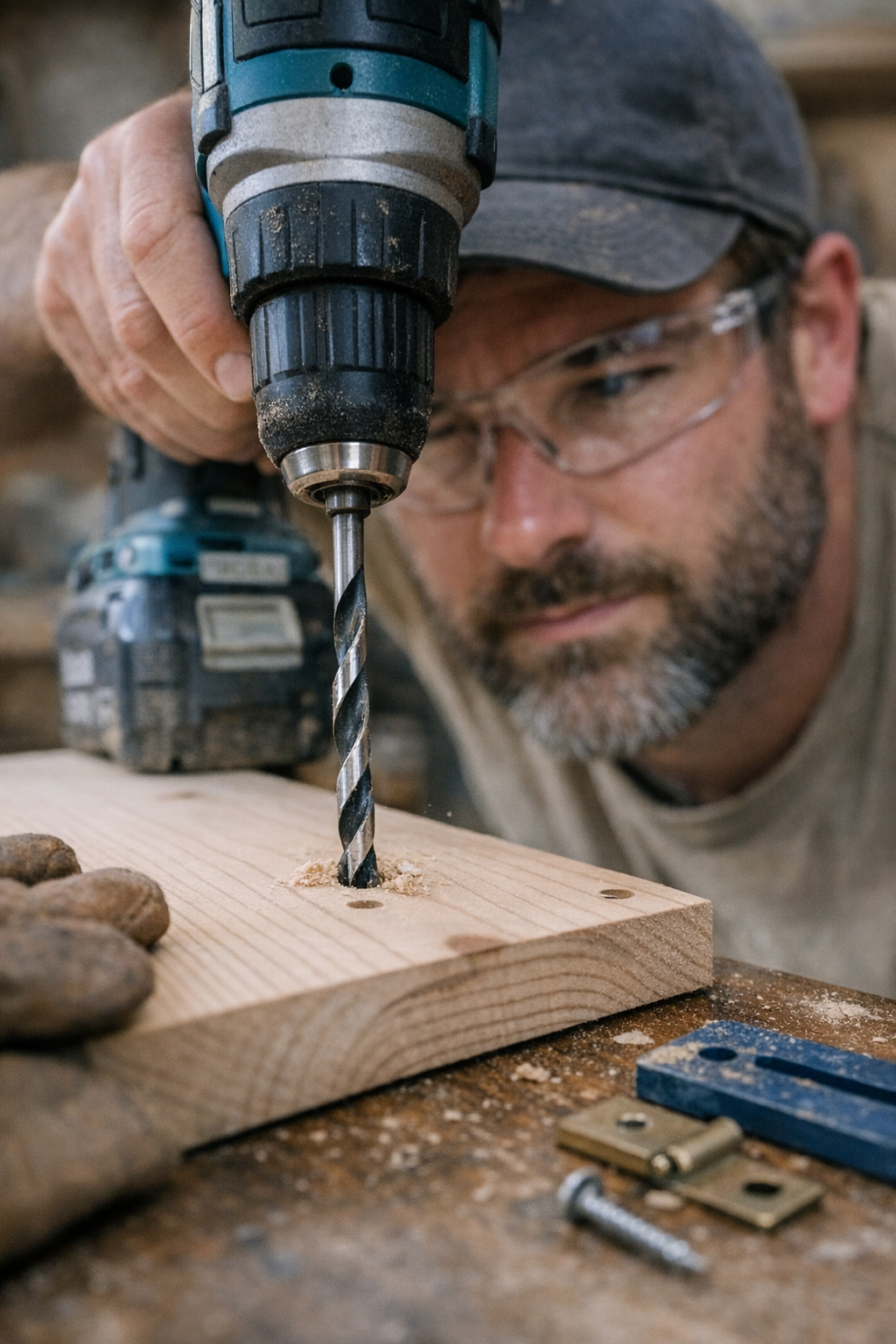
There’s a moment, sometimes hours into a project, when a small misalignment suddenly reveals itself. Maybe it’s a row of hardware that sits crooked, maybe a faint chip along the edge. At first, it all looks fine—holes drilled, pieces in place—but then something doesn’t quite fit. Drill bit alignment isn’t the sort of thing we dwell on, until imprecision gathers into something unmistakable.
When the Little Mistakes Gather
You don’t notice it immediately.
A drill bit off by just a degree—what’s the harm? A hole seems close enough, a shelf pin almost flush. But with every repetition, the little skew deepens. The more holes you make in a straight line, the further the next one drifts. When accuracy begins to matter—hinges, hardware, rows of pegs—small errors compound into bigger annoyances.
There’s the moment during assembly when gaps appear or shelves lean in ways they shouldn’t. It’s rarely dramatic at first. But you feel it.
Seeing Isn't Always Believing
It’s easy to trust your eye—bits look centered, edges seem sharp. Sometimes, even matching tools produce wildly different results. The deeper story plays out once the bit meets the surface. A steady hum and even dust: something’s gone right. The opposite—a squeal, a chattering vibration, a sideways wobble—is the bit telling you it’s already strayed.
Those signals don’t always catch our attention right away. Realizing later, as you force a screw or notice a ragged veneer, can be quietly defeating. I’ve seen rows of shelf pin holes begin confidently, only to meander across pine boards, each departure from center magnifying the problem.
The Satisfying Click of the Right Start
There’s a small move that changes the entire rhythm—creating a visible, deep enough pilot dimple before drilling. It doesn’t feel dramatic, but letting the bit settle fully before pressing forward suddenly makes everything smoother. The drill follows, not fights.
It’s interesting how the difference isn’t always about new tools or gleaming bits. Sometimes, just meeting the wood at the right spot, with patience, keeps the whole project on track. I noticed that after working on kitchen shelves—each neat hole translated into parts that fit without force, and a process that felt less like troubleshooting, more like flow.
Mistakes still happen. Even when you try to align, things drift sometimes. But taking a moment with each entry point, listening for that steady rhythm, seems to save far more time than it costs.
These reflections all surfaced while quietly reworking some shelving at home this spring.