When Small Sander Habits Shape the Day’s Work
Cutting corners with sander maintenance during extended furniture projects compounds surface issues and repair time. Regular pad checks and dust clearing preserve tool control and finish consistency.
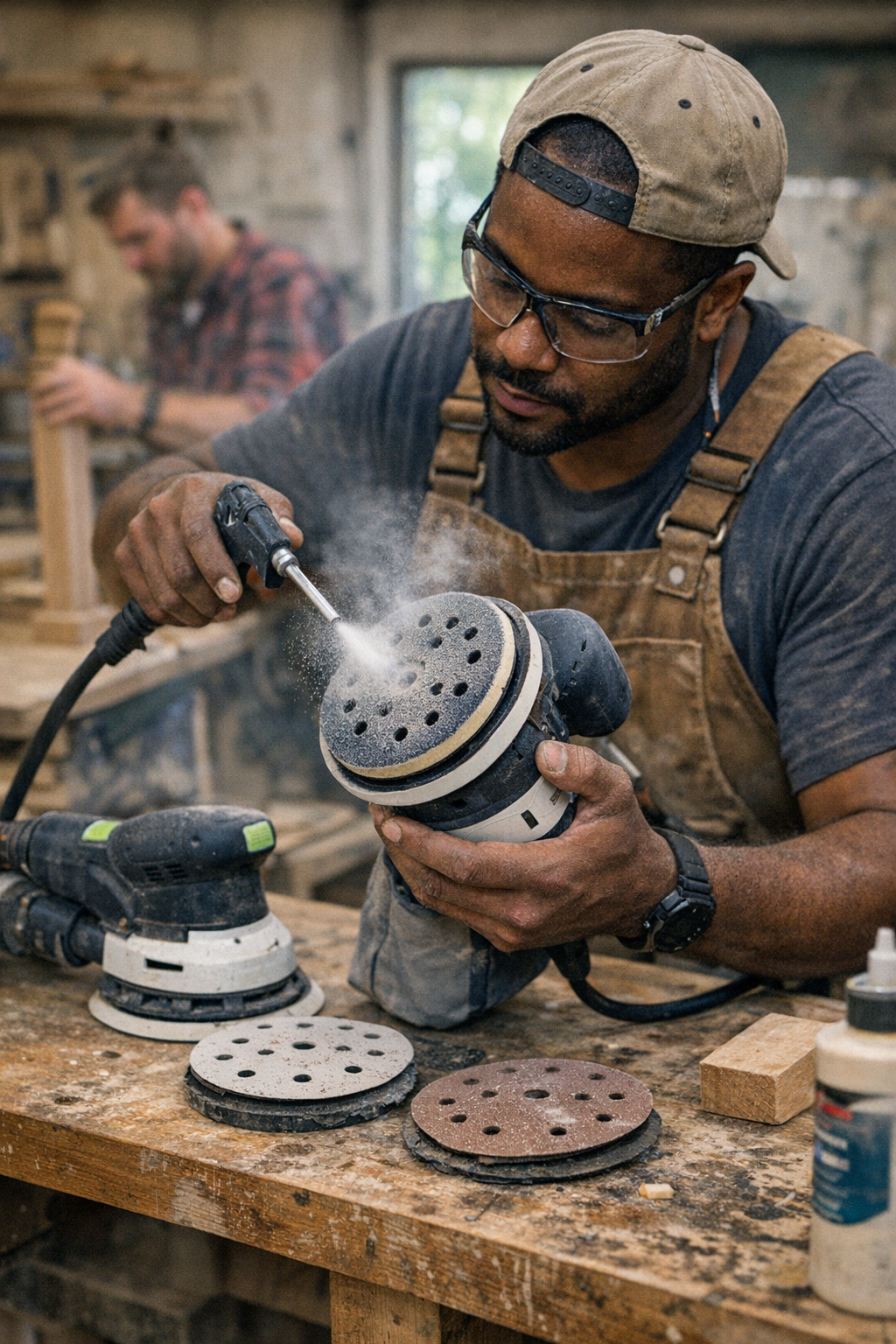
You don’t notice it at first. A faint scratch, a swirl, a patch of roughness — they sneak in quietly, almost politely, when you’ve been sanding wood all day. The sander still hums, dust drifts in the light, and the rhythm feels uninterrupted. But something shifts in the quality of your work. For those of us who spend hours shaping pieces for furniture, the way we care for our sanders makes a difference that’s easy to overlook — until it’s too late.
Not All Sanding Mistakes Are Obvious
Swapping from a simple test board to a stretch of real furniture, you’re caught off guard by how quickly small issues add up. Maybe an edge is rough where it shouldn’t be, maybe the finish won’t look quite uniform under the shop lights. You don’t catch it immediately.
But you feel it.
A neglected sander might look fine resting on the bench beside a well-cared-for one. Both run, both vibrate. But after a few uninterrupted hours, subtle differences emerge. One skips, the other glides. There’s a drag on a knotty leg or a patch that takes too many passes. Fixes get harder the longer you wait.
The Quiet Cost of Skipped Steps
Most furniture jobs aren’t rushed. They repeat, board after board — and so do their habits. Caught in the flow, it’s tempting to sweep off dust and keep moving, trusting everything still lines up like it did that morning.
But underneath, dust builds, and pads wear. Heat lingers in corners, unseen. Miss a simple check, and suddenly, the surface tells you: a dull spot here, a raised grain there. You find yourself working harder, thinking about touch-ups you didn’t plan for. There’s a moment when you brush debris from the pad, but regret comes after — with more time spent repairing the same stubborn flaws.
Sometimes the hardest lessons don’t come from disaster, but from repetition.
A Small Pause, A Predictable Finish
There’s relief in a simple, repeatable act. Just a few seconds — realign the pad, tap out the dust, run a quick blast of air across the holes. It resets something. Over time, this small pause with every new board keeps the sander feeling steady, predictable, almost trustworthy.
If anything, that pause becomes a kind of anchor for the day. Contrast unfolds gently: patchiness fades, resistance slips away, the surface stays smooth. When your tool is right, everything else begins to add up as it should. The payoff, quietly, is more time spent finishing pieces instead of fixing them.
It’s easy to underestimate what’s invisible at first. Surface quality, tool feel, and that elusive consistency — all settle into place just by tending to the parts most people overlook.
I think about this on long afternoons at the workbench, as the light shifts and dust settles in the air. Sometimes, slowing down for a moment changes everything — quietly, unobtrusively, and then all at once.
These thoughts came together while sanding the legs of a stubborn old table.



