When Small Shifts Turn Into Big Finish Problems
Blade drift in thick panels with jig saws appears after repeated cuts; using a stiffer blade and proper saw handling reduces finish errors and waste.
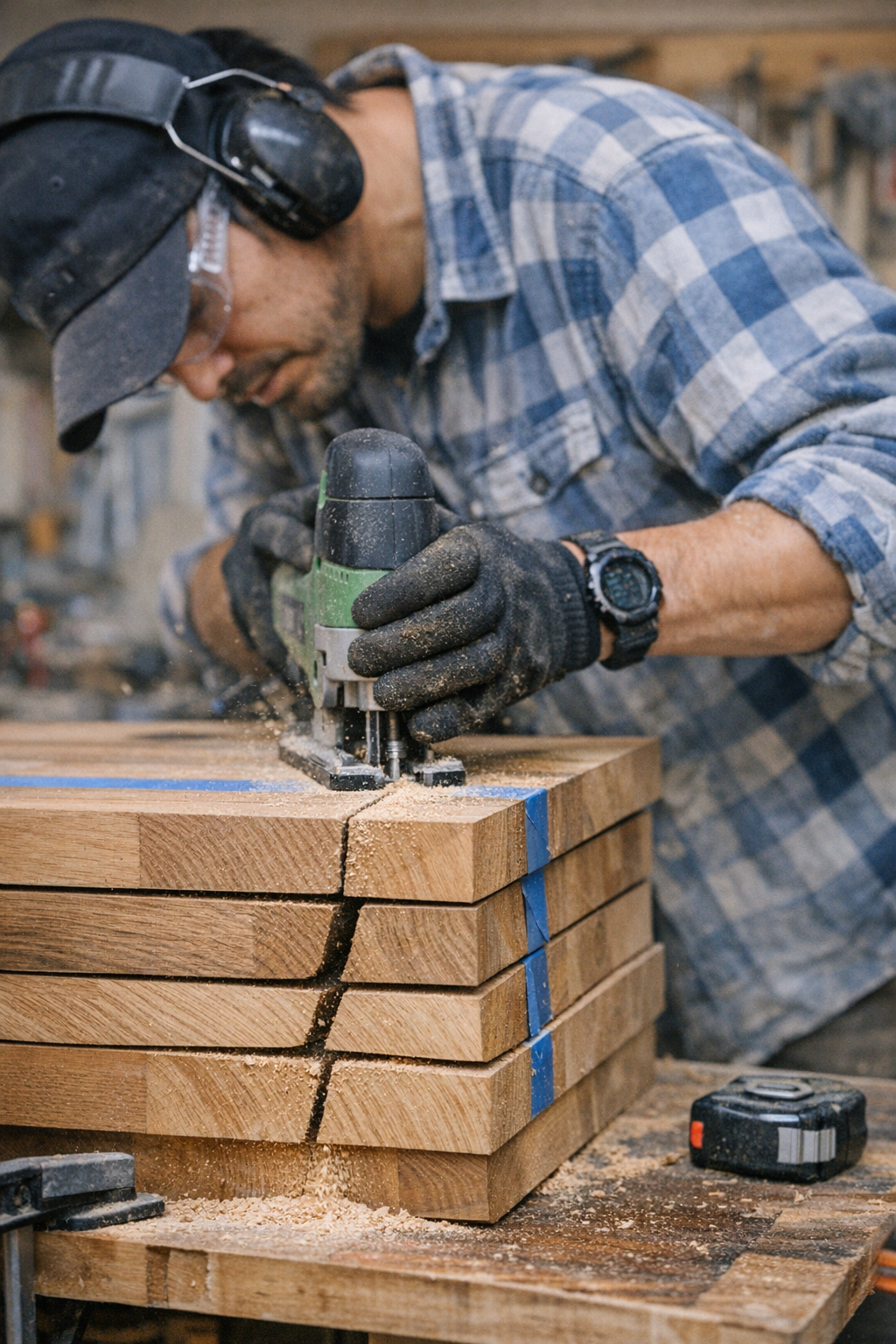
There’s a quiet moment in every workshop—right as the blade sinks into another thick panel—when everything seems routine. Hands steady. The saw hums along. Another cut, just like the last. But something subtle happens as you move from the second pass to the third, then the fourth. The finish that felt predictable begins to slip. You don’t notice it immediately.
But you feel it.
The Slow Reveal of Blade Drift
Drift in a jig saw’s cut rarely grabs your attention at first. A few sheets in, and it’s easy to believe things are still “good enough.” Maybe a seam is off by less than a millimeter, or the bottom edge looks slightly out of square. I’ve watched it unfold over and over—especially when working with thick, dense panels. What begins as a minor flex in the blade, encouraged by the weight of the material and a bit of fatigue, grows into visible seams that don’t quite line up. More sanding, more frustration. It’s rarely the saw’s fault. The signs come quietly: a barely rougher push, an angle appearing where it shouldn’t, a sense that control is slipping—even as your routine stays the same.
Blade Choices Feel Subtle Until They Aren’t
Most people only realize there’s a difference in blades after the damage appears. At first glance, every blade looks like it could handle the job; packaging boasts about precision and longevity. In reality, only small details—like blade stiffness and kerf width—reveal themselves after four or five deep cuts. I remember one day cutting through thick oak panels, swapping to a slightly flimsier blade midway. Suddenly, the next panel’s edge came out just barely beveled, sending me back to the sander for another round. The cost isn’t dramatic at first. It’s cumulative: stacked layers that just won’t match, corrections that take longer than planned. And each pass wears down your trust in the process just a little more.
Learning the Subtle Warning Signs
There’s a rhythm in repetitive work—a feeling that gets disrupted when the blade starts wandering. The saw vibrates more. Dust clouds thicken. You push a little harder, hoping to steer things back on track, but it rarely helps. Sometimes the drift is only one millimeter by the end of a row, but that’s enough to shift the fit just out of tolerance. That’s when you realize: the answer isn’t always working harder, but giving the process a chance to recover. Slowing the saw, letting dust clear, and making sure the blade is right for dense hardwoods changes everything. The finish gets cleaner, and suddenly the workload feels lighter, even as the panels still stack high. It’s a small adjustment, but it spares hours of backtracking.
The job feels different when the blade doesn’t fight you.
I started to appreciate the value of small shifts—listening to the saw, feeling the change in resistance—rather than always trying to out-muscle the material. It’s a lesson that’s quietly reshaped most of my projects since.
These thoughts came together while undoing a handful of misaligned cuts, during one long afternoon in the shop.



