When Small Signs Signal Big Seal Trouble at Home
Pump seal damage shows as trigger resistance, uneven pressure, and streaks; reinforced seals and 30-micron pre-filters improve performance and reduce rework.
You don’t think about how everything holds together until, suddenly, something slips. Maybe it’s the way pressure tapers off in the handle of a cleaning tool, or how a line that used to be clear now leaves a faint mist. These aren’t the moments anyone expects — but they creep up, quietly, threading into the flow of work just enough to break your rhythm.
This is how I noticed how much depends on something as overlooked as a pump seal. Not at the beginning, but after time and use, when routine starts giving way to small irregularities.
Friction in the Familiar
Early on, you trust that each part will do its job. Press the trigger, adjust the setting, and the cleaner responds — like muscle memory. Days blur together like that, everything functioning as promised.
But friction builds slowly. The trigger feels a little heavy, the pressure wavers. You find yourself wondering if it’s in your head.
You don’t notice it immediately.
But you feel it.
It’s in those hesitations — a second pass over a stubborn spot, a sidelong glance at the faint mist hugging the edges. At first, it’s easy to ignore. Small interruptions. Still, over time, these moments start to gather, asking you for a bit more attention than before.
When Enough Isn’t Enough
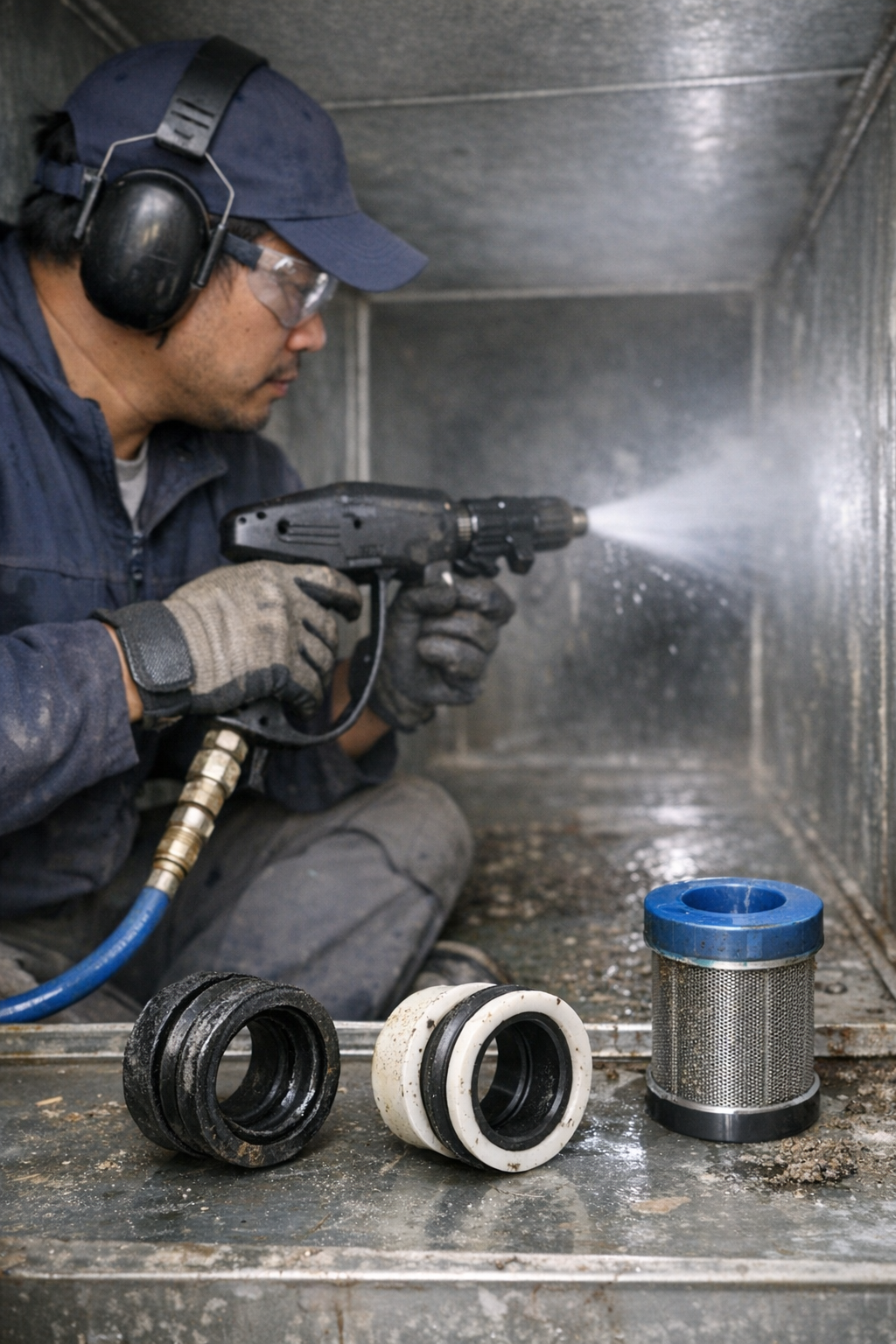
Sometimes, after hours of repetition, the familiar turns on its head. A seal that seemed fine in the morning shows its limits mid-job: pressure that won’t stay put, the trigger unpredictably stiff. Imagine cleaning a long duct and seeing, suddenly, that thin wet track where it should be dry and spotless.
You pause, adjust, go again. The problem persists, insistently quiet, until you realize — it’s the seal. Not a big failure, but an accumulating one, slowing everything down, inviting mistakes.
Mist creeps into your routine.
A Shift in Approach
The difference came, unexpectedly, with a new feel. Replacing an old seal with a reinforced one — something described as PTFE-backed and paired with a finer mesh — didn’t seem revolutionary at first. But as debris accumulated and the minutes ticked by, the interruption just… didn’t appear.
Pressure held steady. Lines remained distinct. Cleaning moved forward, not in circles. What seemed technical and minor at first revealed itself as a quiet kind of relief.
Sometimes, it’s these adjustments — nearly invisible but real — that restore a sense of control back into the little routines. The right seal isn’t about perfection; it’s about staying in flow, longer.
I thought about all this on a late afternoon, as sunlight caught the dust in the air and cleaning lines glimmered, quietly even. These things have a way of lingering, long after the noise has faded.
These reflections came together while working through some recurring troubleshooting on my own workbench.